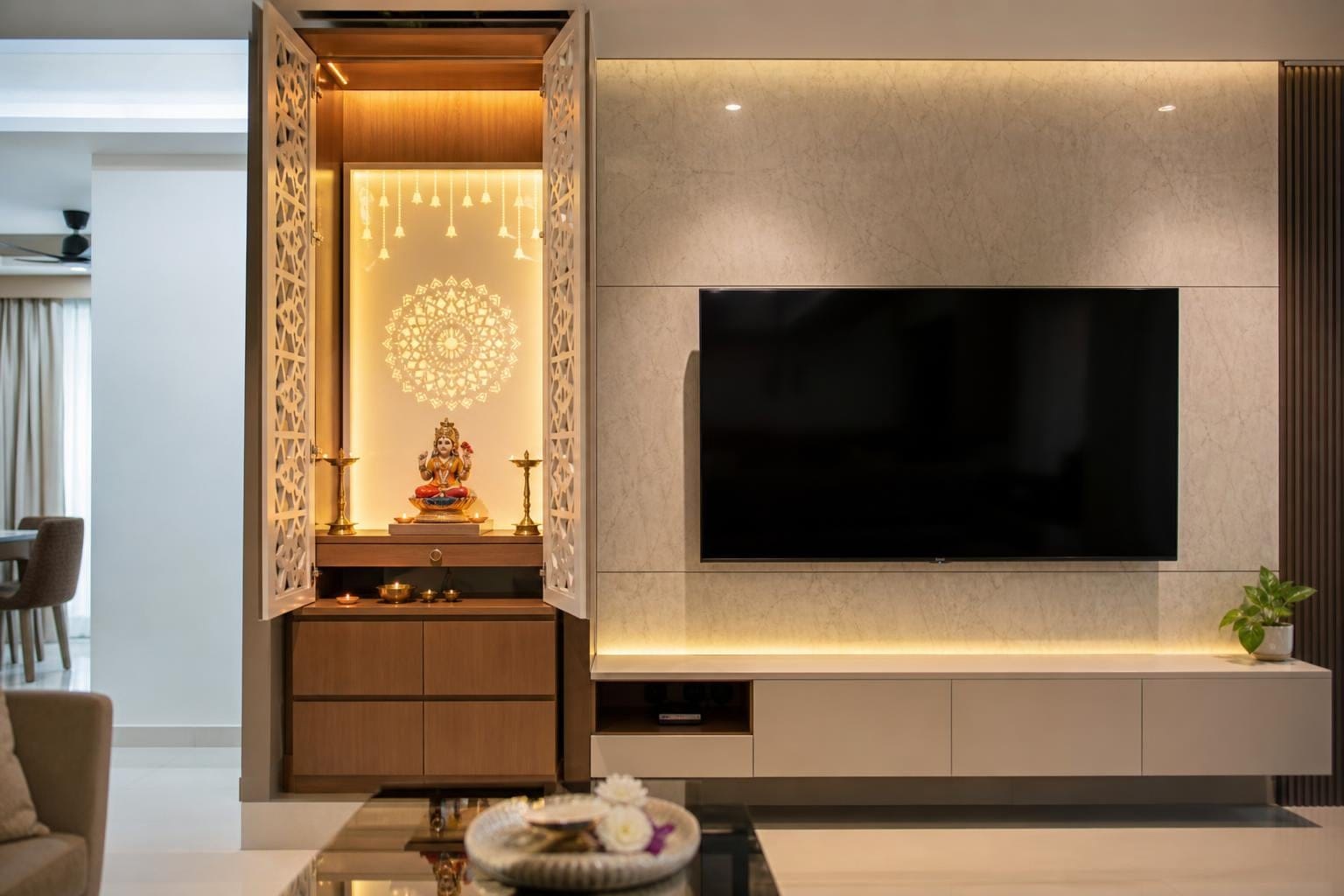
12 Space-Saving Pooja Room With TV Unit Ideas (2026)
TL;DR
Combining a pooja room with TV unit saves 20–30% wall space compared to separate installations, making it ideal for 2BHK and 3BHK apartments. This guide covers 12 proven design configurations, from floating wall-mounted setups starting at ₹40,000 to premium marble-accent units exceeding ₹2.5 lakh. Each design includes material recommendations, Vastu compliance notes, cost ranges, and honest tradeoffs, including the incense-near-electronics problem that most guides ignore entirely.
Why Combine Your Pooja Space with the TV Unit?
About 67% of Indian apartment dwellers struggle to fit both a TV unit and mandir in their living room, according to Livspace’s 2026 survey data. In cities like Bangalore, where most apartments range from 600 to 1,200 square feet, dedicating a full room to prayer simply isn’t realistic for many families.
A pooja room with TV unit solves this by combining two functions on a single wall, typically requiring 6 to 10 feet of width and 6 to 8 feet of height. The TV area claims about 60–70% of the unit’s width, with the remaining space devoted to the mandir section. Done well, this integration feels intentional rather than compromised.
But as designer Samiksha Gupta noted on Medium, “combining a TV and mandir unit can sometimes be tricky. You want the entire setup to look like a combined unit, but at the same time you want to separate the mandir from the TV unit.” That tension between unity and distinction is what separates a good design from a mediocre one.
If you’re planning a broader living room overhaul, figuring out the TV-mandir wall first often dictates the rest of the layout.
At-a-Glance Comparison Table
| Design | Best For | Min. Wall Width | Est. Cost Range | Vastu-Friendly? |
|---|---|---|---|---|
| 1. Floating TV + Side Pooja Niche | 2BHK, renters | 5 ft | ₹40K–₹80K | Yes (flexible placement) |
| 2. Full-Wall Integrated Unit | 3BHK+, large walls | 8–12 ft | ₹1.2L–₹2.5L | Yes (with planning) |
| 3. Sliding Shuttered Mandir | Families wanting privacy | 7–9 ft | ₹80K–₹1.5L | Yes |
| 4. CNC Jali Panel Design | Traditional-modern fusion | 7–10 ft | ₹90K–₹1.8L | Yes |
| 5. L-Shaped Corner Unit | Large living rooms, villas | 10+ ft (two walls) | ₹1.5L–₹2.5L+ | Excellent |
| 6. Symmetrical Open Shelving | Scandinavian/contemporary | 8–10 ft | ₹70K–₹1.2L | Moderate |
| 7. Hidden Mandir Cabinet | Minimalists, open-plan | 7–9 ft | ₹80K–₹1.5L | Yes |
| 8. Marble-Accent Backlit Wall | Luxury apartments | 8–12 ft | ₹1.8L–₹3L+ | Yes |
| 9. Traditional Wood + Modern TV | Joint families | 8–10 ft | ₹1L–₹2L | Good |
| 10. Compact Corner Shelf + Angled TV | Studio/1BHK | 4–5 ft | ₹30K–₹60K | Moderate |
| 11. Backlit Acrylic Jali | Modern-premium flats | 7–10 ft | ₹1L–₹1.8L | Yes |
| 12. Modular Portable (Renter-Friendly) | Renters, frequent movers | 5–7 ft | ₹25K–₹60K | Flexible |
Now for a closer look at each design, with honest notes on what works, what doesn’t, and what it actually costs.
1. Wall-Mounted Floating TV with Side Pooja Niche

Best for: 2BHK apartments and renters who can’t drill extensively
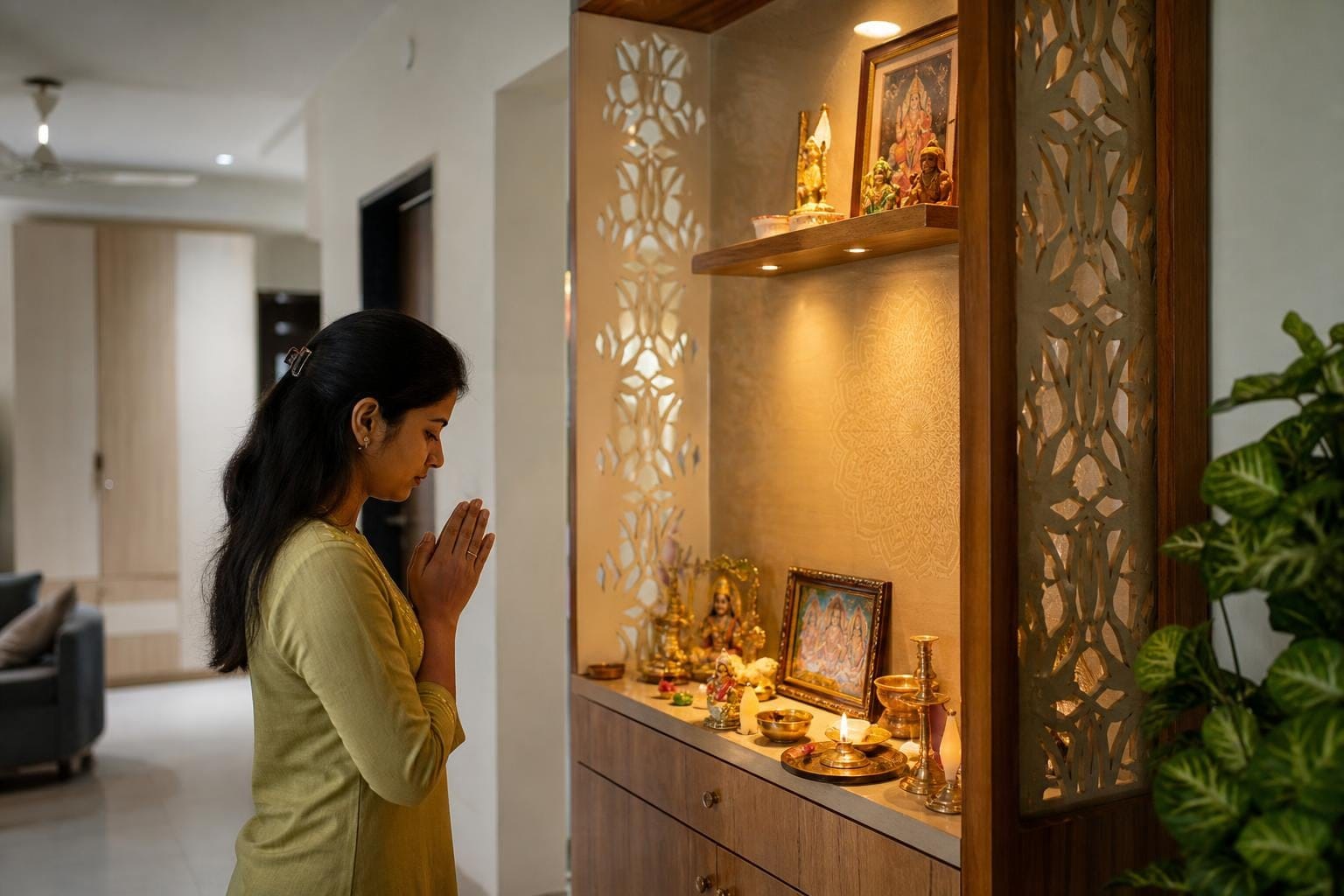
This is the most space-efficient pooja room with TV unit configuration. A floating TV panel anchors the wall, with a small backlit niche beside or just above it for deity idols. Everything stays off the floor, which makes the room feel larger than it is.
How it works: The TV mounts on a wall panel (typically laminated MDF or engineered wood), while a recessed niche with a floating shelf and warm LED strip serves as the mandir. The visual lightness is the whole point.
Materials: Laminated engineered wood or MDF for the panel. For Bangalore’s humidity, WPC (wood-plastic composite) is worth considering, it handles moisture better than standard MDF and doesn’t swell easily. Thickness usually stays between 12mm and 18mm.
Vastu note: Flexible placement since the niche can sit on the NE side of the wall while the TV occupies the center or SE side.
Cost estimate: ₹40,000–₹80,000 depending on finishes and backlighting.
Tradeoff: Storage is minimal. If you need space for incense holders, bells, and prayer books, this design won’t accommodate much. Also, the proximity of the pooja niche to the TV means incense smoke becomes a concern (more on that later).
2. Full-Wall Integrated Unit with Dedicated Mandir Section

Best for: 3BHK+ homes with 8–12 feet of uninterrupted wall space
This is the design most people picture when they think of a TV unit with pooja room. One continuous structure spans the wall, with the TV entertainment section flowing into a clearly defined mandir zone. Partitions, material changes, or jaali panels visually separate the sacred space without breaking the overall composition.
How it works: The TV section takes 60–70% of the width, with open and closed storage. The mandir section occupies the remaining 30–40%, typically elevated from the base, with its own dedicated lighting and often a different finish or material to signal the transition.
Materials: BWP (boiling water proof) or marine-grade plywood for the carcass is strongly recommended in Bangalore, where monsoon humidity can warp standard plywood within a few years. Understanding why BWP plywood matters will help you avoid costly replacements down the line. Laminates for the TV section, natural wood veneer or CNC-cut panels for the mandir.
Vastu note: If the wall faces east, this works beautifully. NE-facing mandir with the TV slightly to the south of it is the ideal configuration.
Cost estimate: ₹1.2 lakh–₹2.5 lakh. At the higher end, you’re looking at soft-close hardware, backlit panels, and premium veneers.
Tradeoff: Requires serious structural planning. A 10–25 kg TV plus storage needs reinforced mounting. Cable routing and electrical planning should happen before the unit is built, not after. This is exactly why 3D visualization before execution prevents expensive mid-project changes.
3. TV Unit with Sliding or Bifold Shuttered Mandir

Best for: Families who want to close off the pooja area when not in use
A shuttered mandir is one of the most practical pooja room with TV unit configurations for Indian families. Sliding or bifold doors conceal the mandir section, keeping the space tidy during daily life and revealing the sacred zone only during prayer times.
How it works: The TV sits in its standard position. Adjacent to it, a cabinet houses the mandir behind sliding shutters or bifold doors. When open, the doors tuck flat against the unit’s sides. When closed, the wall looks like a clean entertainment unit.
Materials: CNC-cut MDF or WPC panels for the shutter faces. The tracks and hinges matter enormously here. Cheap sliding hardware will jam within months. Commercial-grade soft-close mechanisms cost more upfront but prevent the frustration of doors that won’t slide properly. Ball-bearing drawer slides for any pull-out shelves inside the mandir.
Vastu note: Fully compliant. Shutters also address the Vastu concern about keeping deities visible while watching television, since you close the mandir during entertainment time.
Cost estimate: ₹80,000–₹1.5 lakh. Hardware quality is the main cost variable.
Tradeoff: The shutters add depth to the unit (usually 2–4 inches). In very compact rooms, that extra projection can feel bulky. Bifold doors need clearance to open fully.
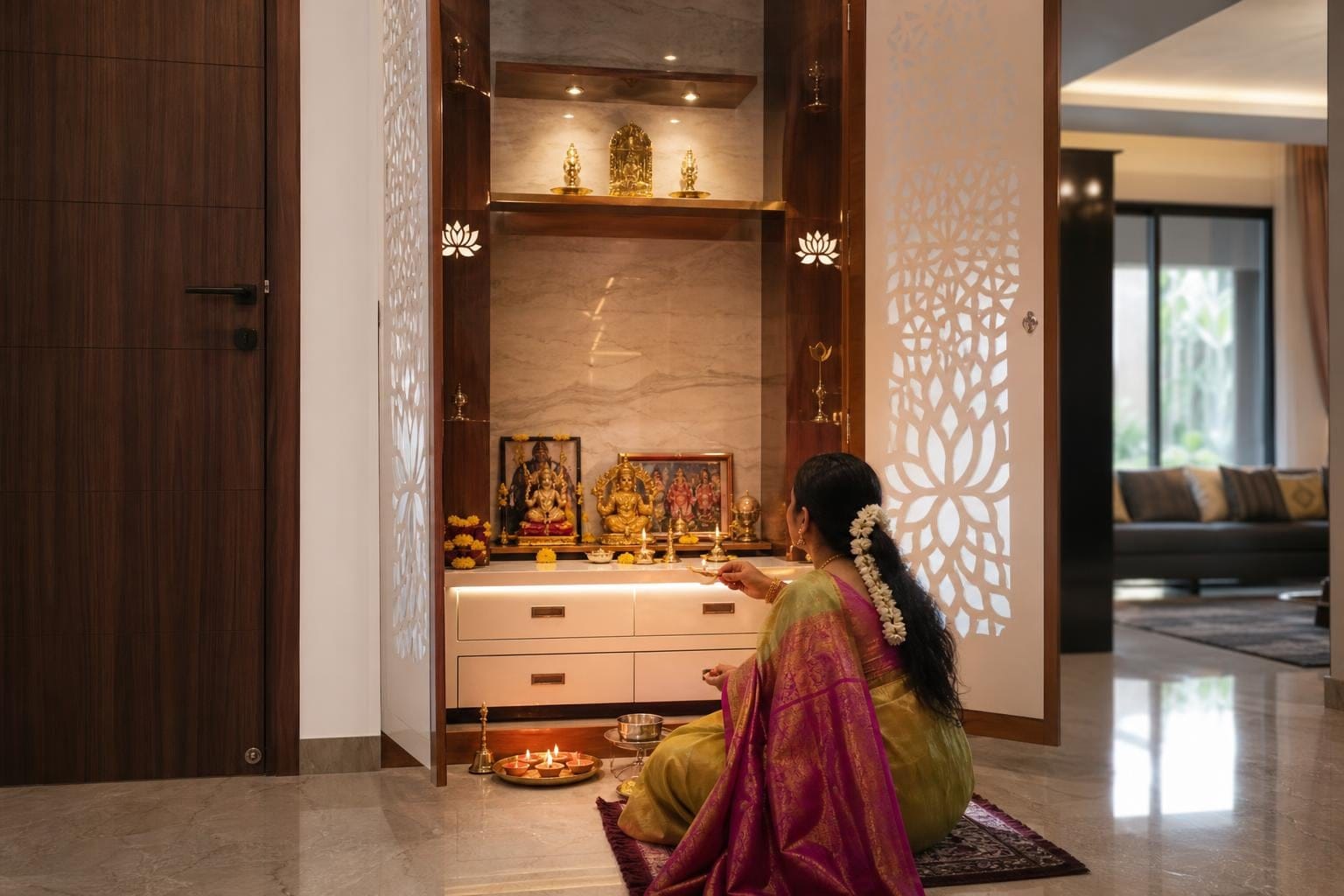
4. CNC Jali Panel Integrated Design

Best for: Families seeking a traditional-modern fusion aesthetic
CNC-cut jali panels are probably the single most popular element in modern Indian pooja room design. When integrated into a TV unit, they serve a dual purpose: they visually distinguish the mandir zone while allowing air circulation, which matters when you’re burning incense.
How it works: The TV sits in a standard wall-mounted or console configuration. The adjacent mandir section features CNC-cut jali panels, often with Om, Ganesh, or diya motifs, as the door or accent surface. Backlighting behind the jali creates a warm, layered glow.
Materials: MDF is the standard substrate for CNC jali work, but in humid environments, WPC is the safer choice. WPC costs more, but practitioners on forums report that MDF jali panels in moisture-prone areas start warping within two monsoon seasons. For accent walls around the unit, wall panelling options like fluted panels complement jali work nicely.
Vastu note: The perforated jali allows light and air to pass through, which aligns with Vastu principles about the mandir space feeling open rather than enclosed.
Cost estimate: ₹90,000–₹1.8 lakh. Intricate CNC patterns cost more per square foot.
Tradeoff: CNC jali panels collect dust inside the grooves. Cleaning them requires compressed air or a soft brush every couple of weeks. If your household burns incense daily, the tar residue in those grooves becomes a maintenance headache.
5. L-Shaped TV and Mandir Corner Unit

Best for: Large living rooms and villas with two adjacent walls available
An L-shaped configuration is one of the smartest layouts for separating the TV and mandir zones while keeping them architecturally connected. One arm of the L holds the TV and entertainment storage; the other arm, typically the shorter one, houses the mandir.
How it works: The TV unit runs along the primary wall. At the corner, the unit wraps onto the adjoining wall where the mandir section sits. This natural turn creates physical and visual separation without any partitions.
Materials: BWP plywood carcass with laminate or veneer finish. The corner joint needs reinforced framing since it bears structural load from both directions. Edge banding quality at the L-joint is a construction marker worth inspecting.
Vastu note: This is potentially the most Vastu-friendly configuration. If the corner sits in the east or northeast of the room, the mandir occupies the NE wall while the TV extends toward the SE, exactly what Vastu recommends. If you’re planning a 3BHK layout, this configuration works particularly well in larger living-dining areas.
Cost estimate: ₹1.5 lakh–₹2.5 lakh+. The corner fabrication adds complexity.
Tradeoff: Requires two walls with usable space, which rules out most compact apartments. The corner can become a dead zone if not designed with purpose (storage, display, or lighting).
6. Symmetrical Open-Shelving Design

Best for: Contemporary and Scandinavian-inspired homes that prioritize visual order
Symmetry is the organizing principle here. Open shelves flank both sides of the TV, with one side holding books and decor while the other serves as the pooja area. The balanced composition makes the sacred space feel designed rather than squeezed in.
How it works: A central TV panel with equal open-shelf modules on each side. The pooja side gets a slightly deeper shelf (8–10 inches instead of 6) to accommodate idols and a small lamp, with a subtle material or lighting distinction.
Materials: Engineered wood with matte laminates. The open-shelf format means every material choice is visible, so consistency in edge banding and finish quality matters more here than in any other design.
Vastu note: Moderately compliant. The open format ensures light reaches the mandir, which is positive, but placement depends on which wall the unit sits against.
Cost estimate: ₹70,000–₹1.2 lakh. Fewer doors and shutters reduce cost.
Tradeoff: No concealment. Everything is visible all the time, which means daily tidying. Dust accumulates on open shelves faster. And if you burn incense, the residue settles on every surface within the open unit.
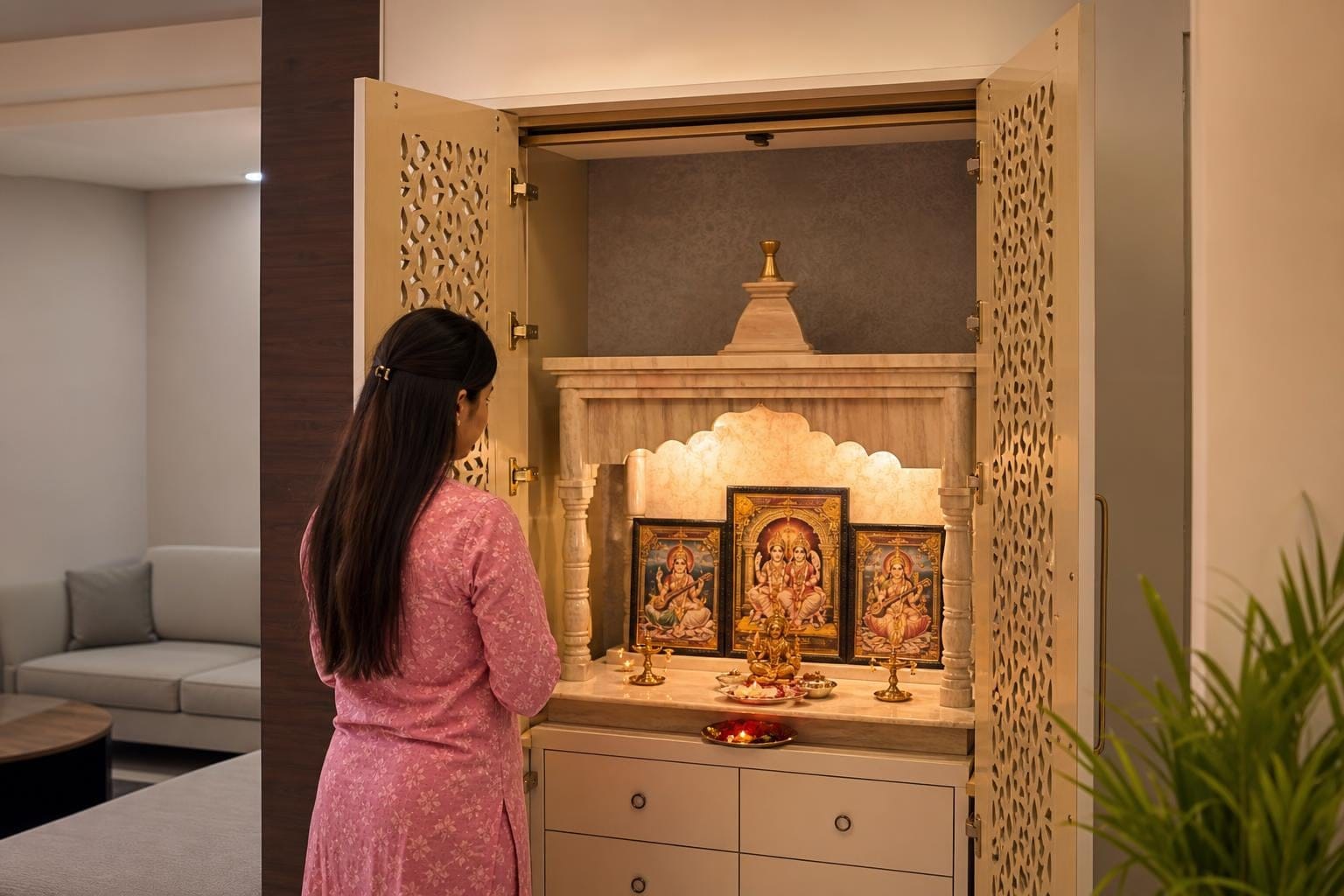
7. Hidden Mandir Cabinet (Concealed Behind Doors)

Best for: Minimalists and open-plan living spaces where visual clutter is the enemy
Faith can be deeply personal. A concealed mandir cabinet alongside a TV unit keeps idols, bells, and prayer items behind simple doors or panels that blend seamlessly with the entertainment unit. When closed, nobody would guess there’s a mandir inside.
How it works: A narrow vertical cabinet (12–18 inches wide) integrates into the TV unit structure. Inside, shelves hold idols and accessories. The door face matches the rest of the unit, sometimes with subtle jaali work as the only hint.
Materials: Same substrate as the main TV unit for visual consistency. Interior surfaces should be easy to clean, consider light-colored laminate inside the mandir cabinet so soot and oil stains are visible and wipeable.
Vastu note: Compliant, though some Vastu practitioners suggest the mandir should remain visible during prayers and opened to sunlight each morning.
Cost estimate: ₹80,000–₹1.5 lakh.
Tradeoff: The concealed format limits the mandir’s size. If you have large idols or need space for daily elaborate puja setups with multiple items, this design will feel cramped. Internal lighting is essential since the cabinet will be dark when closed.
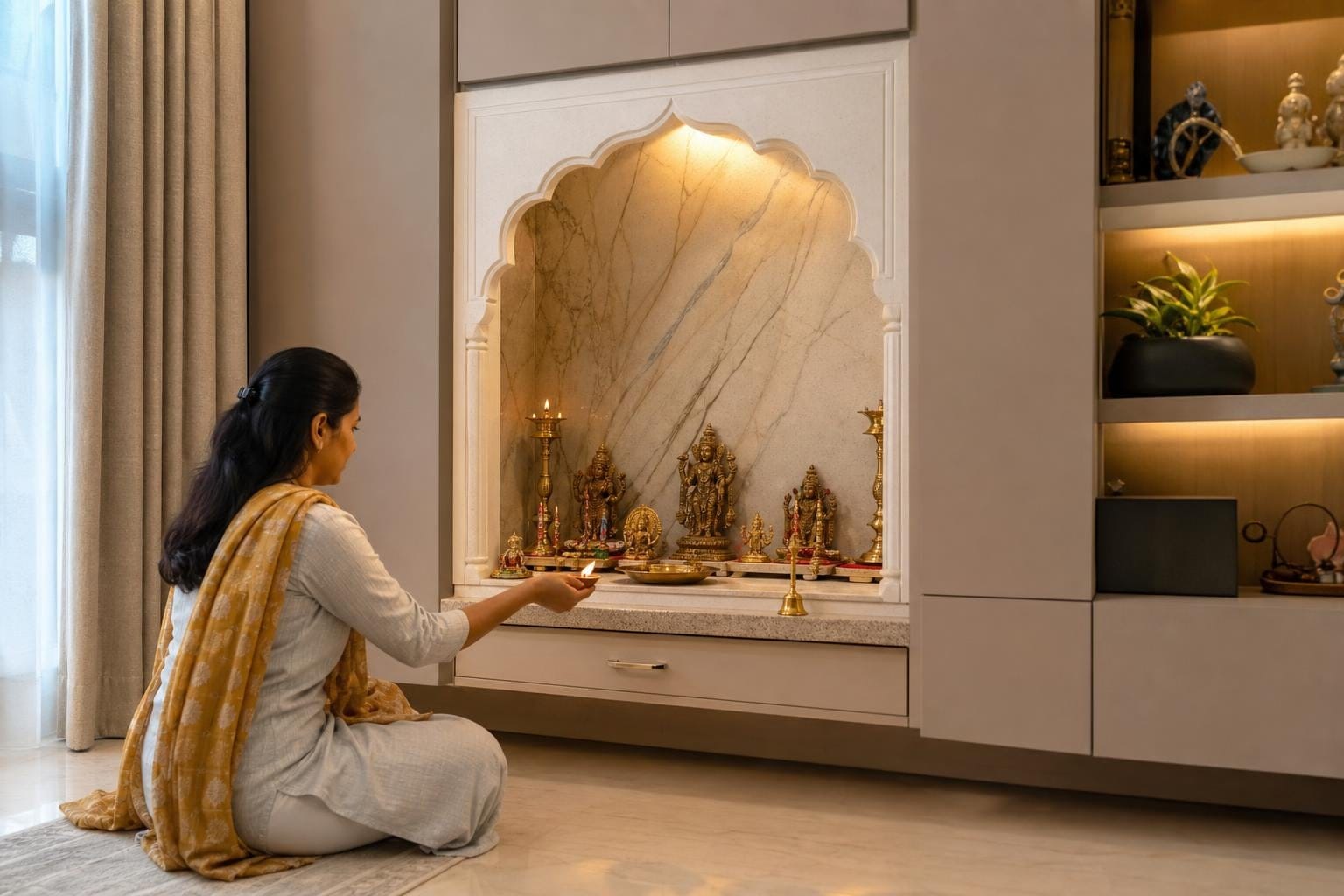
8. Marble-Accent Backlit Mandir Wall

Best for: Luxury apartments with premium budgets
This is the statement-maker. Marble, quartz, or stone-effect finishes visually distinguish the mandir from the TV unit, with subtle metal accents in gold, brass, or champagne tones. Warm LED backlighting behind the marble panel transforms the mandir into the room’s focal point.
How it works: The TV section uses standard materials (laminate, veneer). The mandir section features a marble or marble-effect backpanel with floating shelves for idols. The contrast between materials is intentional, it signals that the two zones serve different purposes. Getting the lighting right is critical here, since warm-toned LEDs set the devotional mood while the TV zone needs cooler, glare-controlled light.
Materials: Italian or Rajasthani marble for the backpanel (or PU-coated marble-effect laminates for lighter budgets). BWP plywood carcass. Metal inlay or brass trim detailing.
Vastu note: Light-colored marble (white, cream, pale gold) aligns with Vastu recommendations for pooja zones, which suggest white, pale yellow, or light blue surfaces.
Cost estimate: ₹1.8 lakh–₹3 lakh+. Real marble panels drive the cost significantly.
Tradeoff: Marble is heavy. The wall must be structurally capable of supporting it, especially in apartments with hollow-block walls. Marble also stains from oil lamps and turmeric if not sealed properly. A complementary false ceiling with cove lighting above the unit amplifies the visual impact.
9. Floor-Standing Traditional Wood Mandir Alongside Modern TV Unit

Best for: Joint families and homes where traditional aesthetics are non-negotiable
Sometimes the best design choice is to not force integration. A standalone traditional wooden mandir sits beside a modern TV cabinet, each as its own piece of furniture. The TV cabinet handles entertainment and storage, while the wooden mandir, often in teak or sheesham, serves as the primary worship space.
How it works: The TV unit is a standalone console or wall-mounted panel. A separate floor-standing or wall-mounted wooden mandir sits adjacent to it, connected visually through a shared wall color or a unifying shelf/ledge.
Materials: Classic sheesham and mango wood mandirs start around ₹25,000, while premium teak designs range from ₹50,000 to ₹1,20,000 for the mandir alone. Teak and sheesham handle Bangalore’s humidity well, which is a genuine advantage over engineered alternatives.
Vastu note: This approach makes Vastu compliance easiest since the mandir can be positioned independently at the ideal NE location. For more pooja unit placement ideas, there’s a dedicated guide worth reading.
Cost estimate: ₹1 lakh–₹2 lakh total (TV unit + standalone mandir).
Tradeoff: Takes up more wall space than a single integrated unit. The aesthetic mismatch between a carved traditional mandir and a sleek modern TV unit can feel jarring if not handled with a unifying design language (shared color palette, consistent lighting temperature).
10. Compact Corner Pooja Shelf with Angled TV Mount

Best for: Studio apartments and 1BHKs where every inch counts
When you’re working with 4 to 5 feet of wall space, compact floating shelves above or beside the TV are your best option. An angled TV mount maximizes viewing while a small pooja shelf claims the corner space that would otherwise go unused.
How it works: A corner-mounted or angled TV bracket points the screen toward the seating area. Above or beside it, one or two floating shelves with a backlit niche serve as the mandir. The entire setup stays wall-mounted, freeing all floor space.
Materials: Wall-mounted shelves in engineered wood or WPC. The bracket needs to be rated for your TV’s weight with margin. A complete 2BHK interior design guide covers more space-saving strategies for compact apartments.
Vastu note: Corner placement is moderately compliant. If the corner happens to be in the NE quadrant, it’s ideal.
Cost estimate: ₹30,000–₹60,000. This is the most budget-friendly integrated option.
Tradeoff: Minimal storage. No concealment options. The pooja area is visually small, which may not satisfy families accustomed to a more prominent mandir.
11. Backlit Acrylic Jali Design

Best for: Modern-premium apartments seeking a contemporary spiritual aesthetic
This is a current trend in 2026 pooja room with TV unit design. A backlit acrylic or MDF jali serves as the backdrop for the mandir section, creating a luminous, almost ethereal quality that stands apart from the entertainment zone.
How it works: The TV sits in a standard console or wall-mounted configuration. The mandir section features a laser-cut acrylic panel (3–6mm thick) with geometric or floral patterns, lit from behind by warm LED strips. The acrylic diffuses the light evenly, creating a soft glow.
Materials: Cast acrylic (not extruded, which cracks easier) for the jali panel. MDF or WPC for the surrounding frame. LED strip lights rated for continuous use (look for 50,000-hour lifespan ratings).
Vastu note: The warm light emanating from the jali creates a peaceful ambiance that supports Vastu’s emphasis on the pooja zone being well-lit and inviting.
Cost estimate: ₹1 lakh–₹1.8 lakh.
Tradeoff: Acrylic scratches easily. Cleaning requires microfiber cloths and non-abrasive solutions. The LED strips will eventually need replacement (typically after 5–7 years of daily use), so access panels behind the jali should be part of the design.
12. Modular Portable Mandir with TV Stand (Renter-Friendly)

Best for: Renters and people who relocate frequently
Modular, portable mandirs are easy to move and require no permanent fixtures, making them the practical choice for anyone who doesn’t own their apartment. Paired with a standalone TV stand or console, this setup offers flexibility without sacrificing devotion.
How it works: A freestanding TV console or stand holds the television and media equipment. A separate modular mandir (tabletop or wall-hung with removable adhesive mounts) sits on or beside the console. Some modular units even include built-in LED lighting powered by USB.
Materials: Engineered wood or WPC for the mandir. Avoid solid wood if you move frequently since it’s heavier and more prone to damage during transport.
Vastu note: Maximum flexibility. Since nothing is permanently installed, you can reposition both pieces to match Vastu directions in any new apartment.
Cost estimate: ₹25,000–₹60,000 for both pieces combined.
Tradeoff: The setup will never look as seamless as a custom-built integrated unit. Cable management is harder without built-in routing. And the visual separation between the mandir and TV can feel disconnected rather than intentional.
Vastu Guidelines for Combined TV and Pooja Units
Here’s the honest problem that most design guides skip: Vastu places the mandir in the northeast (Ishan corner) and recommends the TV in the southeast. Combining them on one wall creates a direct contradiction.
How to reconcile this: If your living room wall runs east-west, position the mandir section at the NE end of the wall and the TV toward the center or SE end. An L-shaped corner unit (Design #5) handles this most naturally since each arm can serve a different Vastu direction.
If your wall doesn’t align with these directions, here are practical workarounds:
- Idol facing: Ensure deities face east or west, regardless of the overall unit’s wall direction. The idol’s orientation matters more than the furniture’s position.
- Height placement: The mandir shelf should sit at or above chest height. Below the TV is not recommended since you shouldn’t look down at deities.
- Separation from bathrooms: No shared wall with a bathroom or toilet. This is one Vastu rule that even skeptics tend to follow for aesthetic reasons.
- Color palette: Use white, pale yellow, or light blue for the mandir section’s background. This is both a Vastu recommendation and a practical one, since light colors make the pooja area feel calm and distinct from the entertainment zone. For broader wall colour ideas, there’s a separate guide.
The bottom line: strict Vastu compliance with a combined TV-mandir unit requires some compromise. Most families prioritize the mandir’s direction and treat the TV’s position as secondary.
Materials That Last in Bangalore’s Climate
Material selection is where most pooja room with TV unit designs succeed or fail over time. Bangalore’s monsoon humidity, combined with daily incense and diya use, creates conditions that test every material choice.
Carcass (the structural body):
BWP (boiling water proof) or marine-grade plywood is the standard for any unit in Bangalore. Standard commercial plywood will warp within two to three monsoon seasons in apartments with poor cross-ventilation. BWP costs 30–40% more but eliminates the replacement cycle.
Shutter and panel faces:
For the TV section, HPL (high-pressure laminate) outperforms LPL (low-pressure laminate) in durability and scratch resistance. For the mandir section, natural wood veneers or CNC-cut panels look warmer but require sealing against oil and soot stains.
CNC jali panels:
MDF is the default, but WPC comes into the picture when humidity is a concern. Practitioners report on forums that WPC doesn’t swell and handles moisture better. It costs more, but people choose it to avoid replacement later. Standard thickness is 12mm to 18mm.
Hardware:
This is the construction quality marker most buyers overlook. Soft-close hinges prevent slamming (important for shuttered mandirs where vibration could topple idols). Ball-bearing drawer slides for pull-out shelves last years longer than roller slides. Commercial-grade hardware from established brands is worth the premium.
Fire-retardant finishes:
If you burn diyas or oil lamps near the unit, fire-retardant laminates on the surfaces closest to the flame zone are a sensible precaution, not a luxury.
The Incense and Electronics Problem
Nobody talks about this enough: incense smoke contains tar, and when drawn into electronic components, it coats the internals with a sticky residue. Practitioners on Quora have shared that TV sets in rooms with daily incense burning show visible tar buildup on vents within six months.
The solution isn’t to stop burning incense. It’s to design around it.
Ventilation gaps: Build a 2–3 inch gap between the mandir and TV sections. This gap, ideally backed by a mesh-covered opening to the wall cavity, allows smoke to disperse rather than concentrate around the TV.
Electric alternatives: LED diyas and flameless incense diffusers eliminate the tar problem entirely. Modern LED diyas are remarkably convincing and remove both the fire hazard and the air quality concern.
Soot-resistant surfaces: Matte-finish laminates show soot stains less than glossy ones, and they’re easier to wipe clean. Light-colored interiors inside the mandir help you spot and clean residue before it accumulates.
Directional airflow: If the room has a ceiling fan, position the unit so the fan’s airflow pushes smoke away from the TV and toward a window. A small exhaust vent near the mandir section is another practical solution in compact apartments.
For more TV unit design ideas that account for real-world usage, there’s a dedicated guide.
Cost Guide: Budget to Premium
Here’s what a pooja room with TV unit actually costs across three tiers in 2026, based on market data from multiple sources.
Budget Tier: ₹40,000–₹80,000
- Construction: Carpenter-built or basic modular
- Carcass: Standard commercial plywood
- Finish: LPL laminate, basic edge banding
- Hardware: Standard hinges and slides
- Mandir style: Open niche or simple shelf
- Best for: Rentals, first-time homeowners, temporary setups
Mid-Range Tier: ₹80,000–₹1.5 Lakh
- Construction: Modular or semi-custom
- Carcass: BWR (boiling water resistant) plywood
- Finish: HPL laminate, CNC-cut MDF or WPC jali panels
- Hardware: Soft-close hinges, basic ball-bearing slides
- Mandir style: Shuttered cabinet with backlighting
- Best for: Most 2BHK and 3BHK apartments
Premium Tier: ₹1.5 Lakh–₹2.5 Lakh+
- Construction: Fully custom, bespoke design
- Carcass: BWP/marine-grade plywood
- Finish: Premium veneers, marble accents, acrylic jali, metal inlays
- Hardware: Commercial-grade soft-close hinges, full-extension ball-bearing slides
- Mandir style: Dedicated section with independent lighting, ventilation, and concealment
- Best for: Premium apartments, villas, families investing for the long term
Modular units starting at ₹3,250/sq. ft. (MDF with SF laminate and CNC shutters) represent the entry point for branded fabrication. Custom bespoke pieces from quality studios range from ₹80,000 to ₹2,50,000 depending on complexity and materials.
To understand how this fits into a broader home budget, the interior design cost guide for Bangalore breaks down costs across all rooms and categories.
Why Custom-Built Beats Modular for This Combo
A TV unit with pooja space is one of the few furniture items where custom fabrication genuinely outperforms off-the-shelf modular options. Here’s why.
Structural engineering matters. A TV weighing 10–25 kg plus storage loads requires reinforced mounting points tailored to your specific wall type (solid concrete, hollow block, or drywall). Modular units use standardized mounting that may not match your wall’s load capacity.
Cable routing and electrical planning. A combined unit needs power points for the TV, set-top box, LED backlighting for the mandir, and possibly a small ventilation fan. Custom units route cables internally, with access panels for maintenance. Modular units leave cables visible or force awkward workarounds.
Material matching between zones. The transition from entertainment to sacred space needs to feel deliberate. A custom designer can use the same substrate with different face finishes, maintaining structural consistency while creating visual distinction. Modular catalogs rarely offer this level of coordination.
3D visualization prevents mistakes. With a combined TV-mandir unit, proportions are everything. An idol shelf that’s 2 inches too narrow or a TV panel that overwhelms the mandir visually can ruin the entire composition. Being able to preview designs in 3D before construction begins eliminates these costly errors.
FAQ
Can I combine a TV unit and mandir in a small 2BHK apartment?
Yes. Designs like the floating TV with side pooja niche (Design #1) or the compact corner shelf (Design #10) work in spaces as narrow as 4–5 feet. Combining both into one unit can save 20–30% wall space compared to separate installations. The key is choosing a wall-mounted configuration that frees floor space entirely.
What Vastu direction should a TV-mandir combo face?
Vastu ideally places the mandir in the northeast and the TV in the southeast. When combining them on one wall, position the mandir section at the NE end of the wall. If your wall doesn’t align with these directions, prioritize the idol facing east or west, which most Vastu practitioners consider the more important factor.
What materials work best for humid cities like Bangalore?
BWP or marine-grade plywood for the carcass, HPL laminate for surfaces, and WPC for jali panels. Standard MDF warps in Bangalore’s monsoon humidity. Teak and sheesham are excellent for standalone mandir elements since they naturally resist moisture.
How much does a custom TV unit with pooja space cost in 2026?
Budget options (carpenter-built, standard plywood) range from ₹40,000 to ₹80,000. Mid-range modular or semi-custom units cost ₹80,000 to ₹1.5 lakh. Premium custom-built units with marble accents, BWP plywood, and commercial hardware range from ₹1.5 lakh to ₹2.5 lakh or more.
Is it safe to burn incense near the TV?
Not without precautions. Incense smoke contains tar that coats electronic internals over time. Maintain a 2–3 inch ventilation gap between the mandir and TV sections, consider electric diyas as a safer alternative, and ensure the room has adequate airflow. A small exhaust vent near the mandir section is the most effective solution.
Do I need a separate pooja room, or can I combine it with the TV unit?
In apartments under 1,200 sq. ft., a combined pooja room with TV unit is the practical choice. Most urban Indian families successfully integrate both functions. The important thing is creating visual and material distinction between the two zones so the mandir feels intentional rather than like an afterthought.
How do I maintain a combined TV and mandir unit?
Clean the mandir section weekly to prevent oil and soot buildup. For CNC jali panels, use compressed air or a soft brush to clear dust from grooves. Wipe laminate surfaces with a damp microfiber cloth. Check hardware (hinges, slides) every six months and tighten any loose screws. If you use oil lamps, inspect the surrounding laminate for heat damage quarterly.
Can I get a home mandir in marble or stone finish?
Absolutely. Marble-accent mandir designs (Design #8) are among the most popular premium options in 2026. Both real marble and PU-coated marble-effect laminates work. Real marble needs sealing to prevent turmeric and oil stains, and the wall must support its weight. For dedicated marble mandir options, there’s a detailed guide on home mandir designs in marble.