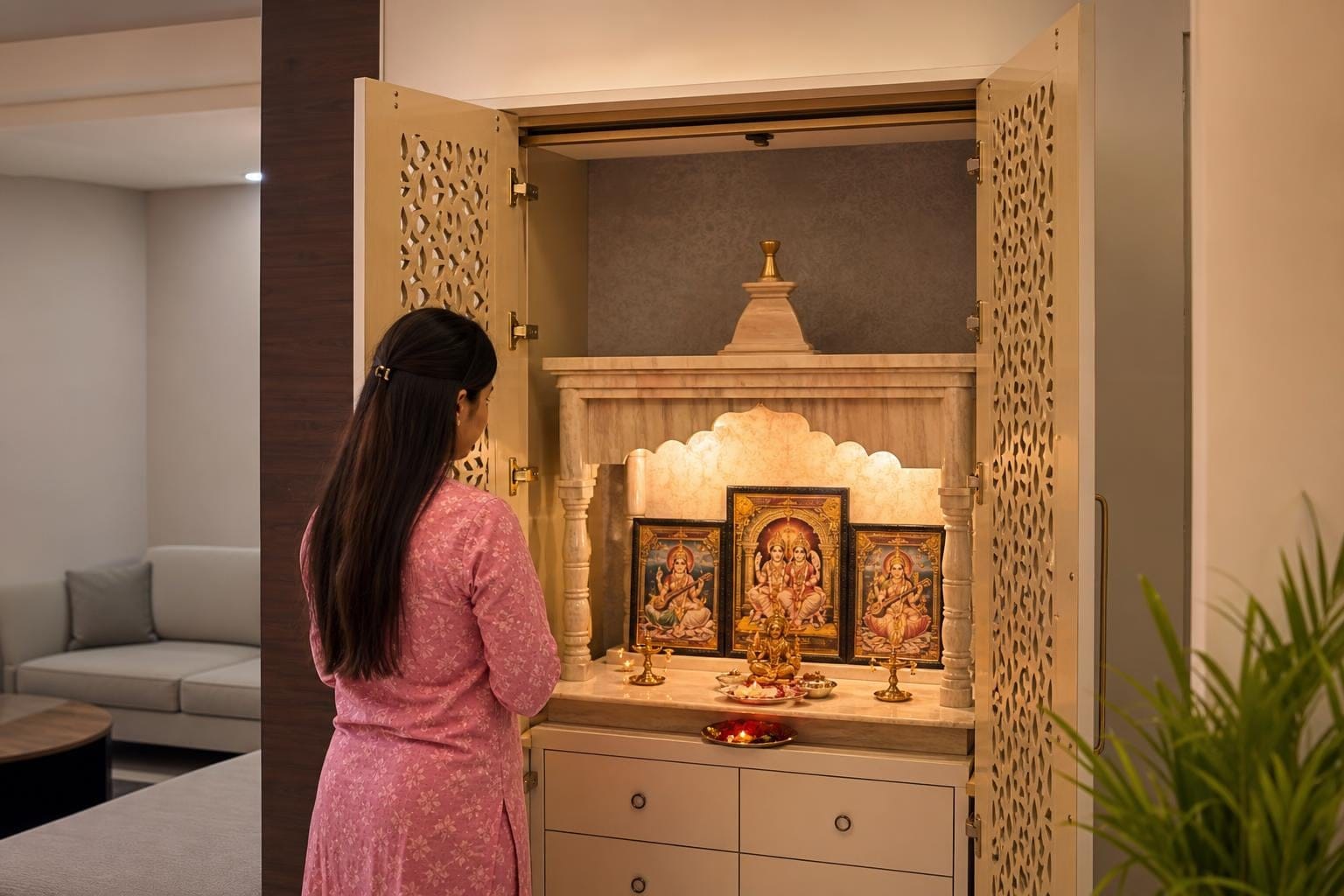
Pooja Room Door Design: 17 Ideas, Costs & Vastu (2026)
TL;DR
The right pooja room door design balances aesthetics, Vastu compliance, and practical durability. Wooden doors (teak, sheesham, plywood) remain the most popular and Vastu-approved choice, ranging from ₹8,000 to ₹50,000+. Glass and combination doors suit modern apartments, while sliding and pocket doors solve space constraints. This guide covers 17 distinct designs with real price ranges, material tradeoffs, maintenance realities, and Vastu guidelines so you can make a confident decision.
Planning a pooja room is deeply personal. The layout, the idol placement, the lighting, the colors: every choice carries meaning. But the one element that ties it all together, the threshold between the everyday and the sacred, is the door.
A pooja room door does more than open and close. It contains incense smoke, blocks dust from settling on idols, provides acoustic privacy during prayer, and sets the visual tone for the entire space. Get it wrong, and you’ll deal with warped panels, sticky residue buildup, or a design that clashes with the rest of your home.
Most online guides stop at pretty pictures. This one won’t. For every design below, you’ll find the material, a realistic price range in INR, Vastu compliance notes, who it’s best for, and the honest maintenance reality. If you’re budgeting for a full home project, our interior design cost guide provides broader context.
Quick Vastu Reference
Before browsing designs, know these non-negotiables from Vastu Shastra:
| Vastu Rule | Recommendation |
|---|---|
| Door direction | East, North-East, or North facing |
| Opening direction | Inward (draws positive energy in) |
| Number of panels | Double doors preferred; single panel considered inauspicious |
| Material | Wood strongly preferred; avoid full-metal, aluminum, or PVC |
| Minimum size | 2 feet 6 inches wide, 7 feet tall |
| Small rooms (5–6 ft wide) | Double shutters that open the full width |
At-a-Glance Comparison Table
| # | Door Type | Material | Price Range (₹) | Best For | Vastu OK? | Maintenance |
|---|---|---|---|---|---|---|
| Group A: Wooden Doors | ||||||
| 1 | Hand-Carved Teak Double Door | Solid teak | 25,000–50,000+ | Villas, dedicated rooms | Yes | Medium |
| 2 | CNC-Cut Wooden Jaali Door | Plywood/MDF | 10,000–20,000 | Modern apartments | Yes | Medium-High |
| 3 | Sheesham with Brass Inlay | Sheesham + brass | 20,000–40,000 | Heritage interiors | Yes | Medium |
| 4 | Simple Panelled Wood Door | Plywood/solid wood | 8,000–15,000 | Minimalist homes | Yes | Low |
| 5 | Wooden Sliding Door | Plywood/teak veneer | 12,000–25,000 | Narrow corridors | Yes (with caveats) | Medium |
| Group B: Glass & Combination Doors | ||||||
| 1 | Frosted Glass with Wood Frame | Glass + wood | 15,000–30,000 | Contemporary apartments | Partially | Low |
| 2 | Etched Glass with Sacred Symbols | Toughened glass | 10,000–20,000 | Modern pooja niches | Partially | Low |
| 3 | Fluted Glass Door | Fluted glass + frame | 12,000–25,000 | Living room adjacent | Partially | Low |
| 4 | Stained Glass in Wood Frame | Art glass + wood | 20,000–45,000 | Statement pooja rooms | Yes | Medium |
| 5 | Back-Painted Glass Door | Painted glass | 15,000–30,000 | Bold contemporary | Partially | Low |
| Group C: Space-Saving & Modern Doors | ||||||
| 1 | Bi-Fold Accordion Door | Plywood/MDF | 10,000–20,000 | Alcoves, small niches | Yes | Medium |
| 2 | Sliding Glass Door (Track) | Glass + metal track | 15,000–30,000 | Apartment living rooms | Partially | Medium |
| 3 | Pocket Door | Plywood + cavity wall | 20,000–35,000 | Seamless modern homes | Yes | Low (once installed) |
| 4 | Flush Laminate with CNC Cutwork | Laminate + MDF | 5,000–12,000 | Budget-friendly | Yes | Low |
| Group D: Decorative & Statement Doors | ||||||
| 1 | Bell-Accented Wood Door | Wood + brass bells | 15,000–30,000 | Traditional homes | Yes | Medium-High |
| 2 | Arch-Top Double Door | Teak/hardwood | 25,000–50,000+ | South Indian temple style | Yes | Medium |
| 3 | Metal-Framed Jaali with Glass | Metal + glass | 18,000–35,000 | Industrial-contemporary | No (full metal) | Low |
Prices include basic material and fabrication; installation adds ₹2,000–5,000 depending on complexity.
Group A: Wooden Pooja Room Doors
Wood remains the gold standard for pooja room door design. It satisfies Vastu requirements, ages beautifully, and handles the daily assault of incense smoke better than most alternatives.
1. Hand-Carved Teak Double Door

Best for: Villas and independent homes with dedicated pooja rooms.
This is the temple-grade classic. Solid teak with hand-carved motifs of deities, florals, or geometric mandalas. According to the Indian Institute of Wood Science, teak’s natural dimensional stability helps doors resist warping in humid climates, which makes it the preferred timber for spaces exposed to daily agarbatti smoke and seasonal monsoon moisture.
- Material: Solid teak wood
- Price range: ₹25,000–50,000+ (plain solid teak starts at ₹1,500–3,500 per sq ft; add 30–60% for moderate carving)
- Vastu: Fully compliant. Double panel, wood, inward opening.
- Maintenance: Seasonal teak oil application. Inspect for termite activity once a year. Premium polish (melamine or PU) adds ₹4,000–10,000 per door but dramatically improves longevity.
Tradeoffs: Expensive. Heavy doors need 3–4 heavy-duty hinges and a firmly anchored frame. Not suited for wall-mounted pooja units or compact apartment niches.
Real-world note: Flipkart buyer reviews reveal a common problem with mass-market “teak” doors: material substitution. One buyer reported, “Wood not magokani, they used other tree. If we place steel it’s broken.” This reinforces why transparent material specifications matter. Always ask for the timber species in writing before paying.
2. CNC-Cut Wooden Jaali Door

Best for: Modern apartments wanting a traditional feel at a lower cost.
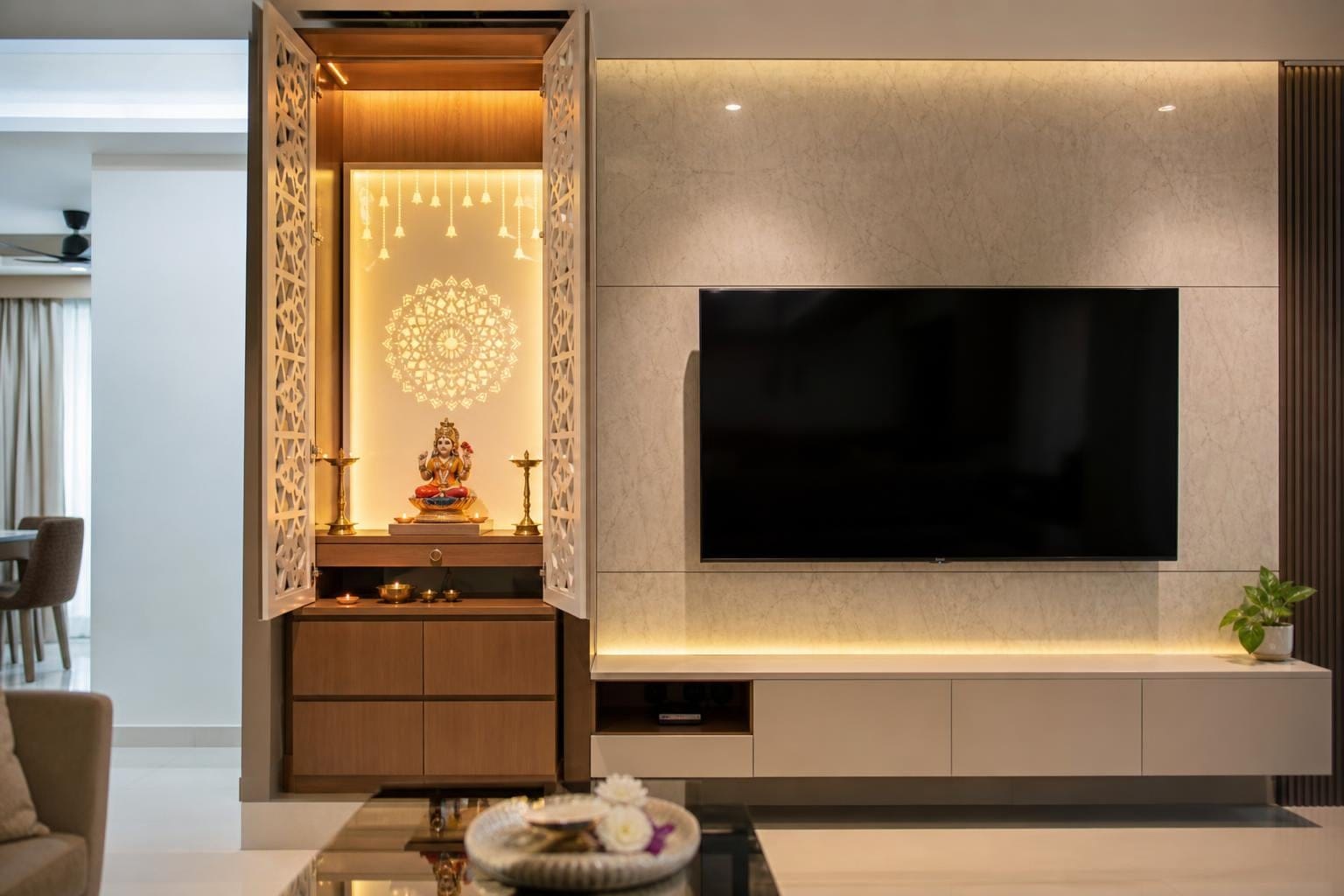
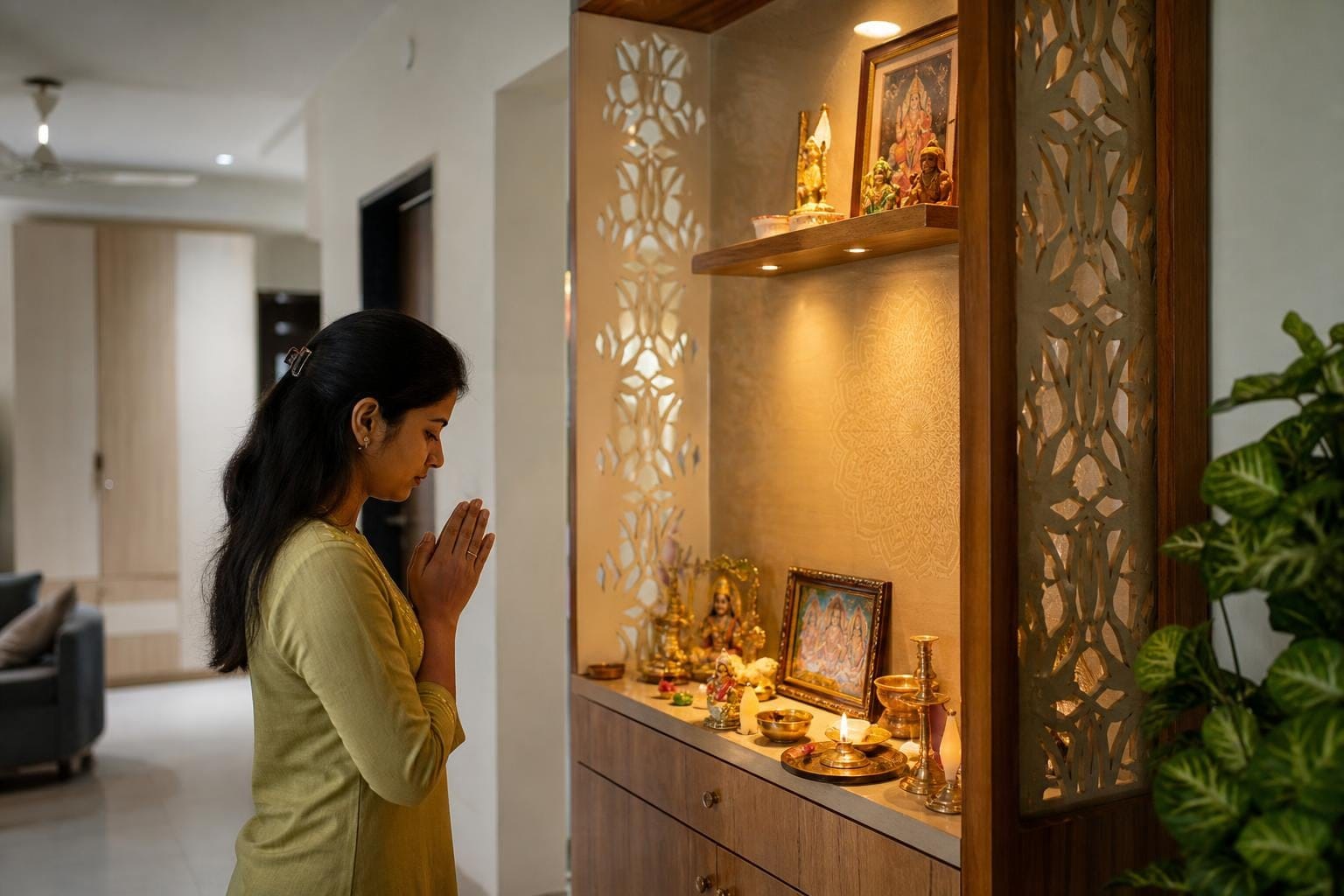
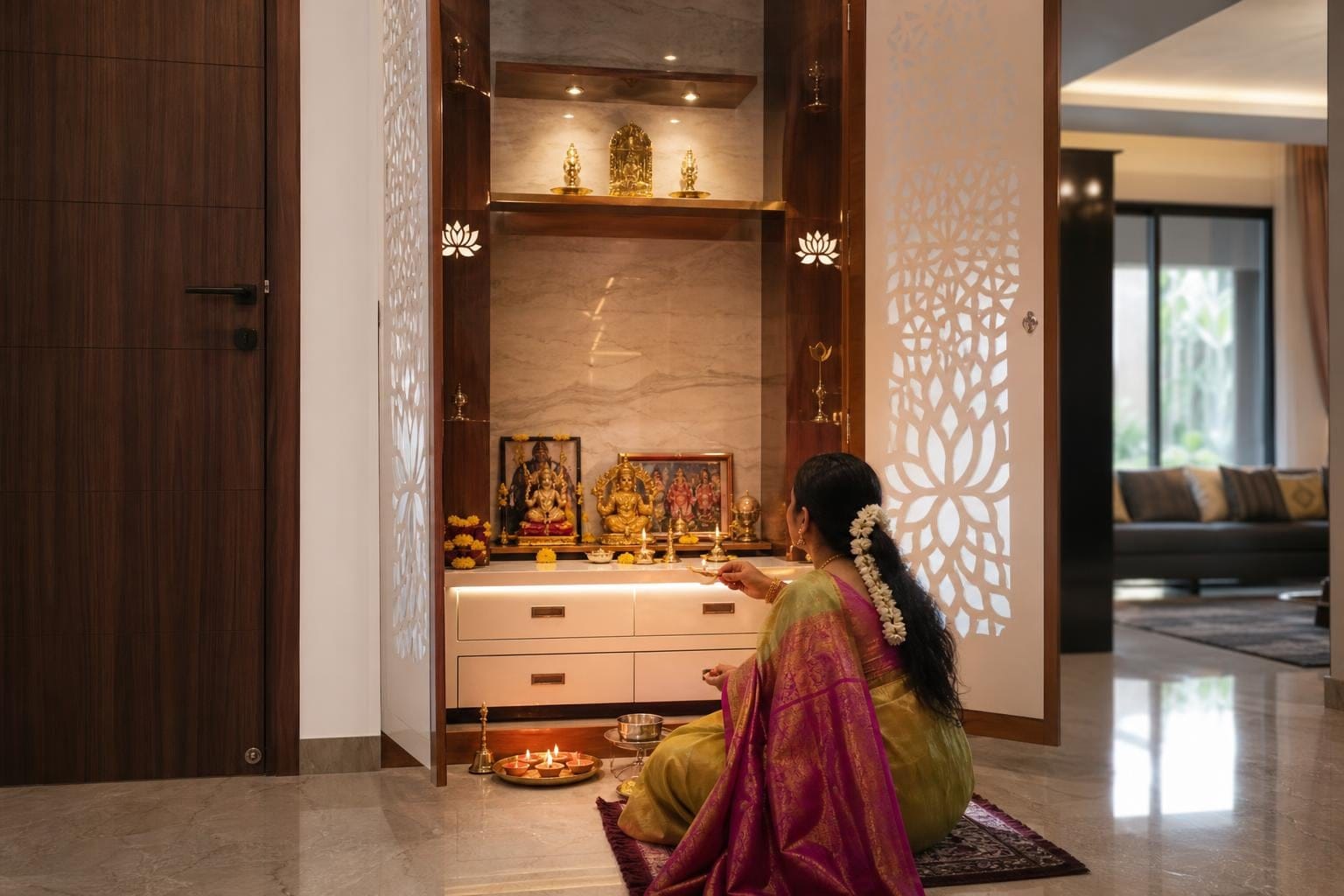
CNC (Computer Numerical Control) routing creates intricate jaali patterns with machine precision. You get the look of hand-carved latticework at a fraction of the cost and time. Patterns range from classic lotus and peacock motifs to geometric Islamic-inspired designs.
- Material: Plywood or MDF base with CNC-cut overlay
- Price range: ₹10,000–20,000 (CNC cutting alone runs ₹80–150 per sq ft for straightforward patterns)
- Vastu: Compliant when executed in wood or plywood.
- Maintenance: The edges of patterned cutouts catch dust easily and need regular cleaning. An architect on Houzz noted this is the single biggest drawback of jaali doors.
Tradeoffs: Open jaali patterns leak dust and sound. If your pooja room is near the living room TV, consider adding an acrylic backer behind the jaali to reduce both problems without losing the visual effect.
Tip: For humid cities like Bangalore, specify BWR-grade (IS 303) or BWP-grade plywood for the base panel. MR-grade plywood works in dry interior zones, but humidity fluctuations during monsoons can cause swelling at CNC-cut edges.
3. Sheesham Wood Door with Brass Inlay

Best for: Heritage and classical Indian interiors.
Sheesham (Indian rosewood) has a rich, dark grain that pairs naturally with brass inlay work. The brass elements, whether strip inlays, medallions, or border detailing, catch light beautifully and add an unmistakable temple character.
- Material: Sheesham wood + brass inlay
- Price range: ₹20,000–40,000 (brass inlay alone adds ₹5,000–25,000 depending on complexity)
- Vastu: Fully compliant. Brass is considered auspicious.
- Maintenance: Brass tarnishes over time, especially near incense. Clean with lemon-salt paste quarterly, or apply a clear lacquer coating to reduce oxidation.
Tradeoffs: Sheesham is dense and heavy. Ensure your wall frame can handle the weight. Genuine sheesham is increasingly hard to source due to regulation, so verify certification.
4. Simple Panelled Wood Door

Best for: Minimalist interiors and Scandinavian-inspired homes.
Not every pooja room needs ornate carving. A clean, two-panelled wood door with a simple recessed or raised panel design integrates seamlessly into modern apartment corridors. The visual restraint lets the pooja room interior, the marble shelf, the lighting, the idols, take center stage.
- Material: Plywood with veneer finish or solid wood
- Price range: ₹8,000–15,000
- Vastu: Compliant. Two panels are recommended over a single panel for visual symmetry and Vastu balance.
- Maintenance: Low. Wipe down weekly. A PU-coated finish resists incense residue well.
Tradeoffs: Can look plain if the surrounding wall treatment doesn’t complement it. Consider pairing with a coordinated false ceiling design inside the pooja room for a polished look.
5. Wooden Sliding Door

Best for: Apartments with narrow corridors where a swing door would block the walkway.
Sliding pooja room door designs save swing clearance, making them ideal for 2BHK and 3BHK apartments where the pooja niche sits along a passage. The door glides on an overhead or floor-mounted track, and you can choose between exposed barn-style hardware or a concealed track.
- Material: Plywood or teak veneer on a timber frame
- Price range: ₹12,000–25,000
- Vastu: Wood material is compliant. The “inward opening” rule gets debated since sliders move laterally. Most Vastu consultants accept sliders as long as the material is wood and placement direction is correct.
- Maintenance: Track maintenance is the real issue. Dust and oil from nearby cooking or incense gunk up the motion over time. A practitioner working on Kerala projects noted that “barn sliders need a clean full-length track, and dust and coastal grit are enemies, so regular wiping is a must.”
Tradeoffs: Sound isolation is weaker than a fully sealed hinged door. If chanting privacy matters, add felt seals along the slider edges. The mechanism comparison parallels the sliding vs. hinged wardrobe debate, where the same space-vs-seal tradeoff applies.
Group B: Glass & Combination Doors
Glass pooja room doors bring light, openness, and a modern edge. Vastu traditionalists prefer wood, but glass-and-wood combinations are widely accepted as a practical middle ground.
1. Frosted Glass with Wood Frame
Best for: Contemporary apartments wanting natural light flow into the pooja area.
A frosted glass panel set in a solid wood frame gives you privacy without complete visual blockage. The diffused light creates a serene glow, especially when combined with an LED backlight behind the idols.
- Material: Frosted toughened glass + wood frame
- Price range: ₹15,000–30,000
- Vastu: The wood frame satisfies the material rule. Pure glass without a wood element is frowned upon by strict Vastu practitioners.
- Maintenance: Low. Ammonia-free glass cleaner and a microfiber cloth. Frosting hides fingerprints better than clear glass.
Tradeoffs: Less acoustic privacy than solid wood. Incense smoke doesn’t damage glass, but the residue can leave a yellowish film over months, so wipe the interior surface regularly.
2. Etched Glass with Sacred Symbols

Best for: Modern pooja niches in living rooms or open-plan apartments.
Laser or acid-etched glass with Om, lotus, Ganesha, or diya motifs creates a stunning visual statement. The etching is permanent and doesn’t peel or fade.
- Material: Toughened glass (etched or laser-engraved)
- Price range: ₹10,000–20,000 for standard sizes
- Vastu: Acceptable when framed in wood. The sacred imagery is considered auspicious.
- Maintenance: Very low. The etch texture can trap a thin layer of dust; a soft brush during weekly cleaning handles it.
Tradeoffs: Limited sound insulation. If someone is watching TV in the adjacent living room, prayer time won’t feel private. Also, purely glass doors without a wood frame may not satisfy Vastu requirements.
If your pooja space opens directly onto the living area, consider how the door integrates with the broader living room interior design.
3. Fluted Glass Door

Best for: Pooja rooms adjacent to high-traffic areas where fingerprints are a constant issue.
Fluted (reeded) glass has vertical ridges that diffuse light while masking smudges. It’s the same material trending in wall panelling designs, and the visual language carries across beautifully when used on a pooja door.
- Material: Fluted glass + wood or metal frame
- Price range: ₹12,000–25,000
- Vastu: Same as other glass options. A wood frame helps.
- Maintenance: The ridges are surprisingly easy to clean with a damp microfiber cloth. Better fingerprint resistance than flat glass.
Tradeoffs: The fluted texture limits the clarity of any backlit elements inside the pooja room. If you’re planning elaborate interior lighting, clear or frosted glass shows it off better.
4. Stained Glass Panels in Wood Frame

Best for: Homeowners who want their pooja door to be a standalone art piece.
Stained glass panels in deep reds, ambers, blues, and greens create a cathedral-like atmosphere when light passes through. Set in a solid wood frame, this is one of the most visually dramatic pooja room door designs available.
- Material: Handcrafted stained glass + hardwood frame
- Price range: ₹20,000–45,000
- Vastu: Compliant. Wood frame and sacred color associations.
- Maintenance: Medium. Stained glass panels are fragile at joints. Avoid slamming. The lead came (joint material) needs occasional inspection.
Tradeoffs: Expensive for the size. Fragile compared to toughened glass. Not ideal for homes with young children who might bump into it.
5. Back-Painted Glass Door
Best for: Ultra-contemporary homes going for a bold color pop.
A back-painted glass door in gold, white, maroon, or deep green gives a sleek, reflective surface that’s easy to clean and visually striking. The paint is applied to the reverse side, so the front surface is smooth, glossy glass.
- Material: Back-painted toughened glass
- Price range: ₹15,000–30,000 (custom glass doors can go up to ₹1,00,000+ for large or complex designs)
- Vastu: Partial compliance only. Best paired with a wood frame element.
- Maintenance: Low. Glass cleaner and cloth. The paint is protected on the back, so it doesn’t chip from front contact.
Tradeoffs: Feels more “kitchen” or “wardrobe” than sacred to some homeowners. The glossy surface shows every water drop and fingerprint in certain lighting angles. No breathability, unlike jaali designs.
Group C: Space-Saving & Modern Doors
Apartment living in Bangalore, Mumbai, and other metros demands creative solutions. These pooja room door designs prioritize compact footprints without sacrificing beauty.
1. Bi-Fold / Accordion Door
Best for: Alcove-style pooja units where you want the door to fold completely flat against the wall.
A bi-fold door splits into two or more hinged panels that fold onto each other, clearing the entire opening. Perfect for wall-mounted or niche pooja rooms where a traditional swing door would block a corridor.
- Material: Plywood, MDF, or solid wood panels
- Price range: ₹10,000–20,000
- Vastu: Compliant when made of wood. The folding mechanism is not addressed in traditional Vastu texts, so most consultants accept it.
- Maintenance: Hinges bear more stress than on a standard door. Specify commercial-grade piano hinges or concealed hinges with soft-close mechanisms. Cheap hinges sag within a year.
Tradeoffs: The folded panels still occupy some depth against the wall. Dust settles between the folds. The folding action isn’t as smooth as sliding, especially with heavy wood panels.
2. Sliding Glass Door (Track-Mounted)

Best for: Modern apartment living rooms with an integrated pooja shelf.
A track-mounted glass slider (frosted or etched) lets you reveal or conceal the pooja area smoothly. When open, the door tucks behind the adjacent wall section.
- Material: Toughened glass + aluminum or wood track
- Price range: ₹15,000–30,000
- Vastu: Glass material is a partial concern. Wood track or frame improves compliance. Avoid full-aluminum framing if Vastu matters to you.
- Maintenance: Track cleaning is essential. A practitioner who works on coastal and humid-climate projects warned that “sound isolation is weaker than a fully sealed hinged door, so consider felt seals if chants travel.”
Tradeoffs: Aluminum tracks can look industrial. Glass sliders can feel cold and clinical without warm lighting inside the pooja room. Consider adding an LED backlight kit (₹2,000–6,000) to create warmth.
3. Pocket Door

Best for: Seamless modern homes where you want the door to vanish entirely into the wall.
A pocket door slides into a cavity built within the wall itself, disappearing completely when open. It’s the cleanest possible look, leaving nothing but a neat opening.
- Material: Plywood or MDF panel inside a steel or wood pocket frame
- Price range: ₹20,000–35,000 (includes cavity wall construction)
- Vastu: Compliant when the door panel is wood.
- Maintenance: Low once installed properly. But the upfront planning is critical.
Tradeoffs: Pocket walls need careful planning. Electrical conduits must avoid the cavity, and you sacrifice wall thickness. This is not a retrofit option; it needs to be planned during the construction or major renovation phase. A Kerala-based practitioner emphasized that “electrical conduits must avoid the cavity, and you’ll sacrifice a bit of wall thickness.”
4. Flush Laminate Door with CNC Cutwork

Best for: Budget-conscious homeowners who want a clean, modern look.
A flush door with a laminate finish and selective CNC-cut patterns (a small Om symbol, a border motif, or corner detailing) delivers the modern pooja room door aesthetic at the lowest price point.
- Material: MDF or commercial plywood with laminate finish
- Price range: ₹5,000–12,000
- Vastu: Compliant. Wood-based material, and you can specify double shutters even at this budget.
- Maintenance: Low. Laminate resists moisture and stains better than raw wood. Wipe with a damp cloth.
Tradeoffs: MDF is moisture-vulnerable. In humid climates, the CNC-cut edges can swell if not properly sealed. Always ask for edge-banding on all exposed cuts. The look is functional, not luxurious; if your home leans toward premium finishes, this door might feel out of place.
Group D: Decorative & Statement Doors
These designs make the pooja room door the centerpiece of the space.
1. Bell-Accented Wood Door

Best for: Traditional homes where the sound of bells is part of the prayer ritual.
Small brass bells hung within jaali cutouts or grid openings ring gently every time the door opens. It’s a sensory experience, visual, tactile, and auditory, that no other door type offers.
- Material: Wood frame + brass bell grid
- Price range: ₹15,000–30,000 (bell sets add ₹2,000–8,000)
- Vastu: Fully compliant. Bells are considered auspicious and are believed to ward off negative energy.
- Maintenance: Bells tarnish and collect incense residue. Clean with lemon-salt paste. Bells can rattle loose from hooks over time; check quarterly.
Tradeoffs: The constant tinkling can be annoying if the pooja room is near a bedroom. Not ideal for nighttime worship if family members are sleeping nearby. Bells also add weight, so hinge quality matters.
2. Arch-Top Double Door

Best for: South Indian temple-inspired pooja rooms in villas or large apartments.
An arched top on a double door evokes the Dravidian gopuram silhouette. Typically executed in teak or hardwood, with carved pillars flanking the frame for a full temple-entrance effect.
- Material: Teak or hardwood
- Price range: ₹25,000–50,000+
- Vastu: Fully compliant. The arch is considered auspicious and mirrors temple architecture.
- Maintenance: Same as hand-carved teak doors: seasonal oiling, termite checks, and PU finish for longevity.
Tradeoffs: Requires ceiling height. A 7-foot door with an arch needs at least 8–8.5 feet of clearance. Standard apartment ceiling heights (9–10 feet) can accommodate this, but measure carefully. The arch adds fabrication complexity and cost.
For rooms with the height, coordinating the arch with a false ceiling inside the pooja room creates a truly immersive temple atmosphere.
3. Metal-Framed Jaali with Glass Backing

Best for: Industrial-contemporary or eclectic homes blending sacred and modern design languages.
A metal frame (mild steel or stainless steel) with laser-cut jaali patterns, backed by frosted glass, creates a striking contrast. The metal silhouette reads industrial; the glass and jaali pattern read sacred.
- Material: Mild steel or SS frame + frosted glass backing
- Price range: ₹18,000–35,000
- Vastu: This is the one entry on the list that doesn’t fully comply with traditional Vastu, which discourages metal doors for pooja rooms. If Vastu is important to you, skip this option.
- Maintenance: Low. Metal frames don’t warp or swell. Glass is easy to clean. However, mild steel needs powder coating or regular rust prevention in humid climates.
Tradeoffs: Vastu non-compliance is the biggest issue. The metal-on-glass aesthetic also feels cold to some homeowners, which is the opposite of what many people want in a prayer space.
How to Choose the Right Pooja Room Door
Seventeen options can feel overwhelming. Here’s a step-by-step framework to narrow it down.
Step 1: Measure your opening. The recommended minimum is 2 feet 6 inches wide and 7 feet tall. For small rooms (5–6 feet wide), double shutters that open the entire width are preferable per Vastu.
Step 2: Identify your space type. A dedicated pooja room in a villa has different needs than a niche in an apartment corridor. Dedicated rooms can handle heavy teak double doors. Niches need sliders, bi-folds, or compact hinged doors.
If you’re working with a pooja unit integrated into your living room, the door design needs to harmonize with the surrounding furniture and wall treatment.
Step 3: Pick your mechanism. Hinged doors are the default and most Vastu-compliant. Sliding doors save space but sacrifice sound isolation. Bi-fold doors suit alcoves. Pocket doors deliver the cleanest look but require pre-planned wall cavities.
Step 4: Choose material based on budget, humidity, and Vastu. Use this priority order:
- Vastu-strict + high budget: Solid teak or sheesham
- Vastu-flexible + moderate budget: BWR/BWP plywood with veneer or laminate
- Modern aesthetic + moderate budget: Glass-and-wood combination
- Tight budget: Laminate on MDF or commercial plywood
Step 5: Specify hardware. This is where most homeowners go wrong. Cheap hinges cause sagging within months. Specify soft-close mechanisms for any door that will be opened and closed multiple times a day (which pooja doors absolutely are). Ball-bearing slides for sliders. Reinforced frames for heavy carved doors. The difference between a ₹200 hinge and a ₹800 commercial-grade hinge shows up within the first year.
For a deeper understanding of how hardware and construction quality affect longevity, the topic of interior design warranties is worth reading before you sign off on any project.
Material Deep-Dive: What Lasts in Bangalore’s Climate
Bangalore’s combination of monsoon humidity (averaging 75–85% RH during June-September) and daily incense use creates a uniquely hostile environment for pooja room doors. Here’s what works and what doesn’t.
Teak: The premium choice. Natural oils in teak resist moisture, termites, and fungal growth. Dimensional stability means minimal warping across seasons. The cost premium is real, but for a door you’ll open twice a day for decades, it’s justified.
Plywood (graded): Not all plywood is equal. MR-grade (moisture resistant) handles normal indoor conditions. BWR-grade (boiling water resistant, IS 303) is wiser for homes where the pooja room is near a kitchen or balcony with humidity fluctuations. BWP-grade (boiling water proof) is the top tier, typically used in wet areas but worthwhile if your pooja room faces an exterior wall prone to seepage.
Glass (toughened/laminated): Immune to moisture and incense damage. Always specify toughened or laminated glass for safety. Plain annealed glass shatters into dangerous shards.
MDF: Affordable and machines beautifully for CNC work, but moisture is its enemy. In Bangalore, uncoated MDF edges will swell during the monsoon. Edge-band every exposed surface, and avoid MDF if your pooja room lacks cross-ventilation.
PVC: Low-maintenance and waterproof, but Vastu texts specifically advise against PVC for pooja room doors. Beyond Vastu, PVC lacks the warmth and gravitas most homeowners want in a sacred space.
A designer on a project walkthrough for Coohom shared practical advice: “If you burn incense or diyas often, specifying fire-retardant plywood can add safety. India’s BIS IS 5509:2021 details fire-retardant plywood performance for residential interiors.”
Maintenance Guide: Keeping Your Pooja Door Beautiful
Pooja room doors endure daily agarbatti smoke, camphor residue, oil lamp soot, and the oil from hundreds of hand touches every month. Here’s how to keep each type looking its best.
Carved wooden doors: Dust weekly with a soft brush. Apply teak oil or wood polish seasonally. Schedule a termite inspection once a year. For heavy incense users, wipe down the inner surface monthly with a damp cloth followed by a dry wipe.
CNC jaali and lattice doors: Use a soft-bristled brush (an old toothbrush works) to clean cutout edges weekly. If dust buildup is severe, consider adding an acrylic backer panel behind the jaali. This reduces dust ingress significantly while preserving the visual pattern.
Glass doors: Clean with an ammonia-free glass cleaner and microfiber cloth. Incense residue leaves a yellowish film on the interior surface; wipe monthly. Frosted and fluted glass hides this better than clear glass.
Brass accessories (bells, handles, inlays): Lemon juice mixed with salt removes tarnish. Rinse and dry thoroughly. For low-maintenance brass, apply a thin clear lacquer coating after initial polish. This keeps the shine for 6–12 months before needing reapplication.
Laminate doors: Wipe with a damp cloth. Avoid abrasive cleaners. Laminate is the easiest material to maintain but offers the least visual warmth.
General ventilation tip: If your pooja room is enclosed on three sides (as most apartment niches are), ensure at least a 6-inch gap at the top or bottom of the door, or include an exhaust vent. Without airflow, incense smoke deposits accelerate on every surface.
3D Visualization: See Your Door Before You Build
One significant advantage of working with a design studio rather than going directly to a carpenter is the ability to preview your pooja room door in context. A 3D visualization shows the door alongside your wall color, flooring, lighting, and pooja room interior, all before a single piece of wood is cut. This eliminates the most common regret: “It looked different in my head.”
If you’re considering a custom carved door, a stained glass panel, or a CNC jaali design, seeing it rendered in your actual room dimensions prevents expensive mid-project changes.
Bringing It All Together
The best pooja room door design is the one that respects your spiritual values, survives your climate, fits your space, and stays within your budget. Don’t chase trends; chase durability. A well-built teak door or a properly specified plywood door with quality hardware will outlast two or three cycles of cheaper alternatives.
If you’re planning a full home interior in Bangalore and want the pooja room door to integrate seamlessly with the rest of your design, working with a studio that handles everything from 3D renders to on-site execution saves coordination headaches. The Artful Abode offers end-to-end interior design with transparent material specifications, commercial-grade hardware, and BWP plywood in areas that need it.
Frequently Asked Questions
What is the best material for a pooja room door?
Solid teak is the best overall material for longevity, Vastu compliance, and moisture resistance. For budget-conscious homeowners, BWR-grade plywood with a good veneer or laminate finish is the practical sweet spot, offering durability at roughly half the cost of solid teak.
How much does a pooja room door cost in India?
Costs range from ₹3,000–8,000 for a basic MDF/laminate door to ₹25,000–50,000+ for an ornate hand-carved teak double door. The majority of homeowners spend in the ₹8,000–18,000 range, which covers plywood doors with CNC cutwork or simple panelling, including basic installation.
What direction should the pooja room door face as per Vastu?
The door should face East, North-East, or North. These directions are considered the most auspicious for inviting positive energy into the worship space.
Should the pooja room door open inward or outward?
Inward. Vastu Shastra prescribes that pooja room doors should open towards the inside of the room, symbolizing the flow of positive energy into the sacred space.
Are glass doors acceptable for pooja rooms?
Glass-and-wood combination doors are widely accepted. Pure glass doors without any wood framing are discouraged by strict Vastu guidelines. If you prefer glass for its modern look, ensure the frame is wooden.
What is the ideal size for a pooja room door?
A minimum of 2 feet 6 inches wide and 7 feet tall. For pooja rooms 5–6 feet wide, double-door shutters that can open the full width of the room are recommended for both Vastu and practical access.
How do you maintain a carved wooden pooja door?
Dust weekly with a soft brush, reaching into carved crevices. Apply teak oil or a suitable wood polish every 3–4 months. Wipe incense residue from the inner surface monthly with a slightly damp cloth. Schedule an annual termite inspection, especially in ground-floor homes.
Is a single door acceptable for a pooja room?
Traditional Vastu recommends double doors (two-panelled) over a single door for pooja rooms. Two-panelled doors create visual symmetry and are considered more auspicious. If space constraints force a single door, some Vastu practitioners accept it with compensatory measures like proper directional placement.