 ChatGPT
 Perplexity
 Google AI
 Grok
Grok Claude
Quick Summary
Ceiling design in Indian homes comes down to choosing the right type for each room, planning lighting before anything is fixed, and not losing too much height in the process.
Key points:
- False ceilings hide wiring, enable cove lighting, and improve how a room feels. Worth it in most owned Bangalore apartments.
- POP suits decorative and curved designs. Gypsum board is faster and cleaner for flat ceilings. PVC is the right call for kitchens and bathrooms.
- Ceiling height after a false ceiling installation typically drops six to nine inches. In rooms under nine feet, every inch counts.
- Profile lights and cove lighting need electrical points planned before the ceiling goes up. Retrofitting them later means cutting through finished work.
- A full home ceiling fit-out in Bangalore runs Rs.1.5L to Rs.4L depending on size, material, and lighting complexity.
- PVC, wooden, POP and gypsum each suit different rooms. Mixing materials across rooms is common and works well.
Want the full breakdown on ceiling types, costs, and what suits your home? Keep reading.
Planning ceiling design for your Bangalore home? Get in touch with The Artful Abode for a free consultation.
Why Does Ceiling Design Matter More Than Most People Think?
Most homeowners budget for flooring, furniture, and walls. The ceiling gets whatever's left. Usually a flat painted surface and a tube light.
The problem isn't that it looks bad. It's that it contributes nothing. A room with good flooring, good furniture, and a bare slab ceiling feels unfinished in a way that's hard to name but easy to feel.
A false ceiling changes three things at once. It hides wiring and ducting. It gives you a surface for recessed lights and cove channels. And it brings the ceiling to a scale that relates to the people in the room rather than a structural dimension.
Rented flats: a false ceiling is permanent. Confirm with the landlord first.
What Are the Latest Ceiling Design Ideas for Indian Homes?
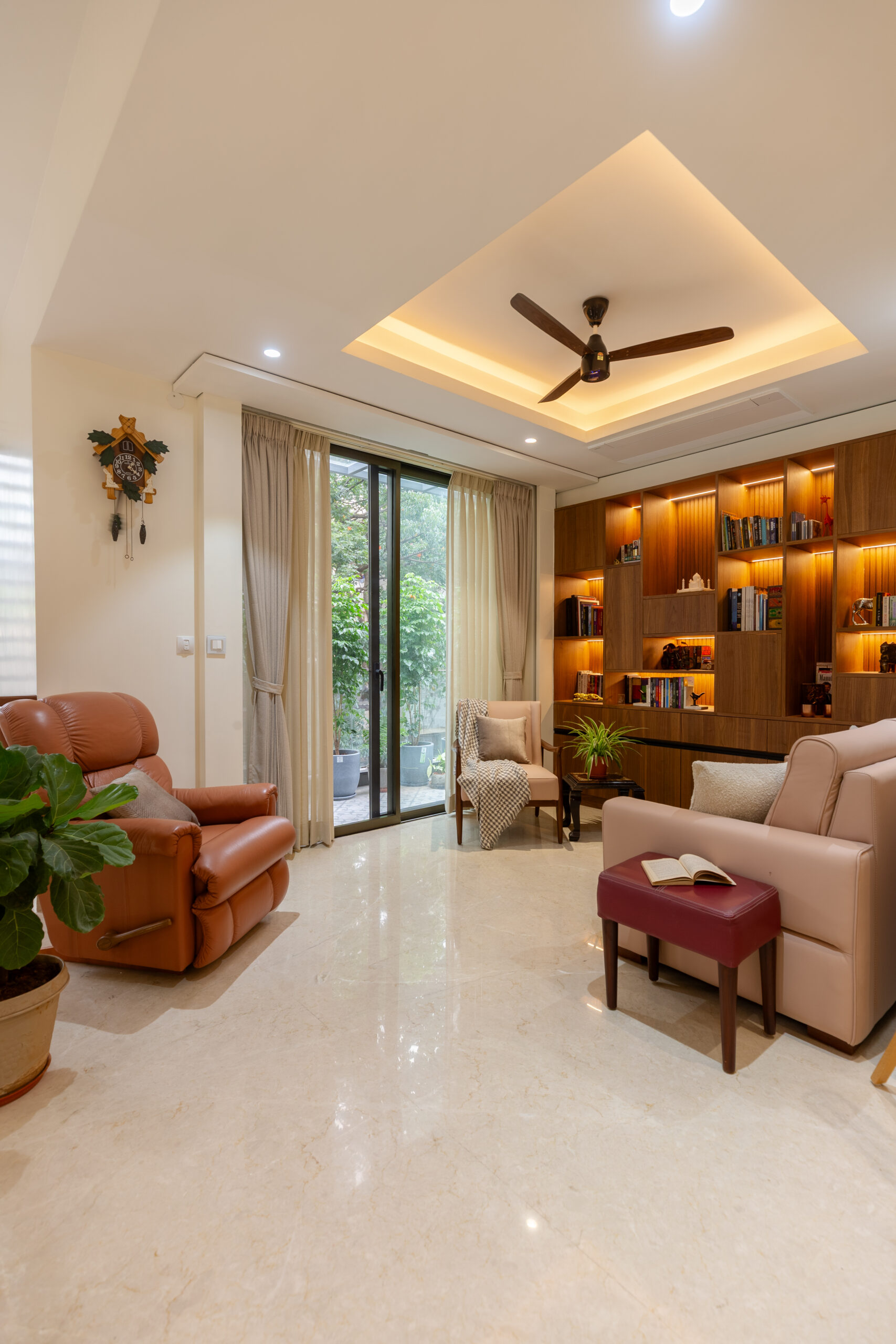
The trend in Bangalore apartments has moved clearly toward restraint. The elaborate POP ceilings with decorative borders, multi-level profiles, and ornate cornices common through the 2010s have mostly given way to flatter, cleaner designs where the lighting does the work rather than the plasterwork.
Flat false ceilings with a single perimeter cove channel. Warm white LEDs at 2700K to 3000K rather than harsh cool white. Profile lights running along one wall rather than all four. Not dramatic choices. But the ones that make rooms feel genuinely well-designed rather than just decorated.
Room-wise ceiling approach is also gaining traction. The hall gets the statement ceiling. Bedrooms get something quieter. Kitchens get PVC for practicality. A home where each room has a ceiling that suits it reads more considered than one where the same treatment is applied throughout.
What Are the Best Ceiling Designs for Halls and Living Rooms?
The hall ceiling is where most of the design budget belongs. It's the first thing someone sees when they walk in and it sets the tone for everything that follows.
Modern False Ceiling Ideas for Halls
A flat false ceiling with LED profile lights running the perimeter is the most common treatment in Bangalore homes right now and it works. The profile light channel sits recessed into the ceiling perimeter, LEDs run inside it, and the light washes upward and outward rather than pointing directly at people. It's functional and it looks intentional.
Multi-level ceilings, where different zones of the hall sit at different heights, work in larger spaces above 200 sq ft. In compact halls, multiple levels just create visual noise without adding anything.
Indian apartment halls are typically around nine feet before the false ceiling goes in. After a standard installation you're at eight to eight and a half feet. That's the practical floor for a hall ceiling. Going lower makes a space people move through daily feel like a corridor.
For detailed hall and room false ceiling designs, see our false ceiling design guide.
Which Ceiling Design Works Best for Bedrooms?
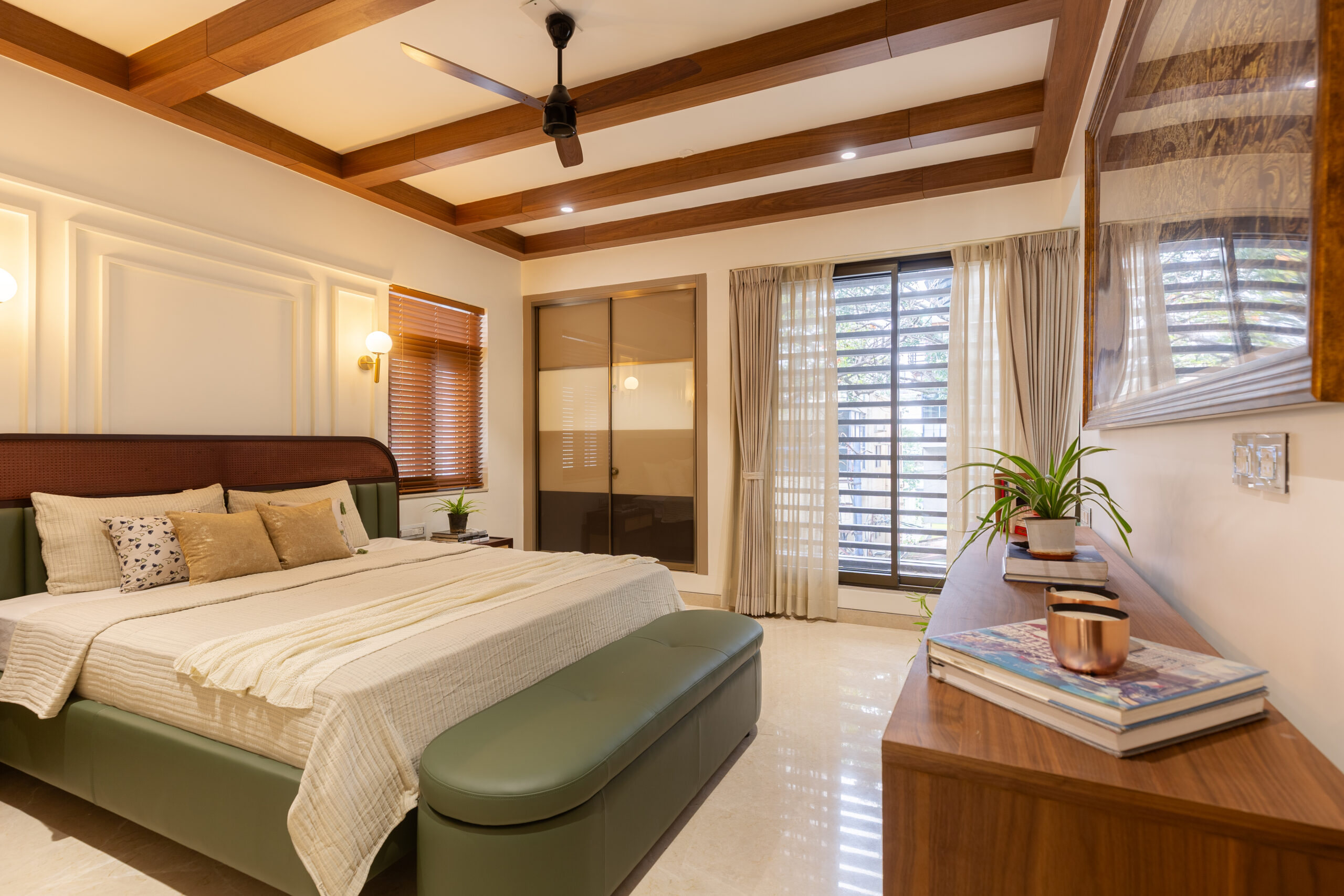
Bedrooms are more forgiving than halls in terms of what the ceiling needs to do. They don't need to make a statement. They need to make the room calm, comfortable, and properly lit for both daytime and evening.
Modern Bedroom Ceiling Design Styles
A single level flat false ceiling with a perimeter cove channel is the standard treatment for master bedrooms in Bangalore. The cove light runs on a dimmer. During the day it adds atmosphere. In the evening it replaces the harsh overhead light entirely and makes the room feel completely different to be in.
Step ceilings, where the centre panel drops slightly lower than the perimeter, work well in larger master bedrooms where you want the ceiling to feel designed without overdoing it. In compact rooms they just eat height.
Ceiling Design Ideas for Small Bedrooms
Small bedrooms need the ceiling to stay out of the way. A flat false ceiling with recessed downlights and a simple cove. No stepped profiles, no decorative borders. The priority is keeping maximum height and getting the lighting right.
Warm white recessed lights rather than cool white. In a room where someone is winding down to sleep, cool white overhead lighting works against the space. This is one of those decisions that seems minor at the planning stage and matters every single day after. For full bedroom interior design planning, see our bedroom interior design guide.
What Types of False Ceiling Are Available in India?
POP, Gypsum, PVC and Wood: A Quick Comparison
Four main materials, each with a specific use case.
POP (Plaster of Paris) is applied wet and can take any shape. Curves, arches, decorative borders, ornate profiles. It's the only material that handles genuinely custom or curved ceiling designs. Slower to install than gypsum and requires more skilled labour. Cracks over time are possible but repairable.
Gypsum board is a prefabricated panel system. Faster installation, consistent surface finish, takes paint evenly. Fire-rated boards are available. The limitation is flexibility. Gypsum is a flat panel system and can't do curves cleanly.
PVC is the practical call for kitchens and bathrooms. Moisture proof, wipe-clean, unaffected by steam and grease. More limited in design terms but in wet areas that's a secondary concern.
Wood adds warmth and texture in specific applications. Slatted wooden ceilings in living rooms and entryways. Not a full-room solution for most Indian apartments due to cost and maintenance, but as an accent it works well.
For a detailed POP vs gypsum comparison, see our POP vs gypsum ceiling guide. For wood-specific ceiling design, see our wooden ceiling design guide.
Planning Ceiling Design for Your Home?
At The Artful Abode, we design and execute ceiling projects across Bangalore 2BHK, 3BHK and 4BHK homes. We'll plan the ceiling type, lighting, and materials for every room before work begins.
What Are the Best PVC Ceiling Design Options?
PVC gets underestimated because it's associated with budget builds. But it's genuinely the right material in the right rooms.
PVC False Ceiling Ideas for Homes
In Indian kitchens, PVC is not a compromise. It's the sensible call. A gypsum or POP ceiling above a gas stove will absorb grease and moisture over time regardless of paint finish. PVC doesn't. Wipes clean, performs the same at year five as at installation.
Same logic in bathrooms. Moisture eventually gets into unsealed gypsum edges. PVC doesn't have that problem.
Design range is more limited. Clean flat panels, simple grid patterns, basic wood-effect finishes. For rooms where the ceiling is mostly functional, that's fine. Cost runs Rs.55 to Rs.85 per sq ft installed.
How Do Profile Lights and LED Cove Lighting Work in Ceilings?
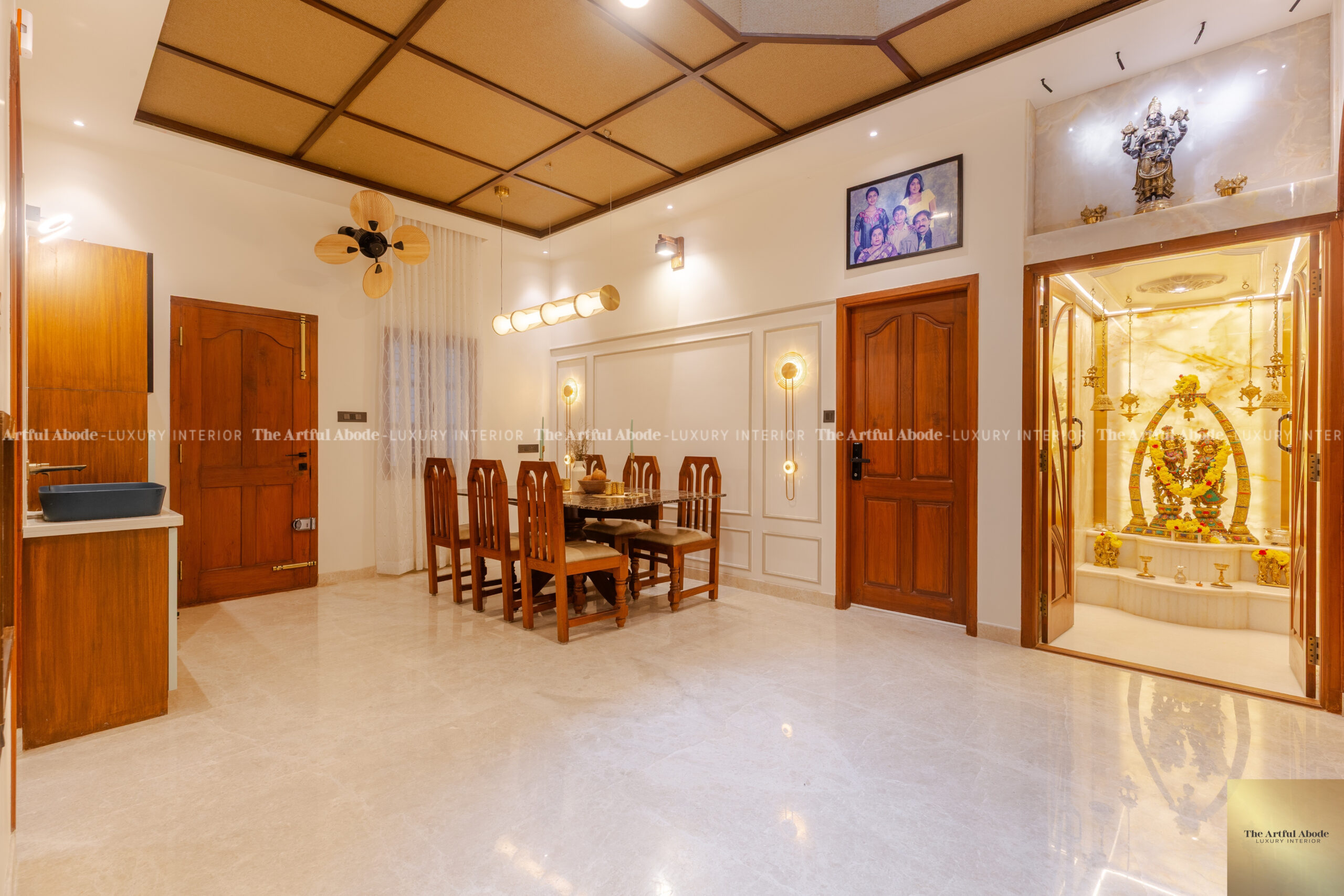
Profile lights are aluminium channels with LED strips running inside. The channel hides the strip and diffuses the light. What you see is the glow, not the source.
Cove lighting sits in a recessed channel in the false ceiling perimeter. Light washes upward across the ceiling rather than pointing at people. It doesn't illuminate the room directly. It changes how the room feels to be in.
Both need electrical points planned before the ceiling is fixed. The electrical plan and ceiling design need to happen together. Moving a cove channel or profile light run after the ceiling is up means cutting through finished work. This is the most common and most avoidable mistake in ceiling projects.
How Much Does Ceiling Design Cost in Bangalore?
Honest 2026 ballparks per sq ft, material and labour:
- POP false ceiling: Rs.60 to Rs.90
- Gypsum board: Rs.70 to Rs.110
- PVC: Rs.55 to Rs.85
- Cove lighting add-on: Rs.150 to Rs.350 per running foot
- Recessed downlights: Rs.400 to Rs.1,200 per fitting
A full 3BHK ceiling project runs Rs.1.5L to Rs.3.5L all-in including material, labour, electricals, and basic lighting. Premium finishes and extensive profile lighting push it higher.
For room-specific cost breakdowns, see our false ceiling design guide.
How Long Does Ceiling Installation Take?
A single room gypsum false ceiling takes one to two days. POP takes longer because it's applied wet and needs drying time between coats.
A full 3BHK ceiling project runs two to three weeks from start to finish. That includes installation, curing time, electrical rough-in for lights, and painting. Rushing curing time on POP or gypsum results in cracks. It can't be compressed.
Sequence matters. Ceiling goes in before walls are painted. Electrical rough-in happens before ceiling is fixed. If these get out of order, there's rework. Confirmed design and electrical plan before work starts prevents most delays.
What Are the Most Common Ceiling Design Mistakes?
Installing too low. Every false ceiling design should confirm the finished height before sign-off. A room that ends up at seven and a half feet after the ceiling goes in is uncomfortable to live in daily.
Wrong material for wet areas. Standard gypsum above a kitchen or bathroom without moisture-rated board. Moisture gets in eventually and the ceiling starts sagging.
Not planning lighting before the ceiling goes in. Electrical points in the wrong position, a cove channel that wasn't in the original plan, a profile light run added as an afterthought. All of these mean cutting through finished work.
Over-designing small rooms. A 100 sq ft bedroom doesn't need a three-level ceiling with decorative borders. One clean level, good cove lighting, enough height to breathe.
Picking cool white LEDs for bedroom and living room cove lighting. The shift to warm white at 2700K to 3000K is the single most impactful lighting decision in any ceiling project.
Ready to Plan Your Ceiling Design?
At The Artful Abode, we design and execute ceiling projects across Bangalore 2BHK, 3BHK and 4BHK homes. Get in touch and let's plan yours.