


Quick Summary
A well designed modular kitchen in India, costs between ₹2.5 lakh and ₹8.5 lakh depending on size, materials, and customization. The layout you choose is the single biggest factor that determines both cost, and functionality.
Here's what matters most:
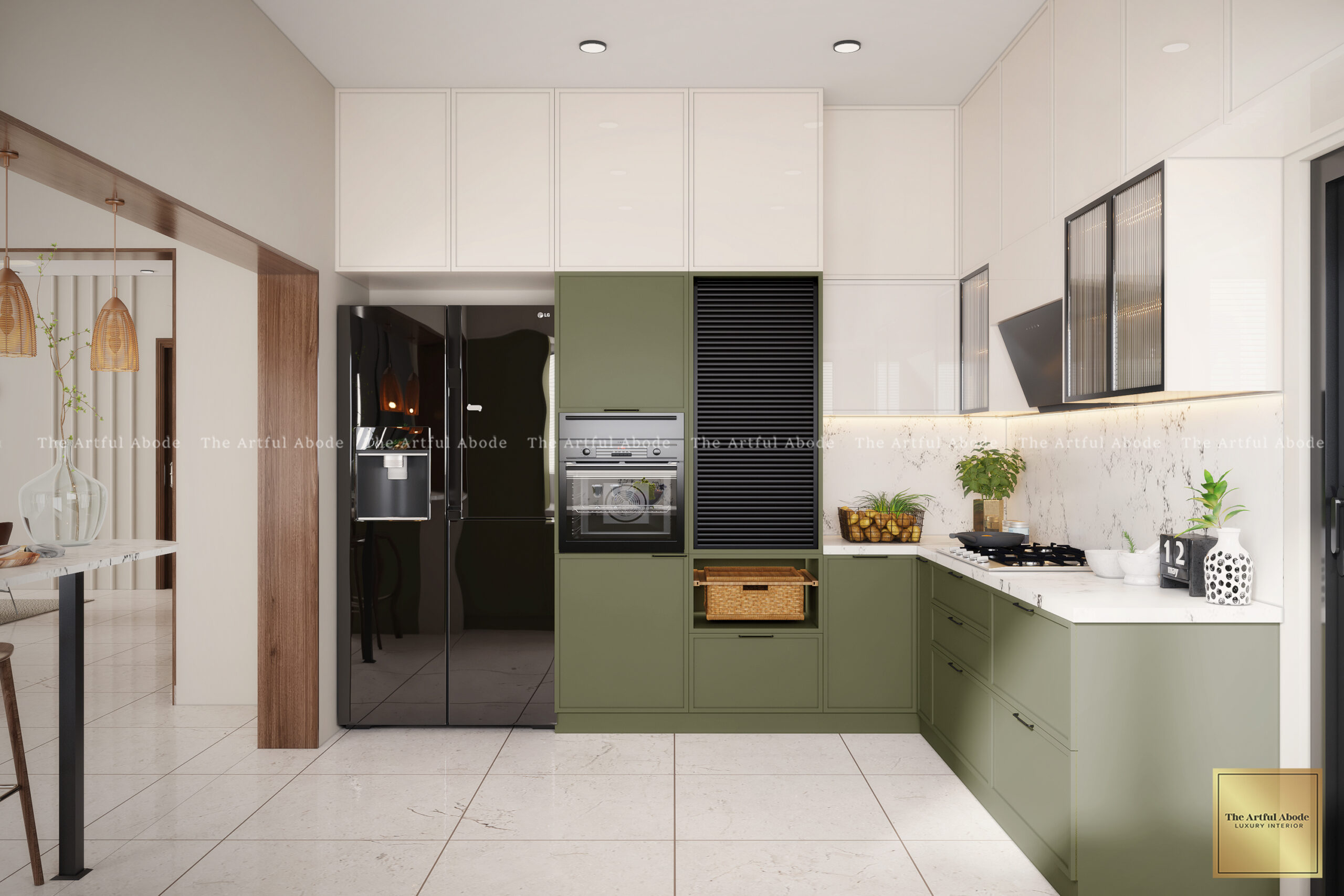
- L shaped kitchens work best for 70 to 120 sq ft spaces and are most popular in Indian apartments
- BWP grade plywood lasts 15 to 20 years while MDF and particle board fail within 5 to 7 years in Indian humidity
- Quartz countertops outperform granite for maintenance but granite handles heat better for direct tawa use
- Timeline runs 45 to 60 days from design finalization to installation for a standard modular kitchen
- Quality hardware matters more than fancy organizers when it comes to longevity
The difference between a kitchen that works and one that frustrates you daily comes down to a layout choice and material quality. Get these two right, and everything else follows.
Want the full breakdown by layout, material, and cost? Keep reading.
What Makes Modular Kitchens Perfect for Modern Indian Homes?
A modular kitchen is pre fabricated cabinet units that fit together. Each module gets manufactured separately, then assembled on site. Tall unit, base cabinet, overhead unit.
Space optimization is why they're taking over. In Bangalore where a 3BHK gives you maybe 90 to 100 sq ft for the kitchen, every inch counts. Modular designs let you customize storage down to the millimeter. That corner you thought was useless? There's probably a carousel solution for it.
Then there's consistency. Traditional carpentry depends on who's building your kitchen that week. Modular manufacturing means quality control. The soft close hinges actually work. Drawers don't jam after six months.
But the real selling point is customization without chaos. You pick finishes and configurations that match exactly what you cook and how you use your kitchen. South Indian cooking with multiple vessels? Base cabinets accommodate that. Need a separate spice pullout because you use 20 different masalas? Done.
Traditional kitchens get built entirely on site. Longer timelines, more dust, outcomes that vary based on the carpenter's skill. Modular comes manufactured, gets installed, you're cooking within days.
Kitchen Layout Planning
Choosing the right layout is crucial for functionality and efficiency in your modular kitchen.
Which Kitchen Layout Should You Choose?
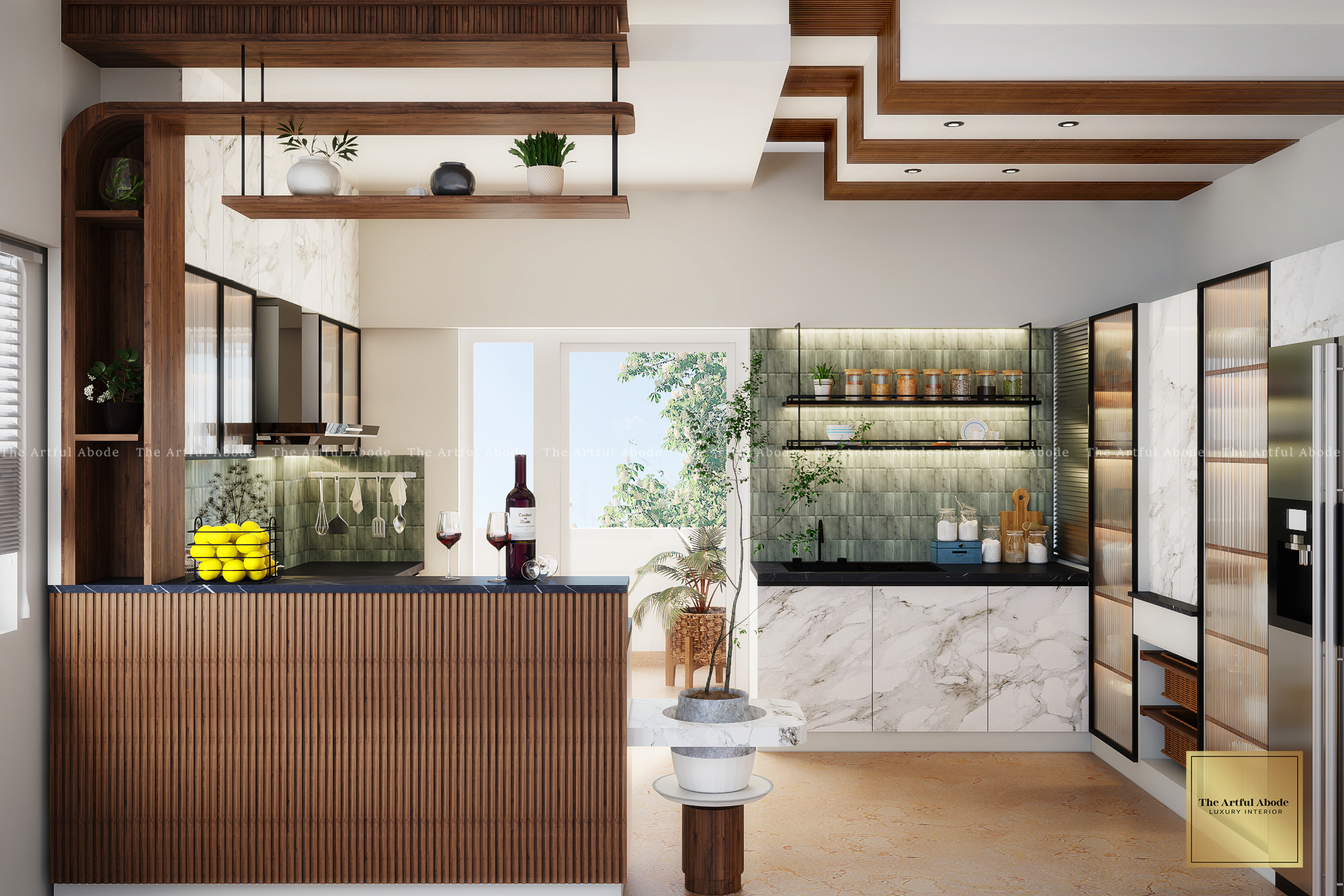
This matters more than most people realize. Your layout determines workflow, storage capacity, and whether cooking for guests turns into chaos.
L Shaped Layouts
The Indian apartment workhorse. A natural work triangle is created between the refrigerator, sink, and stove by the arrangement of the cabinets along two perpendicular walls. A dining table or mobility can be accommodated by the open side.
Perfect for apartments with two or three bedrooms and kitchens that are 80 to 100 square feet. The corner requires either a magic corner unit or a carousel. Cost: ₹2.5L to ₹5L.
U Shaped Configurations
Three walls of cabinets give maximum storage and counter space. The work triangle becomes effortless since everything is within arm's reach. But you need a 10x12 ft kitchen minimum, ideally 12x14 ft. Works best for 4BHK apartments or independent houses. Corner solutions become critical since you have two corners to deal with. Expect ₹3.5L to ₹7L.
Parallel Kitchens
Two parallel walls with a corridor in between. Works brilliantly for narrow rectangular kitchens where L shape or U shape won't fit. Workflow is linear. You need 3.5 to 4 feet clearance between cabinet rows. Budget ₹1.8L to ₹4L. Smaller footage means you can sometimes afford better materials.
If you're working with a compact space under 100 sq ft, maximizing every inch becomes critical. Our detailed guide to small kitchen design covers 50+ space-saving ideas specifically for Indian apartments, including vertical storage strategies and multi-functional furniture solutions.
Need Help Choosing a Layout for Your Kitchen?
At The Artful Abode, we've designed 50+ modular kitchens across Bangalore, optimizing every layout for Indian cooking styles. Our experts understand the unique challenges of compact spaces and can recommend the perfect configuration for your home.
Island Kitchens
Instagram loves them. Indian homes need at least 12x12 ft, preferably 150 sq ft total. You need 3 to 4 feet clearance around all sides. Islands with hob integration require downdraft chimneys. Plumbing for sinks adds cost. ₹1.5L to ₹3L just for the island, plus electrical and plumbing.
Before you commit to an island, there are practical realities about ventilation challenges, oil splatter management, and whether your cooking style actually benefits from this configuration. This comprehensive analysis of island kitchens for Indian homes breaks down when they work and when alternatives make more sense.
Still deciding which layout fits your space and cooking needs? Our layout comparison guide compares L-shaped vs U-shaped vs parallel configurations with specific space requirements, storage capacity analysis, and cost breakdowns for each.
How Much Does a Modular Kitchen Really Cost in Bangalore?
You can purchase a BWP plywood carcass with a laminate finish, basic hardware, a granite countertop, and ceramic backsplash tiles for between ₹2L and ₹3.5L. Works for rentals or functional needs without frills. Lasts 7 to 10 years.
Mid range of ₹3.5L to ₹6L is where you get quality that lasts. BWP plywood, better finishes, Ebco or Hettich hardware, quartz options, proper organizers. Soft close works smoothly. Drawers have telescopic channels. Materials last 12 to 15 years. Most Bangalore homeowners land here for a 10x10 ft kitchen.
Premium range of ₹6L to ₹10L and above brings high gloss acrylic, imported Blum or Hafele hardware, quartz countertops, glass front cabinets, every storage solution imaginable. Looks like magazine photos but is overkill for most people.
What drives costs: material quality is 40% of budget, hardware is 15 to 20%, accessories and organizers run 10 to 25% depending on choices, rest goes to countertops and installation.
Explore our portfolio to see different layouts in real Bangalore homes.
What Are the Best Materials for Your Kitchen Cabinets?
This eventually determines whether your kitchen lasts 8 years or 18 years.
BWP plywood is the gold standard. Boiling Water Proof. It handles humidity, doesn't swell when water seeps in, resists termites. Costs ₹180 to 250 per sq ft versus ₹80 to 120 for MDF. But for 15 years of use or more, the math works out. Look for IS 303 grade from brands like Century or Greenply.
MDF is cheaper. Takes finishes well. For overhead cabinets that don't see much moisture, it's honestly fine. But for base cabinets near sinks? Skip it. MDF swells with repeated water exposure, and in a kitchen, water exposure is inevitable. That swelling means shutters won't close properly.
If budget is an issue, BWP for base and MDF for overheads is a good compromise.
For finishes, the most advisable one is still laminate. It is strong, has a lot of designs, and is more affordable than acrylic or glass. Matte finishes are also preferable over glossy ones when it comes to concealing fingerprints.
Acrylic shutters are very attractive. High gloss, reflective, and very modern. They also show every fingerprint and need constant cleaning. They are 30 to 40% more expensive than laminates.
Digital print finishes offer another modern option. Photorealistic patterns or custom designs get printed directly on shutter surfaces. Provides unique aesthetics that traditional finishes can't match. Cost falls between laminate and acrylic typically.
Hardware matters most. Cheap hinges fail within 3 to 5 years. Mid range options from Ebco or Hettich last 8 to 12 years. Premium Blum hardware goes 15 years or more. For drawer channels, tandem boxes handle heavier loads better than basic telescopic channels.
Cabinet material and hardware choices represent the foundation of kitchen longevity. Our complete kitchen cabinets guide dives deep into material comparisons, finish options, internal organizers, and exactly where to invest versus where to save without compromising quality.
Which Material Should You Pick for Kitchen Countertops?
Your countertop handles hot vessels, knife cuts, turmeric stains, and constant water exposure.
Granite remains the most popular choice for good reason. It handles heat directly. You can put a hot pressure cooker straight on it. Available locally in dozens of patterns. Costs ₹180 to 400 per sq ft. Needs yearly sealing to prevent staining, especially from turmeric. Heavy, so proper cabinet support matters.
Quartz is engineered stone. Non porous, doesn't need sealing. Heat resistance is good but not quite granite level. Use trivets for very hot vessels. Stain resistance is excellent. Costs ₹350 to 700 per sq ft but requires less maintenance.
Marble looks elegant but stains easily. Porous. Gets etched by acidic ingredients like lemon juice or tamarind. Requires constant sealing and careful maintenance. Better for dining areas than cooking zones.
For Indian cooking, granite wins on practicality. Handles high heat, oil spills, pressure from chopping, acidic ingredients. Quartz is a close second if budget allows and you want less maintenance.
Countertop selection involves balancing heat resistance, stain resistance, maintenance requirements, and budget. This detailed countertop materials comparison covers granite vs quartz vs marble for Indian cooking, including care instructions, Bangalore climate considerations, and cost breakdowns with installation charges.
How to Plan Kitchen Storage That Actually Works
Storage planning is where modular kitchens either shine or disappoint.
One 24 inch tall unit can replace three or four base cabinets in storage capacity. Great for rice, pulses, grains. Things Indian households buy in bulk. Internal organizers like pullouts and bottle racks make them functional instead of just deep empty spaces. Budget ₹35,000 to 60,000 for a good tall unit with proper fittings.
Corner solutions turn wasted space into usable storage. Magic corners and Le Mans units cost ₹12,000 to 25,000 per corner. Necessary for kitchens that are L or U shaped.
Things are kept accessible with drawer organizers. Spice pullouts and cutlery dividers. Choose them according to your actual needs because they range in price from ₹2,000 to ₹5,000 each. If you frequently use 15 to 20 different spices, a spice pullout makes sense. If you use five spices total, a shelf works fine.
Base pullouts let you access items at the back without emptying the entire cabinet. Tandem boxes from Blum are the smoothest but cost ₹6,000 to 10,000 per drawer. Regular telescopic channels work for lighter loads at ₹1,500 to 3,000.
Plan for Indian cooking specifics. Pressure cooker storage needs height. Multiple vessel sizes need deep drawers or base pullouts. Spice storage needs pullouts or wall mounted shelves. Grain storage needs airtight containers in tall units. Utensil organization needs wide drawers with dividers.
Traditional modular designs often come from European or American layouts. They don't account for these needs. Customize based on how you actually cook.
What About Kitchen Lighting?
You need three types: task, ambient, and accent.
Task lighting goes under wall cabinets. LED strips work well. Around ₹500 to 3,000 per foot depending on quality. Warm white is easier on eyes than cool white for prolonged work. The 3000 to 4000K range.
Ambient lighting is your general overhead. Recessed ceiling lights, track lights, or a combination. You need 60 to 70 lumens per square foot for kitchen areas. So a 100 sq ft kitchen needs about 6,000 to 7,000 lumens total.
Accent lighting is nice but not essential. Inside glass cabinets, toe kick lights, display shelving. Add it if budget allows after covering task and ambient needs.
Proper lighting transforms kitchen functionality and appearance. Our comprehensive kitchen lighting guide explains how to layer task, ambient, and accent lighting, which fixtures work best for different layouts, color temperature considerations, and budget ranges from basic to premium installations.
How Long Does It Take to Get Your Modular Kitchen Installed?
Design takes 1 to 2 weeks. Manufacturing about 3 to 4 weeks. Installation about a week for a 10x10 ft kitchen. Total timeline runs 6 to 8 weeks. Delays happen with material shortages, site issues, manufacturer backlogs. Add a buffer.
Should You Hire an Interior Designer or Design Your Kitchen Yourself?
Designers optimize space better after doing hundreds of kitchens. They catch issues you won't spot and handle contractor coordination while you work. They get better vendor rates and manage warranties.
DIY works if you've got 20 to 30 hours for research and coordination. Makes sense for small simple kitchens. Professional assistance typically results in cost savings for larger layouts by preventing costly errors.
Designers contribute project management, vendor relationships, material knowledge, and space planning skills. They'll push back on bad choices like MDF for base cabinets.
DIY means you own every decision. If materials fail, there's no one to call.
Ready to Design Your Dream Modular Kitchen?
With 15 years of experience and 50+ completed luxury projects, The Artful Abode brings unmatched expertise in modular kitchen design for Indian homes. We use only premium materials (BWP plywood, Hettich/Blum hardware) and deliver projects on time with comprehensive warranties.
Final Thoughts
Modular kitchens are not as complicated. Yes, there are some decisions that you need to make. And they all tie together, pick the wrong layout and your storage won't work, cheap out on materials and you're renovating in five years.
This isn't about flipping through catalogs and pointing at pretty pictures. It's about how you actually use your kitchen.
The right kitchen for you isn't the one that looks best in photos. It's the one that makes cooking less of a pain, holds up for at least 12-15 years, and doesn't blow your budget on stuff that doesn't matter. Good plywood, hinges that don't break, a layout that makes sense.
Everything else is just details. Have a look at our gallery of completed kitchen projects in Bangalore, or check out our kitchen portfolio for design ideas that work.