


 ChatGPT
 Perplexity
 Google AI
 Grok
Grok Claude
A standard 2BHK in Bangalore gives you somewhere between 70 and 90 square feet for the kitchen. Sometimes less. I have designed enough compact kitchens to know exactly what separates one that works well from one that feels like a daily frustration. It is almost never about the size.
Quick Summary
- Parallel or L-shaped for anything under 100 sq ft — layout is the biggest decision
- Vertical storage is the biggest unlock — most kitchens waste the top 2 to 3 feet of wall
- Light colours make spaces read larger. Test them in your actual kitchen before committing
- A dead corner in an L-shaped kitchen kills 15 to 20% of your storage capacity
- Plan spice storage and pressure cooker dimensions from day one — most European modular designs do not account for either
- Compact kitchens done well with mid-range materials consistently outperform poorly planned kitchens with premium finishes
Which Layout Actually Works for Compact Kitchens?
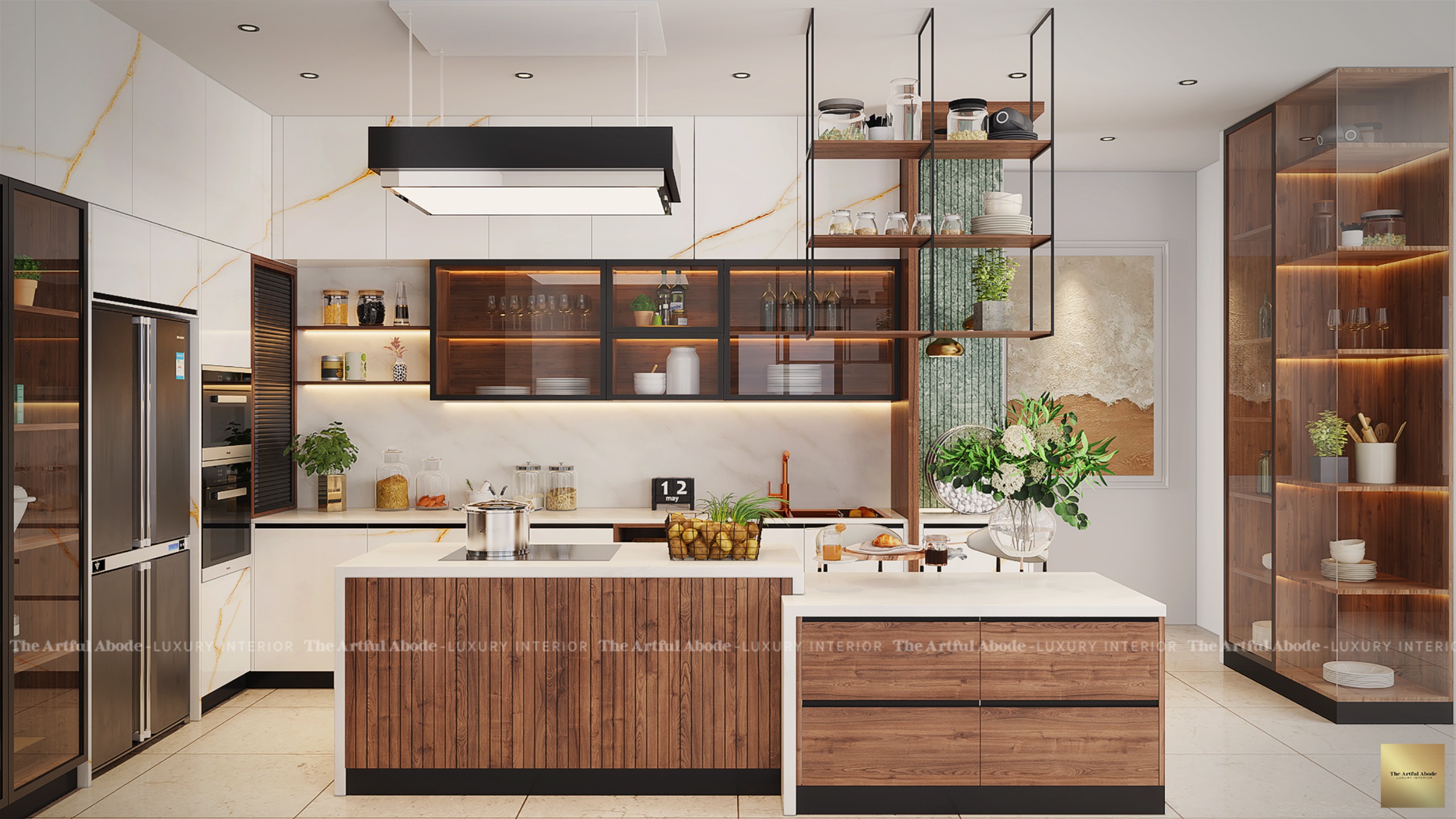
Layout is where small kitchen design succeeds or fails. Get this wrong and nothing else fixes it.
No corners means no dead zones — every inch is accessible. Walkway width is critical: 3.5 to 4 feet is the sweet spot. Under 3.5 ft and you are turning sideways at your own counter.
Work triangle forms naturally. The corner is where it wins or loses. A magic corner unit transforms dead space into real storage. Do not skip this — budget for it from the start.
Least storage of the three, but a floor-to-ceiling pantry unit compensates substantially. For individuals or couples, it works well. Everything along one wall keeps circulation completely open.
Work triangle distance — between sink, stove, and fridge — should fall between 12 and 22 feet. Small kitchens usually achieve this naturally, which is why compact spaces can actually be more efficient to cook in than sprawling ones. See our kitchen layouts guide for full space requirements and costs.
How to Double Storage Without Adding Square Feet
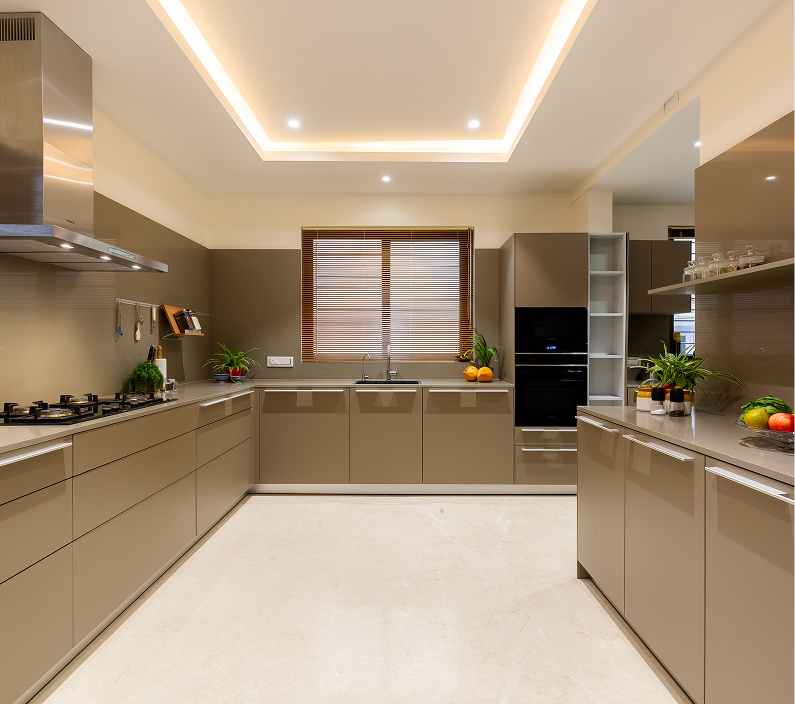
Most kitchens waste the top 2 to 3 feet of wall. That is where the difference is.
- Tall units are the highest-impact investment. One 24-inch wide floor-to-ceiling unit stores what three or four base cabinets would. For rice, pulses, and bulk staples, tall units with pullout shelves beat deep base cabinets where things get buried.
- Wall-mounted rails with hooks keep ladles and utensils accessible without consuming drawer space. Only daily-use items on the rail — everything else goes inside a cabinet.
- Pullout pantries — those 150mm filler panels between cabinets that most contractors leave empty — become fully functional storage for spices or canned goods.
- Overhead cabinets to ceiling height add 30 to 40% more cabinet space for infrequently used serving dishes and festival cookware.
- Corner solutions in L-shaped kitchens are non-negotiable. Magic corner pullouts or Le Mans systems. Without them you lose roughly 15 to 20% of total kitchen capacity to dead space.
Book a free consultation and we will look at your actual dimensions and tell you exactly what fits — and what does not.
Book a Free ConsultationColours and Lighting That Open Up Small Kitchens

Colour does more work than most people expect. It physically changes how a space reads — not just aesthetically.
Light colours reflect more light. White and off-white do the most work here. Want something less clinical? Warm whites or cream give brightness without the hospital feel. Light grey reads as contemporary and reasonably forgiving.
Two-tone schemes are tricky in small kitchens. Light uppers with slightly darker lowers can work. Dramatic contrasts make the kitchen feel chopped into competing zones. Reflective surfaces — high-gloss laminates, acrylic cabinet doors — bounce light around. Glass-front cabinets add depth.
Always test paint colours on a large patch in your actual kitchen before committing. Showroom lighting is nothing like home lighting. A colour that looks perfect on a swatch can read completely differently on a north-facing kitchen wall in the afternoon.
Lighting that opens up small kitchens: under-cabinet LED strips eliminate shadows on countertops. Good lighting can make a small kitchen feel 20 to 30% larger. Keep LEDs in the 4000 to 5000K range for cooking areas — bright enough to see clearly, does not create a cave feeling.
Windows should be used, not covered. Sheer curtains or roller blinds — daylight and privacy without killing the light.
Islands and Multi-Functional Furniture
Islands in Small Kitchens: The Short Answer
No. A functional island needs minimum 12x12 feet total area with 3 feet of clearance on all sides. Most small kitchens cannot meet this. Installing one anyway means constantly squeezing past it.
A rolling cart is a better option — prep surface and storage when you need it, tucked away when you do not. A breakfast peninsula attached to existing cabinetry gives most of what an island offers without the space demand.
Multi-Functional Furniture
Everything in a small kitchen needs to justify being there. Wall-mounted drop-leaf tables fold down for meals, fold back to almost nothing. Foldable or stackable chairs store between uses. Rolling carts provide prep surface and appliance storage, roll to where needed, tuck away after.
Slimline chimneys, built-in microwaves, under-counter refrigerators — the space savings from compact appliances add up more than people expect.
What Not to Do
Dark cabinet colours on upper units. Dark tones shrink perceived space. If you want darker tones, limit them to lower cabinets and keep uppers light. Dark all-around in a compact kitchen is a decision you will regret within weeks.
Bulky protruding hardware in tight spaces. Every centimetre that protrudes catches clothing and creates friction in a compact layout. Handleless or sleek recessed hardware consistently performs better in small kitchens.
Over-specifying internal organizers. Each fitting consumes cabinet volume. Assess what you actually own and cook before filling every space with fittings that may not get used. Design storage around what you cook with, not around a catalogue.
Not accounting for Indian cooking realities. The most common planning mistake: failing to plan for actual pressure cooker dimensions, large vessel sizes, and the spice collection most Indian households actually have. European modular designs do not account for any of these.
Leaving the corner dead in L-shaped layouts. A dead corner kills 15 to 20% of your total storage capacity. A magic corner unit or carousel transforms it into your most useful storage zone. This is non-negotiable in any L-shaped small kitchen.
Final Thought
Small kitchens are not a problem to design around. They are a constraint that produces some of the most efficient and considered kitchens I have done. The planning matters more than the budget.
A well-planned small kitchen with mid-range materials consistently outperforms a poorly planned kitchen with premium finishes.
The Artful Abode has worked on compact kitchens across Bangalore — Whitefield, Koramangala, HSR Layout, Indiranagar. Book a free consultation to see what your kitchen can actually become.