


 ChatGPT
 Perplexity
 Google AI
 Grok
Grok Claude
A well-designed modular kitchen in India costs between Rs.2.5 lakhs and Rs.8.5 lakhs depending on size, materials, and customisation. The layout you choose is the single biggest factor that determines both cost and how the kitchen actually functions. Get the layout wrong and no amount of expensive materials fixes it. Get it right and even a mid-range budget produces a kitchen that works well for 15 years.
Quick Summary
- L-shaped kitchens work best for 70 to 120 sq ft spaces — the most common setup in Indian apartments
- BWP-grade plywood lasts 15 to 20 years in Indian humidity. MDF and particle board fail within 5 to 7 years.
- Quartz countertops need less maintenance than granite but granite handles direct heat better
- Timeline: 45 to 60 days from design finalisation to installation for a standard 10x10 ft kitchen
- Hardware matters more than most people think — cheap hinges fail within 3 to 5 years regardless of plywood quality
- Cost breakdown: materials 40%, hardware 15 to 20%, organizers 10 to 25%, countertops and installation the rest
Keep reading for the full breakdown.
Which Kitchen Layout Should You Choose?
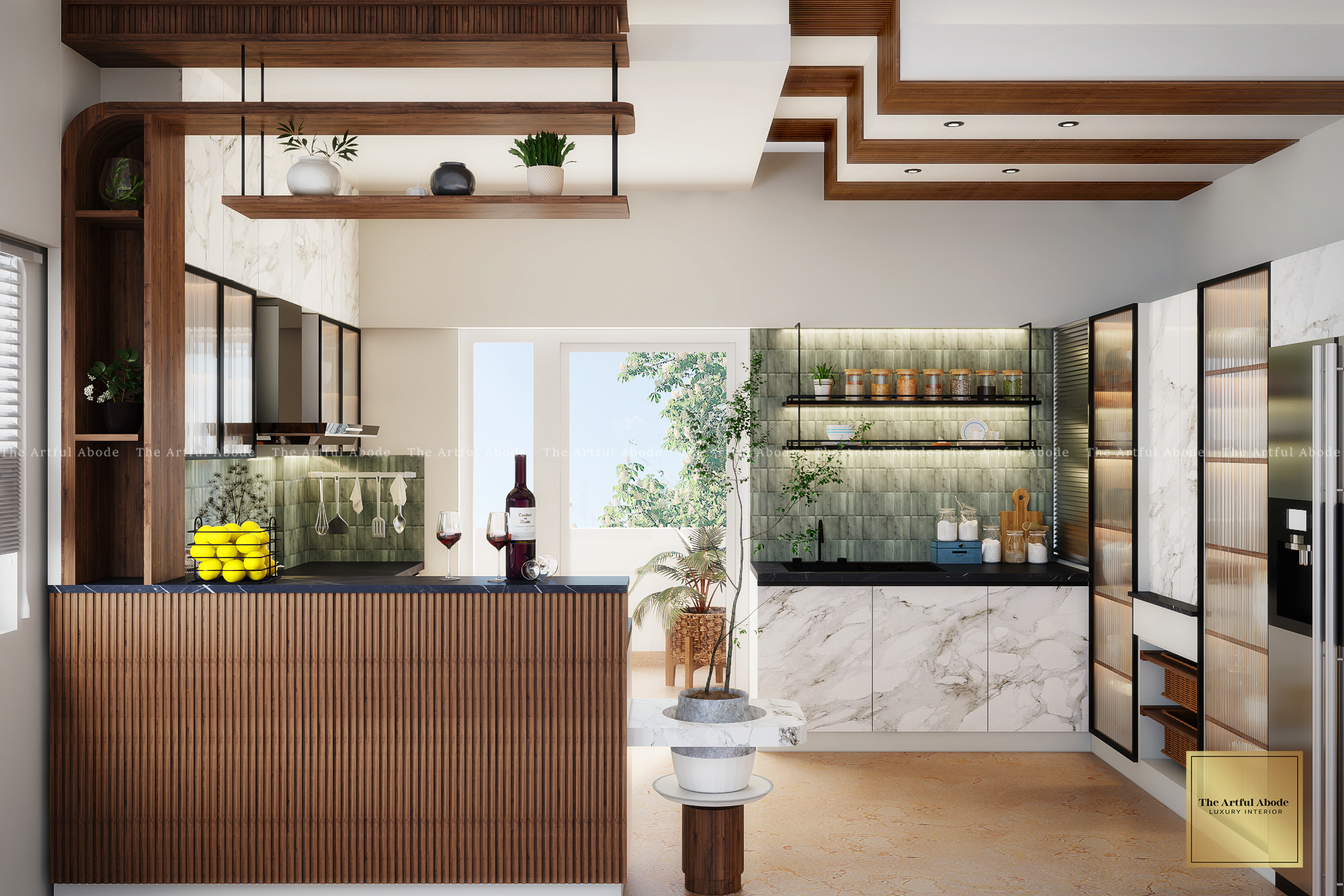
Layout matters more than most homeowners realise. It determines workflow, storage capacity, and whether cooking for guests turns into chaos. Pick the wrong one and no finish or hardware upgrade saves you.
The workhorse of Indian apartments. Cabinets along two perpendicular walls create a natural work triangle. The corner requires a magic corner unit or carousel — budget for this at design stage.
Three walls of cabinets. Maximum storage and counter space. The work triangle becomes effortless because everything is within reach. Two corners to solve rather than one.
Two parallel walls with a corridor between. Works where L-shaped or U-shaped layouts do not fit. You need 3.5 to 4 feet of clearance between cabinet rows.
Instagram loves them. Three to four feet of clearance on all sides. Islands with a hob need downdraft chimneys. The island itself runs Rs.1.5 to Rs.3 lakhs before electrical and plumbing.
For a direct comparison of all layouts with specific space requirements and cost breakdowns, see our kitchen layout comparison guide.
How Much Does a Modular Kitchen Cost in Bangalore?
What drives the cost: materials are 40% of budget, hardware is 15 to 20%, accessories and organizers run 10 to 25%, countertops and installation cover the rest.
The single best investment in any modular kitchen budget is hardware. Cheap hinges fail within 3 to 5 years regardless of how good the plywood is.
Not sure which layout fits your kitchen? Book a free consultation and we will assess your space and recommend the right configuration.
Book a Free ConsultationPlywood, Finishes and Hardware: What Actually Lasts

BWP Plywood
BWP (Boiling Water Proof) plywood is the right choice for Indian kitchens. It handles humidity, does not swell when water reaches it, resists termites. Costs Rs.180 to Rs.250 per sq ft versus Rs.80 to Rs.120 for MDF. For 15+ years of daily use, the maths works clearly in its favour. Look for IS 303 grade from Century, Greenply, or Kitply.
MDF: Where It Works and Where It Fails
MDF takes finishes beautifully and costs less. For overhead cabinets that do not see regular water exposure, it is honestly fine. For base cabinets near the sink, skip it. MDF swells with repeated water exposure and in a kitchen, water exposure is inevitable. If budget is tight, BWP for all base cabinets and MDF for overheads is a workable compromise.
Finishes
Laminate is the most practical choice for most kitchens — durable, hundreds of design options, more affordable than acrylic or glass. Matte finishes hide fingerprints better than gloss. Acrylic shutters look striking but show every fingerprint. Digital print finishes offer photorealistic patterns at a cost between laminate and acrylic.
Hardware
Mid-range from Ebco or Hettich lasts 8 to 12 years. Premium Blum hardware goes 15 years or more. For drawer channels, tandem boxes handle heavier loads better than basic telescopic channels. See our kitchen cabinets materials guide for a full comparison.
Storage and Countertops for Indian Cooking
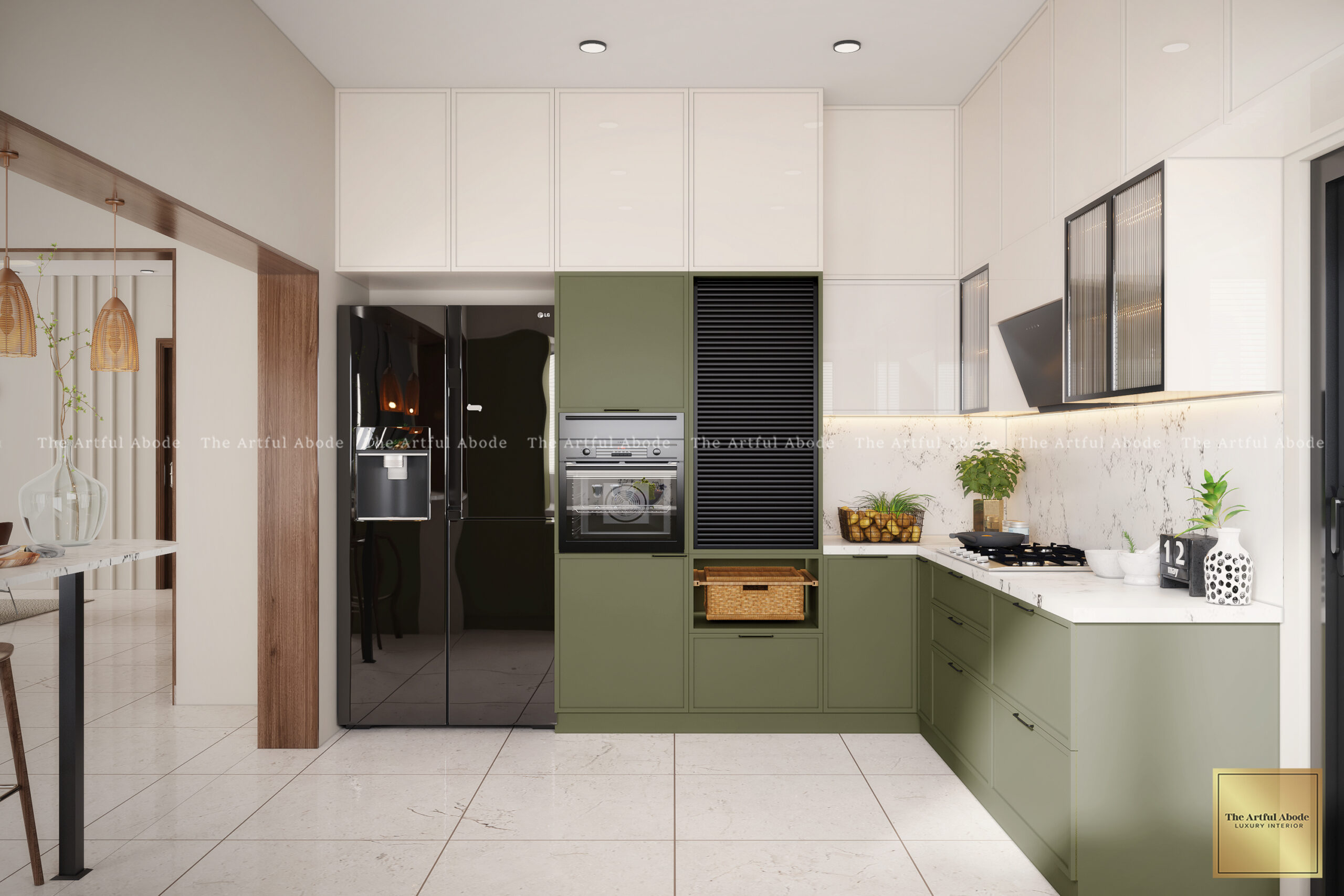
Storage That Works for Indian Kitchens
Tall units replace 3 to 4 base cabinets in storage capacity — excellent for rice, pulses, and grains bought in bulk. Budget Rs.35,000 to Rs.60,000 for a good tall unit with proper fittings.
Corner solutions are non-negotiable in L and U-shaped kitchens. Magic corners and Le Mans units cost Rs.12,000 to Rs.25,000 per corner. Do not skip these.
Pressure cooker storage needs height. Indian kitchens have specific vessel sizes that European modular designs do not account for. Customise base cabinet heights accordingly.
Countertop Options
Granite handles direct heat better than any other material — roti-making directly on the surface is fine. Needs sealing every 2 to 3 years. Cost: Rs.150 to Rs.300 per sq ft.
Quartz needs less maintenance than granite, does not require sealing, and resists staining better. Cannot handle direct heat from a hot vessel. Cost: Rs.250 to Rs.600 per sq ft.
Stainless steel is the commercial kitchen choice — hygienic, heat-resistant, extremely durable. Scratches over time. Works well as the hob surround even if the rest is granite or quartz.
Kitchen Lighting and Installation Timeline
Lighting
You need three types: task, ambient, and accent. Task lighting goes under wall cabinets directly over work surfaces — LED strips at Rs.500 to Rs.3,000 per running foot. Warm white in the 3000 to 4000K range is easier on the eyes than cool white for extended cooking sessions.
Ambient lighting is your general overhead illumination. You need approximately 60 to 70 lumens per sq ft — so a 100 sq ft kitchen needs 6,000 to 7,000 total lumens. For the full guide on layering kitchen lighting, see our kitchen lighting guide.
How Long Does Installation Take?
- Design finalisation: 1 to 2 weeks
- Manufacturing: 3 to 4 weeks
- Installation for a standard 10x10 ft kitchen: approximately 1 week
- Total realistic timeline: 6 to 8 weeks
Build in a buffer of at least 1 to 2 weeks when planning around a specific move-in date or occasion.
Final Thought
Modular kitchens are not complicated if you get two foundational decisions right: layout and materials. Choose the wrong layout and no amount of premium accessories fixes the workflow. Cheap out on plywood and you are renovating again in five years.
Good plywood. Hardware that lasts. A layout that makes sense for how you actually cook. Everything else is details.
The Artful Abode has completed 50+ modular kitchen projects across Bangalore — Whitefield, Koramangala, HSR Layout, Indiranagar. Book a free consultation to design a kitchen that works for your space.