


 ChatGPT
 Perplexity
 Google AI
 Grok
Grok Claude
Layout is the decision that determines everything else about your kitchen. Get it wrong and no amount of expensive materials or clever storage fixes the daily friction of a kitchen that does not flow. I have designed kitchens in all three of these configurations across Bangalore, and the right answer almost always comes down to your actual room dimensions and how you cook — not aesthetics.
Quick Summary
- L-shaped: needs 80 to 120 sq ft, ideal for 2BHK and 3BHK apartments, most popular in Indian homes
- U-shaped: requires 100 to 150 sq ft minimum, maximum storage, best for serious cooks
- Parallel: fits 60 to 100 sq ft narrow spaces, most cost-efficient, no corner problems
- Work triangle efficiency matters more than aesthetics
- Corner solutions are essential in L and U-shaped kitchens — dead corners kill 15 to 20% of your storage
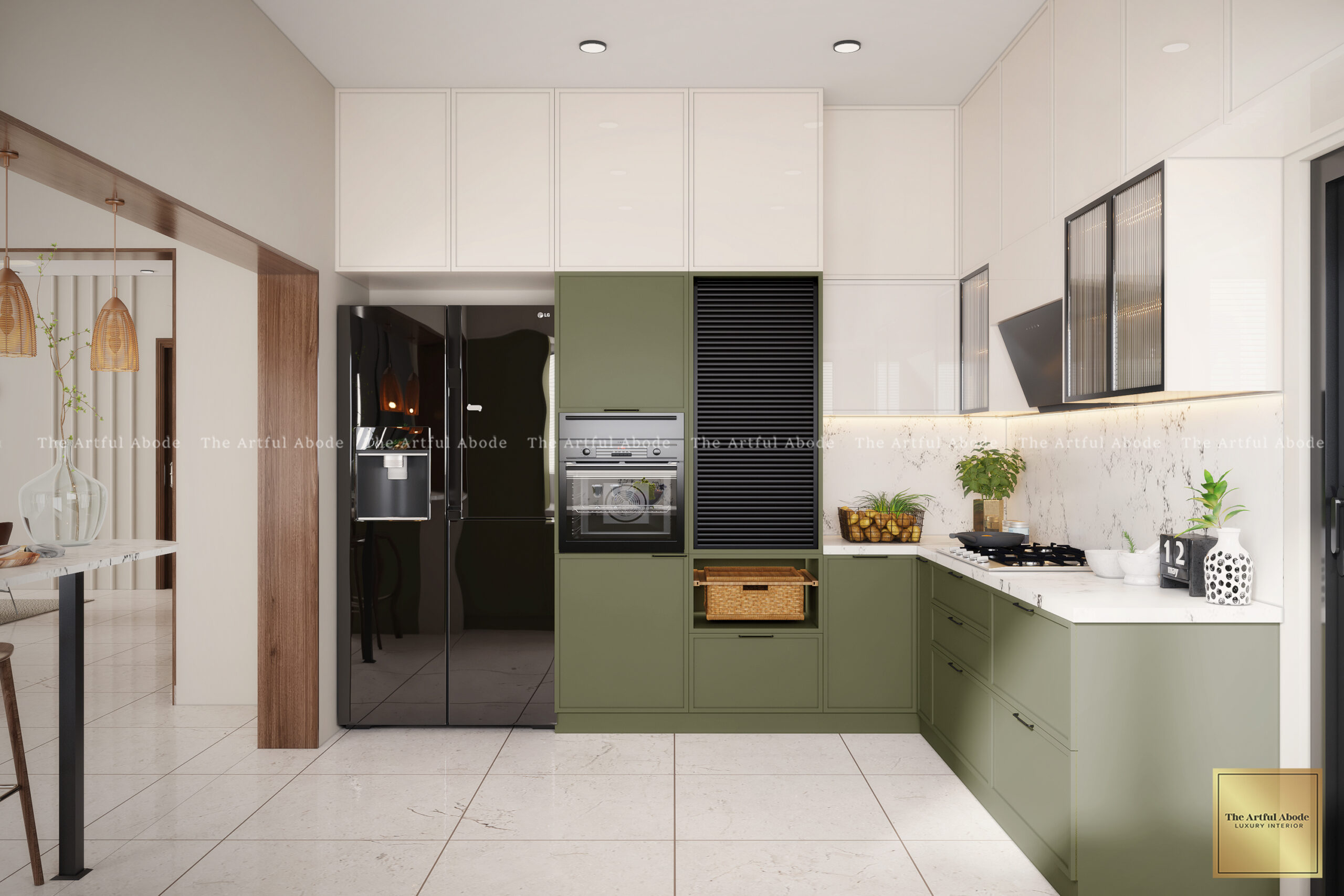
Cabinets along two perpendicular walls. One corner. An open area opposite the L that accommodates a dining table or circulation space. The work triangle forms naturally with sink on one wall, stove and refrigerator distributed across the two runs.
The corner is where L-shaped kitchens win or lose. A badly managed corner is dead storage — items that disappear and never get used. A magic corner unit or carousel system transforms that space into fully accessible storage. Do not skip this. Budget for it from the start, not as an afterthought.
Two cabinet runs of 8 to 12 feet each. One wall handles the wet zone with sink, the perpendicular wall takes the cooking zone. Works best for families with moderate cooking needs in standard Bangalore apartment kitchens.
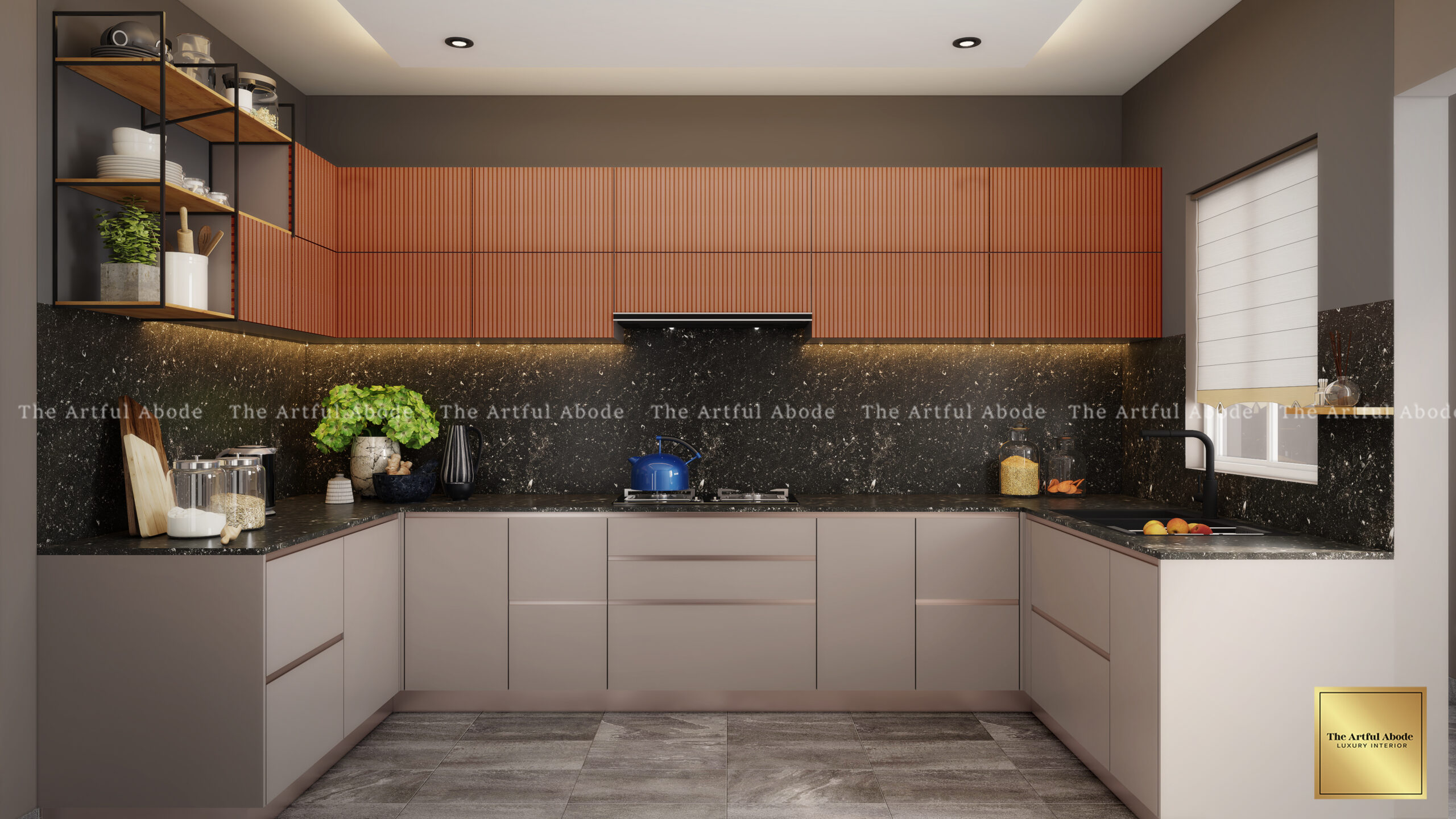
Three walls of cabinets surrounding the cook. Two corners. Maximum storage and counter space of any layout. Everything is within arm's reach. The work triangle distributes naturally across three walls.
If you cook elaborate Indian meals regularly — multiple dishes, multiple vessels, significant spice collections — this is the configuration that supports that kind of cooking. The corridor between opposing cabinet runs needs to maintain at least 4 feet for comfortable movement. Go narrower and the kitchen becomes difficult to work in.
Two corners, not one. Both need proper solutions — two sets of magic corner or Le Mans units. This adds cost but is non-negotiable for making the layout functional. In apartments with lower ceiling heights, three walls of cabinets can feel enclosed — this layout needs space to breathe.
Works best for 4BHK apartments, independent houses, families who cook frequently and elaborately.
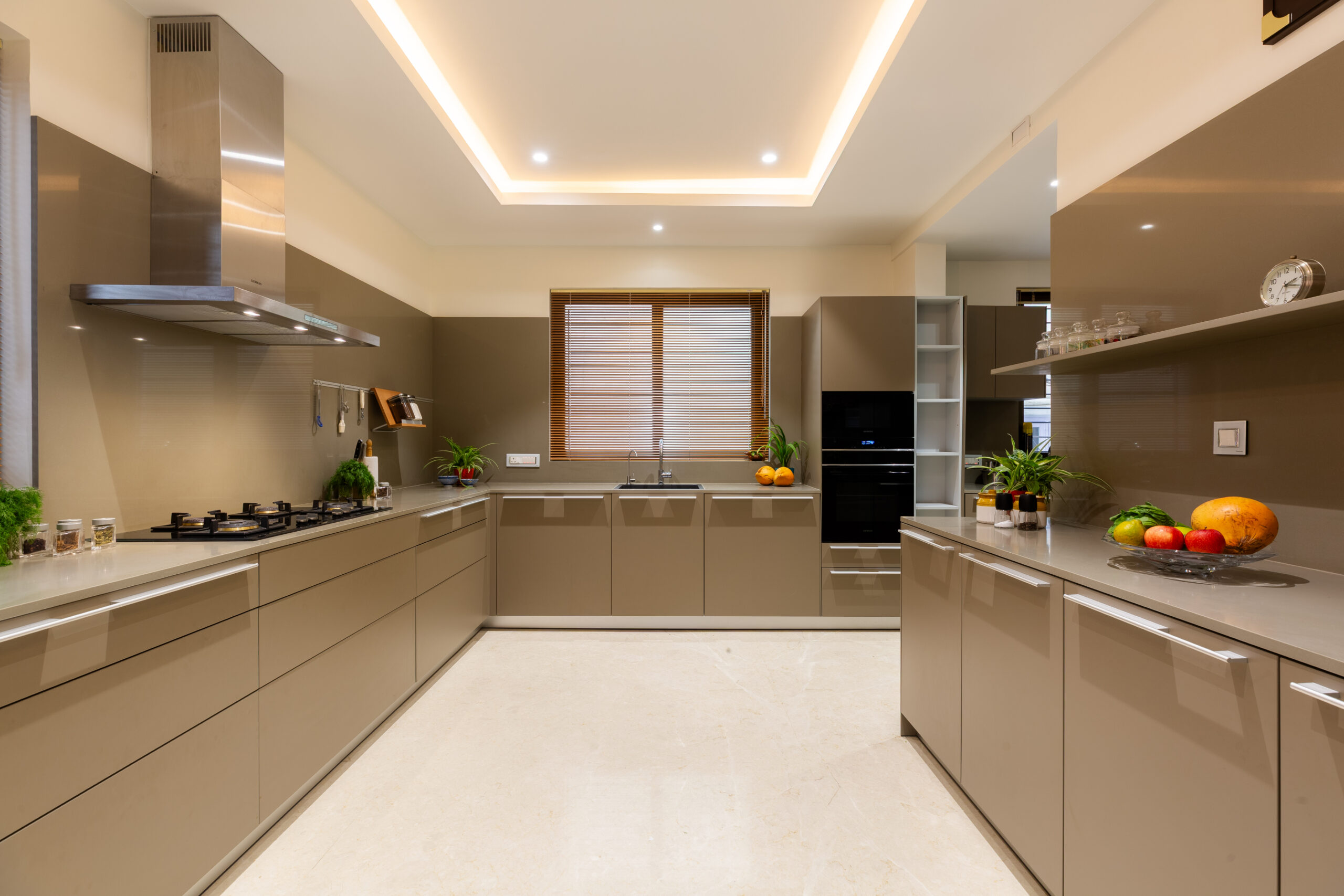
Two walls of cabinets facing each other with a walkway between. Linear workflow. No corners. This is the most underrated layout in Indian kitchen design — it works brilliantly for narrow rectangular kitchens where L-shaped or U-shaped simply will not fit.
Walkway width is critical. Under 3.5 feet and you are constantly squeezing past counters. Over 4.5 feet and you are covering unnecessary distance. The sweet spot is 3.5 to 4 feet — enough for one person to work comfortably and another to pass.
No corners is actually an advantage. Every inch of a parallel kitchen is accessible. No carousel solutions, no magic corner units, no dead zones. From a pure storage efficiency standpoint, parallel kitchens are harder to waste than L-shaped ones.
The limitation: gets congested with two people cooking simultaneously. Works best for narrow kitchens, 1BHK and studio apartments, single cooks or couples, and budget-conscious renovations.
Not sure which layout fits your actual dimensions? Book a free consultation and we will measure your space and give you a straight recommendation.
Book a Free ConsultationSide-by-Side Comparison
| Factor | L-Shaped | U-Shaped | Parallel |
|---|---|---|---|
| Min. Space | 80 sq ft (8×10 ft) | 100 sq ft (10×10 ft) | 60 sq ft (7 ft wide) |
| Ideal Space | 100–120 sq ft | 120–150 sq ft | 70–100 sq ft |
| Cabinet Runs | 16–24 ft | 28–32 ft Most Storage | 14–20 ft |
| Corners | 1 (solve it) | 2 (both matter) | None No Dead Zones |
| Cost Range | Rs.2.5–5L | Rs.3.5–7L | Rs.1.8–4L Most Efficient |
| Best For | 2BHK & 3BHK apartments | 4BHK, villas, serious cooks | Narrow spaces, 1BHK |
| Open Kitchen | Adapts naturally | Challenging | One-wall option works |
Which Layout Is Right for You?
Choose L-Shaped if…
- Kitchen is 80 to 120 sq ft
- Standard 2BHK or 3BHK apartment
- Family with moderate cooking needs
- You want an open dining connection
- Mid-range budget
Choose U-Shaped if…
- Kitchen is 100 sq ft or more
- 4BHK apartment or independent house
- You cook elaborate Indian meals daily
- Storage is the top priority
- Budget allows for two corner solutions
Choose Parallel if…
- Kitchen is narrow (7 to 8 ft wide)
- 1BHK or studio apartment
- Single cook or couple
- Budget is the main constraint
- You want zero wasted corner space
Storage, Open Kitchens and Space Requirements
Which Layout Gives You the Most Storage?
U-shaped, by a significant margin. A 10x12 foot U-shaped kitchen gives you 28 to 32 feet of cabinet runs. An equivalent L-shaped provides 20 to 24 feet. That 30 to 40% increase is substantial for households with large spice collections and multiple vessels.
Maximising each layout:
- U-shaped: corner optimisation, tall units at corridor ends, overhead cabinets to ceiling height
- L-shaped: proper corner solution, at least one tall unit, full-height overheads
- Parallel: tall units at walkway ends, overhead cabinets running full length to ceiling
Open Kitchen Configurations
L-shaped adapts most naturally to open-plan layouts. The open end faces the living area, creating connection while two cabinet walls partially shield mess. Adding a breakfast counter at the open end creates a natural boundary without closing the space off.
U-shaped presents more challenges — three walls create an enclosed space. Opening one side creates a peninsula, which can work well. Parallel can work when one wall forms the kitchen boundary opening to the living area.
Ventilation needs increase significantly in open kitchens. Powerful chimneys rated for the combined volume of kitchen and living spaces become essential — not optional.
Final Thought
There is no universally correct kitchen layout. There is the layout that fits your room dimensions, matches how you cook, and works within your budget.
The mistake I see most often is choosing a layout based on what looks good in a showroom rather than what works in the actual space. Get the dimensions right. Solve the corners. Plan the work triangle. Everything else follows from those three decisions.
The Artful Abode has designed kitchens in every layout across Bangalore — Whitefield, Koramangala, HSR Layout, Indiranagar. Book a free consultation and we will recommend the right configuration for your specific space.