


 ChatGPT
 Perplexity
 Google AI
 Grok
Grok Claude
Your countertop takes more abuse than any other surface in your home. Hot pressure cookers straight off the flame. Knife cuts. Turmeric stains. Water pooling at the sink for hours at a time. I have specified countertops for 50+ Bangalore kitchens and have strong views on what actually survives Indian cooking versus what looks good until it does not.
Quick Summary
- Granite: handles direct heat, needs yearly sealing, most practical for Indian cooking, Rs.150 to Rs.500 per sq ft
- Quartz: non-porous so no sealing needed, better stain resistance, use trivets for very hot vessels, Rs.300 to Rs.800 per sq ft
- Marble: etches from turmeric and tamarind, stains from acids, genuinely impractical for cooking zones
- Laminate: budget option, direct heat burns through it, 5 to 8 years in Indian conditions
- For daily Indian cooking, granite wins on practicality. Quartz if you want lower maintenance and can afford it.
How the Four Materials Compare
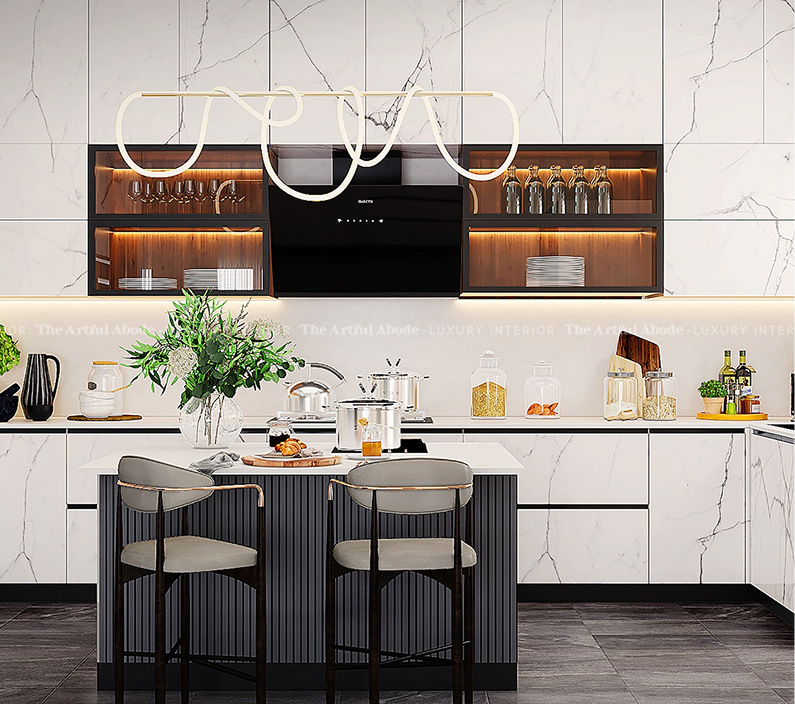
Countertop material determines daily maintenance habits for the next 15 to 20 years. The choice that looks right in a showroom and the choice that is right for how you actually cook are often different things.
| Material | Direct Heat | Turmeric | Sealing | Lifespan | Verdict |
|---|---|---|---|---|---|
| Granite | Yes | Sealing prevents | Yearly | 20–25 yrs | Best for Indian cooking |
| Quartz | Trivets needed | No staining | Never | 15–20 yrs | Best low-maintenance |
| Marble | Trivets needed | Yes, permanently | Every few months | 10–15 yrs | Avoid cooking zones |
| Laminate | No — burns | Yes | No | 5–8 yrs | Budget only |
Granite vs Quartz: The Real Difference
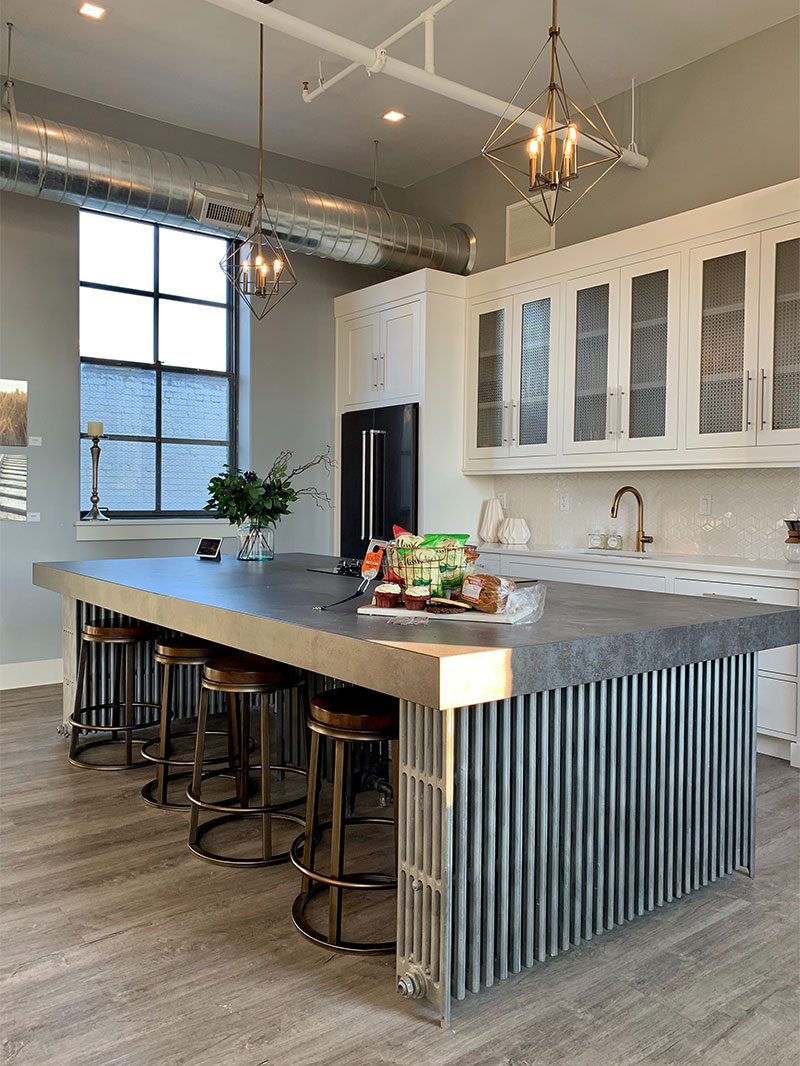
Granite has dominated Indian kitchens for decades — for good reason. It handles high heat directly. A hot pressure cooker straight from the stove is fine. Resists scratches reasonably well. Available locally in dozens of patterns which keeps costs reasonable.
The downside: granite is porous. Turmeric stains if you do not wipe it fast. The solution is annual sealing — 30 minutes once a year and surfaces stay protected. With proper care, granite lasts 20 to 25 years.
Quartz is engineered stone. Ground quartz mixed with resins producing a non-porous surface. Turmeric, tamarind, lemon juice will not stain it even if you leave them overnight. No sealing needed, ever. Heat resistance is good but not quite granite-level — very hot vessels can damage the resin. Use trivets for your heaviest cooking. For everything else, quartz handles Indian cooking well.
Indian granite vs imported: functionally identical. Indian varieties — Absolute Black, Tan Brown, Kashmir White — cost significantly less than Italian or Brazilian granite. For quartz, Indian-manufactured options now start at Rs.300 to Rs.400 per sq ft — more than sufficient for most homes.
The Artful Abode specifies countertops for kitchens across Bangalore. Book a free consultation and we will recommend the right material for your cooking style.
Book a Free ConsultationColour, Edge Finishes and Design Details

Colour choice is more practical than it sounds in Indian cooking contexts.
Light countertops make small kitchens feel larger but show every turmeric stain and water spot. If you cook with turmeric daily — which most Indian households do — white or cream requires constant attention. Medium tones — warm grey, tan brown, mid-range beige — split the difference reasonably.
Dark countertops hide cooking stains but show water spots and fingerprints. Be honest about your cleaning habits before choosing. Browns and mid-grey veined patterns are the most forgiving choice for active Indian kitchens.
On cabinet-countertop combinations: light cabinets with a darker countertop creates good contrast. Dark cabinets with a lighter countertop keeps the space from feeling heavy.
Edge finishes: straight edges are simplest and cheapest. Bullnose edges create rounded corners — safer for children, easier to clean. For Indian kitchens, simpler edges mean fewer crevices where food accumulates. Standard thickness is 18 to 20mm; premium 30mm looks more substantial but the functional difference is minimal.
Waterfall edges — where countertop material continues vertically down cabinet sides — are trending. Granite with strong veining looks particularly good in this application.
Costs in Bangalore
Indian varieties Rs.150–400. Imported Rs.400–500. Installation adds Rs.50–100 per sq ft.
Indian-manufactured Rs.300–400. Imported brands Rs.600–800.
Indian varieties Rs.200–350. Italian Carrara exceeds Rs.500. Poor value for cooking areas.
Installed. Direct heat burns through it. 5–8 year lifespan in Indian kitchens.
A typical 10x10 foot kitchen needs 25 to 30 sq ft of countertop. Total in granite: Rs.5,000 to Rs.15,000. Total in quartz: Rs.9,000 to Rs.24,000. The price difference is real but not enormous relative to the total kitchen budget. Always clarify whether installation is included in the quoted price — it varies.
Day-to-Day Maintenance
Granite
Damp cloth, mild soap. Avoid acidic cleaners — they degrade the seal. Wipe spills fast, especially turmeric.
Annual sealing: clean the surface, apply stone sealant, absorb 15 minutes, wipe excess. Best timing: just before monsoon in June.
Turmeric stain: baking soda and water paste, cover with cling wrap, leave overnight, rinse. Works on fresh stains.
Quartz
Wipe with any household cleaner. No sealing ever. The simplicity across a 15-year kitchen lifespan genuinely adds up.
Use trivets under very hot vessels — a kadai straight from a high flame can damage the resin. For everything else, quartz handles Indian cooking well.
Completely unaffected by Bangalore's humidity and monsoon. Non-porous by nature — no water stains develop.
Marble
Needs sealing every few months — not yearly. Acidic ingredients etch the surface permanently even with sealing.
Turmeric goes deep. Oil stains are nearly impossible to remove completely. Water stains develop in humid conditions.
Save marble for dining tables, bathroom vanities, or low-use decorative applications. Not for daily cooking zones.
Installation Rules
Countertops are templated after cabinets are installed — never before. Any fabricator who wants to template early is cutting corners.
Granite slabs max at 8 to 10 feet. Longer countertops need joints — good fabricators make these nearly invisible. Ask to see examples of their joint work.
Both granite and quartz are heavy. Poorly supported cabinets will sag over time. Ensure cabinet structure is solid first.
What to Avoid
Marble for the main cooking zone. It etches, stains, and requires constant attention. I have watched homeowners regret marble in cooking zones within six months of installation.
Templating before cabinets are installed. Poor fit results. Countertops must be measured from actual installed cabinet positions to account for real wall conditions.
No backsplash. The wall behind the counter gets splatter and moisture daily. Even a simple tile backsplash prevents significant wall damage over years of cooking.
Skipping granite sealing before first use. Stains penetrate within months on an unsealed surface. Seal before first use and then annually thereafter.
Choosing countertop before finalising cabinet colours. Get cabinets settled first, then select the countertop to coordinate. The countertop needs to respond to what surrounds it.
Final Thought
The right countertop performs for 20 years without major issues. The wrong one creates regret within months.
For most Indian kitchens, granite remains the most practical choice. Handles direct heat, available locally, proven performance across decades. Quartz is a genuinely good option for those who want lower maintenance and can use trivets for their heaviest cooking. Marble belongs in low-use areas only.
The Artful Abode specifies countertops for kitchens across Bangalore — Whitefield, Koramangala, HSR Layout, Indiranagar. Book a free consultation and we will recommend the right material for your cooking style.