


 ChatGPT
 Perplexity
 Google AI
 Grok
Grok Claude
Every homeowner who has spent time on Instagram wants a kitchen island. I get it completely. They look stunning. But I am going to give you an honest answer rather than an aspirational one: most Indian apartments cannot accommodate a functional island, and forcing one in causes more problems than it solves. Here is when they actually work, when they do not, and what to do instead.
Quick Summary
- You need minimum 12×12 feet with 3 to 4 feet clearance on all sides. Most 2BHK and 3BHK apartments fall well short.
- Oil splatter and ventilation are real problems for Indian cooking on islands
- Downdraft chimneys cost considerably more than wall-mounted units and still struggle with heavy Indian cooking
- A peninsula delivers most of the island benefits without needing 4-sided clearance
- Islands genuinely work in 4BHK apartments, villas, and open-plan homes above 1,500 sq ft total
How Much Space Do You Actually Need?
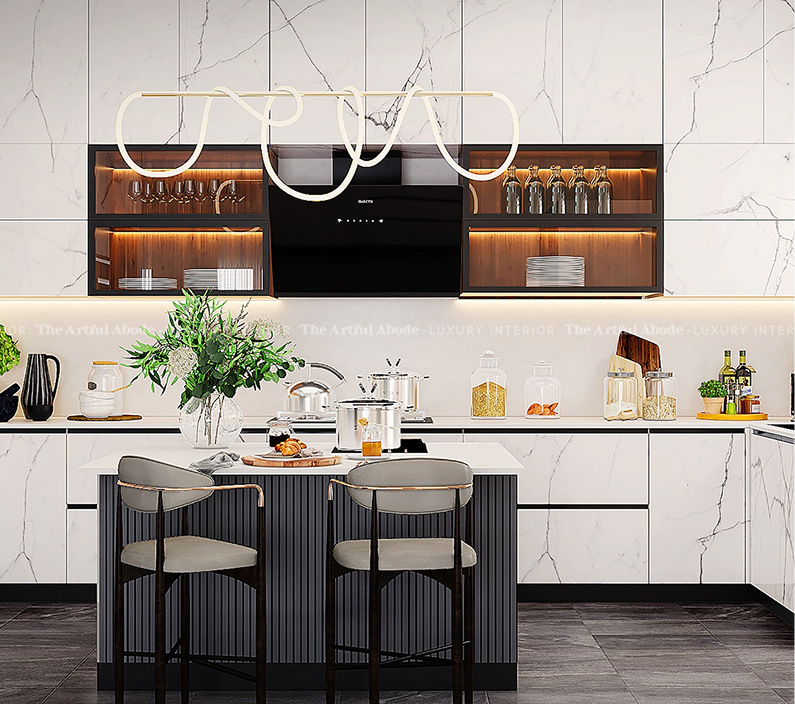
This is where most island plans end. The maths rarely works for Indian apartments.
Minimum Space Requirements
Do the maths. A 4×3 foot island with 3.5 feet of clearance around it needs roughly 11×10 feet of floor space just for the island and its clearance zone. Add perimeter cabinets and you need that 12×12 minimum. Most Bangalore 2BHK apartments allocate 70 to 90 sq ft to the kitchen. The numbers do not work.
When to skip the island entirely: kitchen under 150 sq ft, clearance falls below 3 feet anywhere, or the kitchen is a passage between rooms. Also if budget is already stretched — the island takes money from perimeter storage that would serve you better.
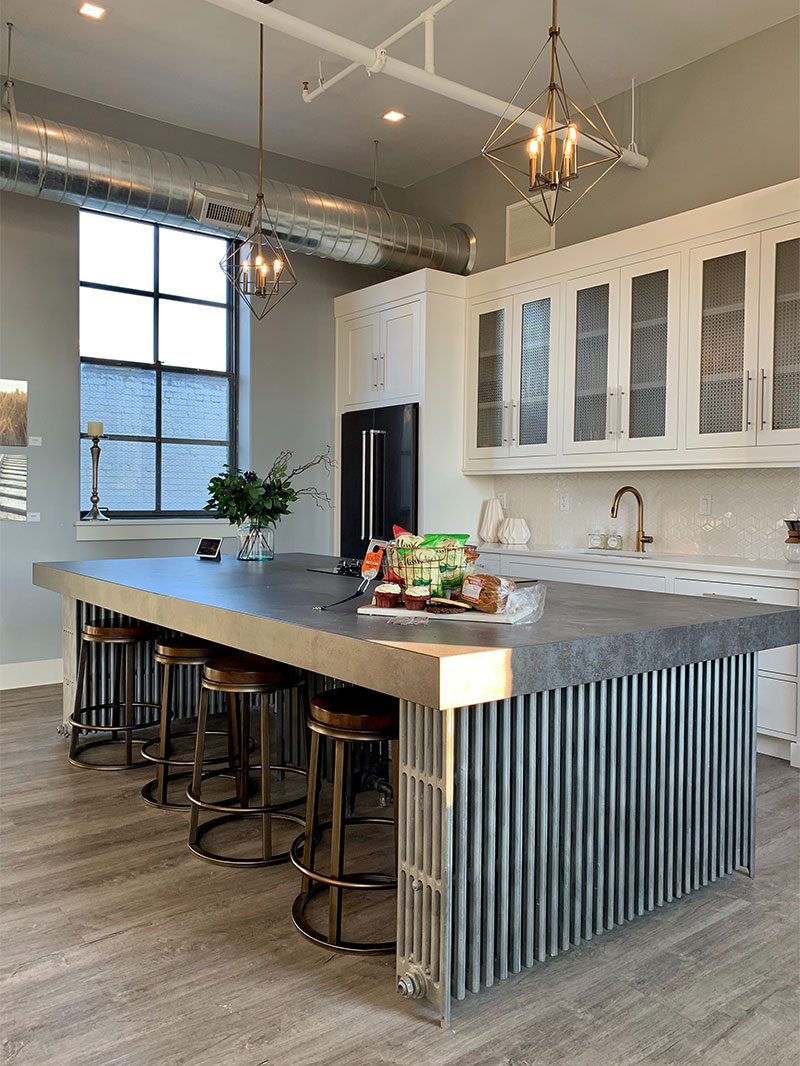
What You Can Actually Do With an Island
Prep Zone
Central positioning means multiple people can participate — genuinely useful during big cooking sessions or when entertaining. This is where islands earn their place most naturally.
Cooking Integration
Putting the hob on the island creates open cooking where you face the room rather than the wall. But it requires downdraft ventilation and modifications to gas or electrical supply. More on why this is harder than it looks below.
Breakfast Seating
A counter extending from one side with seating for two to four people works well in open-plan layouts where the island defines the kitchen boundary.
Storage Underneath
Deep drawers for pots and pans, appliance storage, trash bins. A well-designed island without any cooking equipment adds meaningful storage and a central work surface — without the ventilation problems.
Sink Integration
Moves washing to the island but requires routing plumbing through the floor. In a retrofit this means breaking floors and running new pipes. Factor this into the decision and the budget before committing.
The Ventilation Problem Nobody Warns You About
Wall-mounted chimneys work because they sit directly above the hob. Fumes rise straight up and get captured efficiently. Move the hob to an island and the chimney cannot sit directly above it anymore.
Ceiling-mounted chimneys need higher suction because fumes disperse before reaching them. They require ceiling support and ducting. And the housing gets oil-coated from daily cooking because it is exposed on all sides. For light cooking they manage. For full Indian cooking — multiple burners, high heat, frying — they struggle.
Downdraft chimneys pull fumes downward from beside the hob. More effective than ceiling-mounted, but still limited for heavy-duty use. And they cost considerably more. Installation requires dedicated electrical connections.
My honest assessment: if your cooking involves dals simmering for hours, frying pakoras regularly, or tempering spices in hot oil on high heat, island cooking creates ongoing ventilation frustration that a wall layout avoids entirely. The kitchen will smell and surfaces will oil up in ways the photos do not show.
Island Kitchen Costs in Bangalore
Cabinet structure, countertop, storage underneath. No hob, no sink, no electrical work beyond lighting.
Appliance, dedicated electrical or gas connection, downdraft chimney (Rs.40,000 to Rs.1L), installation complexity.
Plumbing through the floor, water supply lines, drainage routing. Floor breaking required in retrofit situations.
Premium islands with imported hardware, stone tops, and integrated appliances reach Rs.3 to Rs.8 lakhs for the island alone before ancillary work. Hidden costs that catch people off guard: electrical work, plumbing modifications, the downdraft system, ceiling treatment where ducting runs. Get accurate quotes for all of these before committing to the concept.
Before committing to an island, book a free consultation. We will measure your space and give you a straight answer on whether an island, peninsula, or something else serves you better.
Book a Free ConsultationIsland Styles and Better Alternatives

If you have the space, islands come in a few distinct configurations:
Prep-only island: no plumbing or gas — just countertop and storage. The easiest to install, most flexible, and avoids ventilation complications entirely. Often the right call even when space allows a full island.
Social island with seating: counter extends on the dining side with bar stools. Creates the open-cooking dynamic that makes islands appealing without requiring cooking on the island itself. Works in open-plan kitchens where the island defines the kitchen zone.
Full cooking island: hob, sink, storage. The Instagram version. Requires downdraft ventilation, plumbing through the floor, and a kitchen large enough that clearances are genuinely comfortable. For 4BHKs and villas only.
Better alternatives for most Indian homes:
Attaches to existing cabinetry. Clearance needed on two or three sides instead of four. Delivers most of what an island offers without the space requirement.
Temporary prep surface and storage. Rolls out when needed, tucked away when not. Good for kitchens that occasionally need extra surface.
One section of the perimeter countertop made deeper — casual dining or additional prep space without any floor area cost.
Which Bangalore Homes Work for Islands?
4BHK apartments that allocate 150+ sq ft to the kitchen. But not all 4BHKs do — builder layouts vary. Measure before assuming.
Villas and independent houses with kitchens of 200+ sq ft generally accommodate islands properly. Three to four feet of clearance on all sides is achievable without compromise.
Open-plan homes where the kitchen connects to living and dining areas. The island defines the zone while keeping the visual connection. This is where it earns its place most naturally — cooking while facing guests rather than a wall.
Modern 3BHK layouts specifically designed with an island in mind sometimes work, even where a traditional compartmentalised layout cannot. If the architect has built the clearances in from the start, the island can work at 3BHK scale.
Mistakes to Avoid
Squeezing an island into inadequate space. If you are turning sideways to pass it, if doors hit it, if two people cannot work simultaneously — it has made the kitchen worse, not better. Better no island than one that makes the kitchen dysfunctional.
No pendant lighting above. The island sits away from wall-mounted lighting. Without dedicated lights above it, the prep surface is shadowed — exactly the problem you were trying to solve.
No storage underneath. If the island is just counter with legs, that is wasted potential. Base drawers, a trash unit, or appliance storage makes the island justify its floor footprint.
Unrealistic maintenance expectations. Islands need cleaning on all four sides. They collect splatter from every direction. The romantic version does not show daily wiping after an Indian cooking session.
Final Thought
Kitchen islands look stunning on Instagram. Instagram kitchens do not have to account for Indian cooking oil volumes, Bangalore apartment sizes, or how families use kitchens on a Wednesday evening when nobody is performing for a camera.
Before committing: does your kitchen have 150+ sq ft? Can you maintain 3 to 4 feet of clearance on all sides? Have you costed the ventilation, electrical, and plumbing work? Will you genuinely use it for cooking and socialising?
Yes to all of those — go for it. Otherwise, a well-designed peninsula or extended counter will serve you significantly better. The Artful Abode has worked on kitchens across Bangalore — Whitefield, Koramangala, HSR Layout, Indiranagar. Book a free consultation for an honest assessment of what actually works in your space.