 ChatGPT
 Perplexity
 Google AI
 Grok
Grok Claude
Quick Summary
Cupboard design in Indian homes varies significantly by room. A kitchen cupboard needs moisture resistant materials. A bedroom cupboard needs proper hanging space. A living room cupboard is about display and proportion.
Key points:
- Cupboards and wardrobes are different things. A cupboard is any enclosed storage unit. A wardrobe is specifically for clothing with dedicated hanging space.
- BWP plywood works best for kitchen cupboards near water. MDF is fine for bedroom and living room units in dry zones.
- Bedroom cupboard costs run Rs.40,000 to Rs.90,000 depending on size and finish. Kitchen cupboards are priced per sq ft, typically Rs.1,800 to Rs.4,500.
- The most common mistake is wrong shelf depth. Kitchen bases need 22 to 24 inch depth. Bedroom cupboards need 20 to 22 inches. Study cupboards need only 12 to 14 inches.
Want room specific ideas, material comparisons, and cost breakdowns? Keep reading.
Planning cupboards for your home? Book a free consultation with The Artful Abode and we'll design storage that actually works for each room.
What's the Difference Between Cupboard and Wardrobe Design?
People use these words interchangeably in India but they're not the same thing. A cupboard is any enclosed storage unit with shelves, drawers, or a combination. It can go in any room. A wardrobe is specifically designed for clothing storage, with hanging rods, long hang sections for sarees, and internal fittings.
So a kitchen cabinet is a cupboard. A display unit in your living room is a cupboard. But the full height unit in your bedroom with a rod and mirror? That's a wardrobe.
This matters for design because the interior requirements are completely different.
For the full wardrobe design breakdown including materials, interior layouts, and costs, see our Ultimate Wardrobe Design Guide.
Which Kitchen Cupboard Designs Work Best for Indian Cooking?
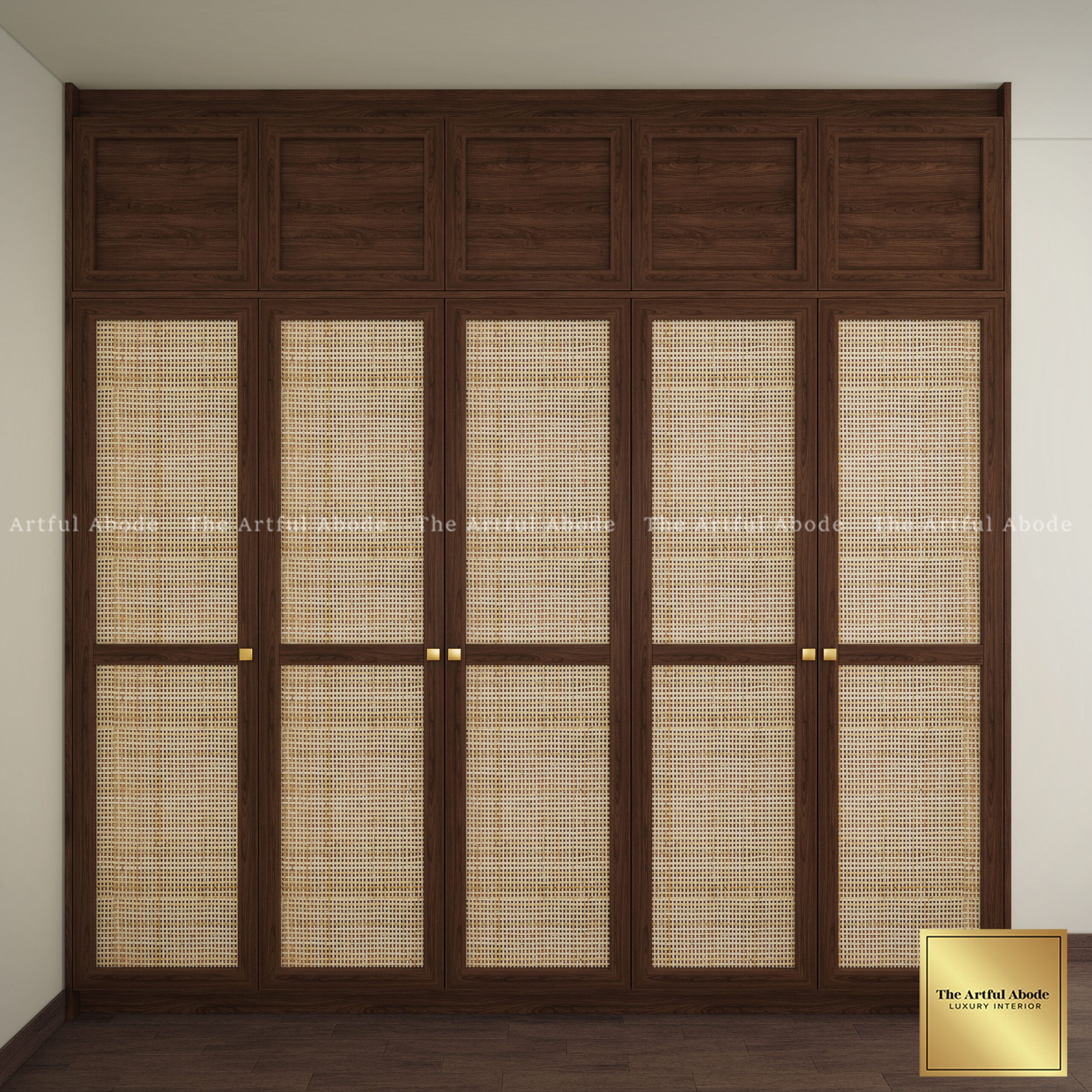
The kitchen is where cupboard design matters most in terms of material choice. Water, steam, cooking oil vapour, and daily cleaning all take a toll. What you use for a living room display unit won't survive five years in a kitchen.
Overhead Kitchen Cupboards
Standard depth is 12 to 13 inches. Height depends on ceiling clearance but 30 to 36 inches is typical. Lift up shutters work better than hinged ones in Indian kitchens, they don't swing into your face when you're standing at the counter.
Base Kitchen Cupboards
These take the most punishment. Vessels drip, spills happen, cleaning water splashes. BWP plywood is mandatory for base cupboard carcasses near a sink. MDF will swell and fail within two to three years. Base depth runs 22 to 24 inches. Pull out drawers rather than shelves make everything at the back actually accessible.
Tall Pantry Cupboards
One tall pantry running floor to ceiling replaces three or four base units in storage capacity. For Indian homes stocking rice, pulses, and grains in bulk, this is genuinely useful. Budget Rs.35,000 to Rs.60,000 for a good tall unit with pull out shelves.
Corner Kitchen Cupboards
Corners are where storage dies in most kitchens. Magic corner units or Le Mans pull out systems make the back accessible. Both cost Rs.12,000 to Rs.25,000 per corner but they pay back in usable space.
What Cupboard Designs for Bedroom Offer Maximum Storage?
A bedroom cupboard that isn't a full wardrobe still needs proper planning, common in older homes or smaller bedrooms. No full hanging section. Typically shelves and drawers for folded clothing, linens, and accessories.
Built in units always outperform freestanding ones. They sit flush to the wall, use the full room height, and don't leave gaps. BWP plywood carcass with laminate finish is the reliable choice. Veneer works well in bedrooms since moisture exposure is low. Acrylic shutters look striking but pick up scratches in daily use.
If you're considering a traditional almirah style unit for the bedroom instead, see our Almirah Design: Smart Storage Solutions for Indian Homes guide.
Need Help Designing Cupboards for Your Home?
The Artful Abode designs storage solutions for every room across Bangalore homes. From kitchen cupboards that handle Indian cooking demands to bedroom units built for the volume of Indian clothing, we plan storage that actually works for how you live. Get the materials right from the start.
Which Room Cupboard Designs Work for Living Room and Study?
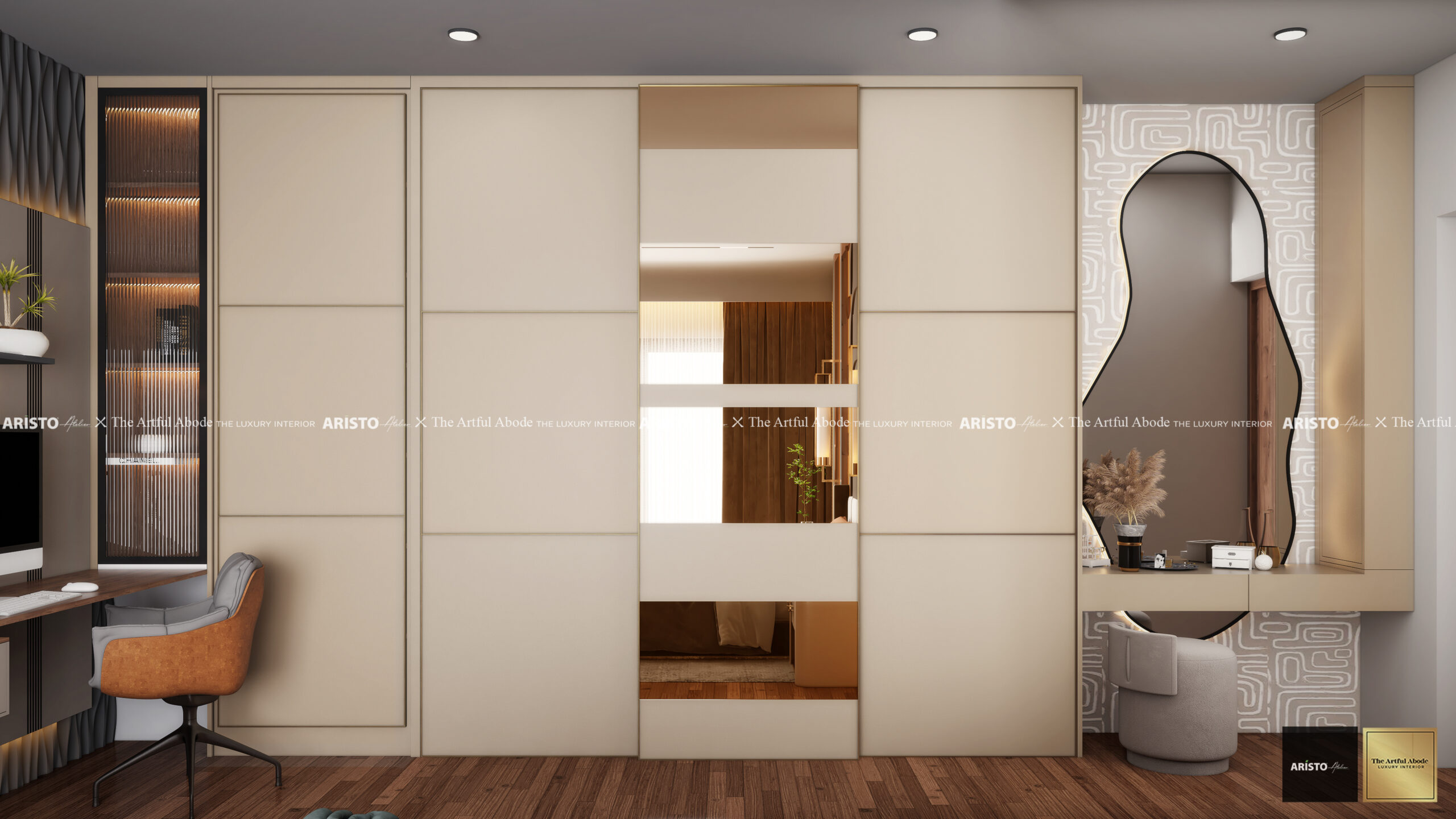
Living Room Display Cupboards
Living room cupboards are as much about aesthetics as storage. Glass front shutters for display sections, solid shutters for hiding cables and clutter below. Height matters: floor to ceiling cupboards in a living room make ceilings feel taller. Half height units make the room feel more open. Which you choose depends on the room size and what you want to display.
Study Room Storage Cupboards
Study cupboards are about books and files, not clothing. Shelf depth drops to 12 to 14 inches. Open shelving works well for books you use often. Closed shutters work for files and documents you need but don't want visible. Adjustable shelves are essential since book heights vary significantly.
Bathroom Cupboards
Humidity is constant. MDF will fail here within a year. Marine plywood or PVC boards are the right call for bathroom cupboards. Wall mounted vanity units keep the floor clear and make cleaning easier. Waterproof laminate or PU paint finishes survive daily moisture far better than standard laminates.
How Much Does Modern Cupboard Design Cost by Room Type?
Honest Bangalore ranges for 2026:
- Kitchen cupboards: Rs.1,800 to Rs.4,500 per sq ft depending on material and finish
- Bedroom cupboard (non wardrobe): Rs.40,000 to Rs.90,000 for a standard 6 to 8 ft unit
- Living room display cupboard: Rs.35,000 to Rs.80,000 depending on size and glass work
- Study shelving unit: Rs.20,000 to Rs.50,000
- Bathroom vanity cupboard: Rs.15,000 to Rs.40,000
Material grade drives cost more than size. A smaller BWP plywood cupboard with good hardware costs more than a larger particle board one. And holds up significantly longer.
What Are the Best TV Cupboard Design Ideas?

The TV unit is really a cupboard with a specific brief: hide the cables, display the screen, store the devices. Open niches for the TV and set top box. Closed shutters for everything else. Cable management is the thing most people forget until the unit is installed and wires are hanging out.
Glass shutter options on side sections add lightness. The unit should be proportional to the TV size and the wall it sits on. A small unit under a large TV looks odd. A unit that runs the full width of the wall and incorporates both storage and display generally looks more designed.
Which Wood Works Best for Wooden Cupboard Designs?
Solid wood cupboards look beautiful and last decades if maintained. But they expand and contract with humidity. Gaps in dry season, sticking doors in monsoon.
BWP plywood carcass with veneer or laminate surface gives you the aesthetic of wood without the maintenance issues. For areas with water exposure, skip veneer and use laminate.
How Can You Maximize Storage in Small Space Cupboards?
Floor to ceiling is the single most effective move in a small room. Using the full height adds 30 to 40 percent more storage without using more floor space. Corners that are typically wasted become usable with pull out corner units. Loft storage above door frames, often completely ignored, can house seasonal items and things used rarely.
Multi functional pieces work well: a study cupboard that doubles as a home office when open, a bedroom cupboard with a fold down ironing board built in. These aren't gimmicks when space is genuinely tight.
What Common Cupboard Design Mistakes Should You Avoid?
Wrong shelf depth is the most common one. Kitchen base shelves too shallow, bedroom shelves too deep, study shelves too tall for paperbacks. Measure what you're storing before finalising dimensions.
Poor ventilation inside closed cupboards leads to musty smells. Leave a small gap at the bottom panel. Don't pack shelves completely sealed.
And skipping proper site measurements before fabrication is where things really go sideways. Beam protrusions, electrical points, door clearances. All of it needs to be caught at the design stage. Finding them during installation? That's an expensive problem.
Designing cupboards across multiple rooms? The Artful Abode handles full home storage design from kitchen to bedroom. Book a free consultation.
Get In Touch
The Artful Abode handles full home storage design across Bangalore, from kitchen cupboards to bedroom units to living room display pieces. We plan each room properly, with the right materials for the environment and storage dimensions that match what you actually own.
Final Thoughts
Cupboard design is room specific. What works in a kitchen fails in a bathroom. What looks right in a living room is impractical in a study. Getting the material and the dimensions right for each environment is what separates storage that works from storage that frustrates.
For the full wardrobe design breakdown including materials, interior layouts, and costs, see our Ultimate Wardrobe Design Guide. Or browse our bedroom portfolio and project gallery for inspiration.