

 ChatGPT
 Perplexity
 Google AI
 Grok
Grok Claude
Quick Summary
Interior design styles are frameworks, not rules. Understanding them helps you identify what appeals to you, communicate it to a designer, and make coherent decisions across the whole home.
Key points:
- Modern and contemporary are not the same thing. Modern refers to a specific mid-20th century design movement. Contemporary means what's current now. The distinction matters when communicating with a designer.
- Most Indian homes that look well-designed are transitional: a dominant style with elements from one or two others, unified by a consistent material palette rather than strict adherence to any single style.
- Scandinavian and minimalist styles are often chosen for their visual appeal and then found difficult to live with because they require maintaining a level of tidiness that most Indian households with children don't sustain.
- Traditional Indian design is having a revival in contemporary homes. Not wholesale reproduction, but selective use of handcrafted elements, brass, handwoven textiles, and carved wood alongside modern furniture.
- The most reliable guide to your style is not a quiz or a mood board. It's looking at the rooms you genuinely enjoy being in and identifying what they have in common.
Want to identify your style? Keep reading.
Designing a home in Bangalore? Get in touch with The Artful Abode and we'll help you find and apply your aesthetic.
What Are the Main Interior Design Styles?
Interior design styles are shorthand for clusters of decisions that tend to appear together: material choices, colour palettes, furniture profiles, lighting approaches, and decorative sensibilities. A style label gives both the homeowner and the designer a starting point. It's not a constraint.
How styles evolved: most contemporary interior design styles are reactions to or evolutions of earlier movements. Minimalism reacted against the maximalism of the 1980s. Contemporary style is a fluid response to what's culturally current in any given year. Scandinavian design responded to the harsh Nordic climate by prioritising warmth, natural light, and simplicity. Understanding the origin of a style makes it easier to apply its principles intelligently rather than mechanically.
Choosing your aesthetic: rather than selecting a style from a list, identify rooms you genuinely respond to and look for what they share. Warmth or coolness? Texture or smoothness? Pattern or plain? Colour or neutral? These underlying preferences point toward the style language that will make you comfortable long-term. A style that looks good in photos but feels wrong to live in is a design mistake regardless of how correctly it's executed.
What Is Modern Interior Design?
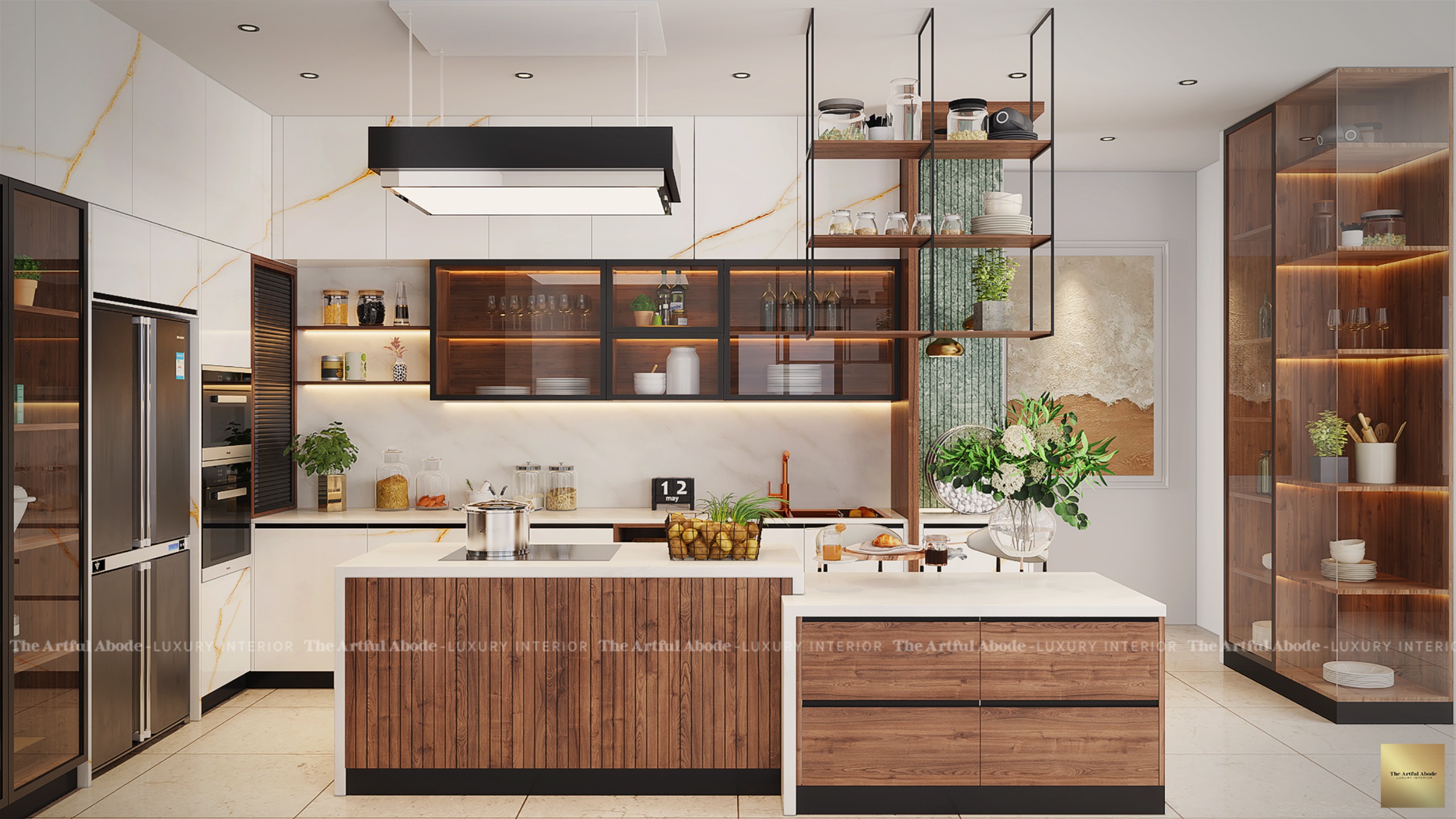
Modern interior design refers specifically to the design movement of the early to mid 20th century: the Bauhaus, Scandinavian functionalism, and mid-century modernism. Its defining characteristics are clean lines, minimal ornamentation, natural materials, and the principle that form follows function.
In practice, what most people mean when they say "I want a modern home" is that they want a clean, uncluttered space without heavy traditional ornamentation. This is contemporary rather than strictly modern, but the underlying instinct is the same.
Material choices in modern design: natural wood, stone, leather, and steel. Colour palette of warm neutrals with deliberate accent colours. Furniture with visible and honest construction rather than decorative applied detail. Floor-to-ceiling windows where the architecture allows.
When it works best in Indian homes: compact apartments where the clarity and discipline of modern design prevents the visual busyness that comes from mixing many styles in a small space. Modern design rewards restraint. It's harder to execute well in households that accumulate objects, because each additional object is visible in a way it wouldn't be in a maximalist interior.
How Does Contemporary Interior Design Differ?
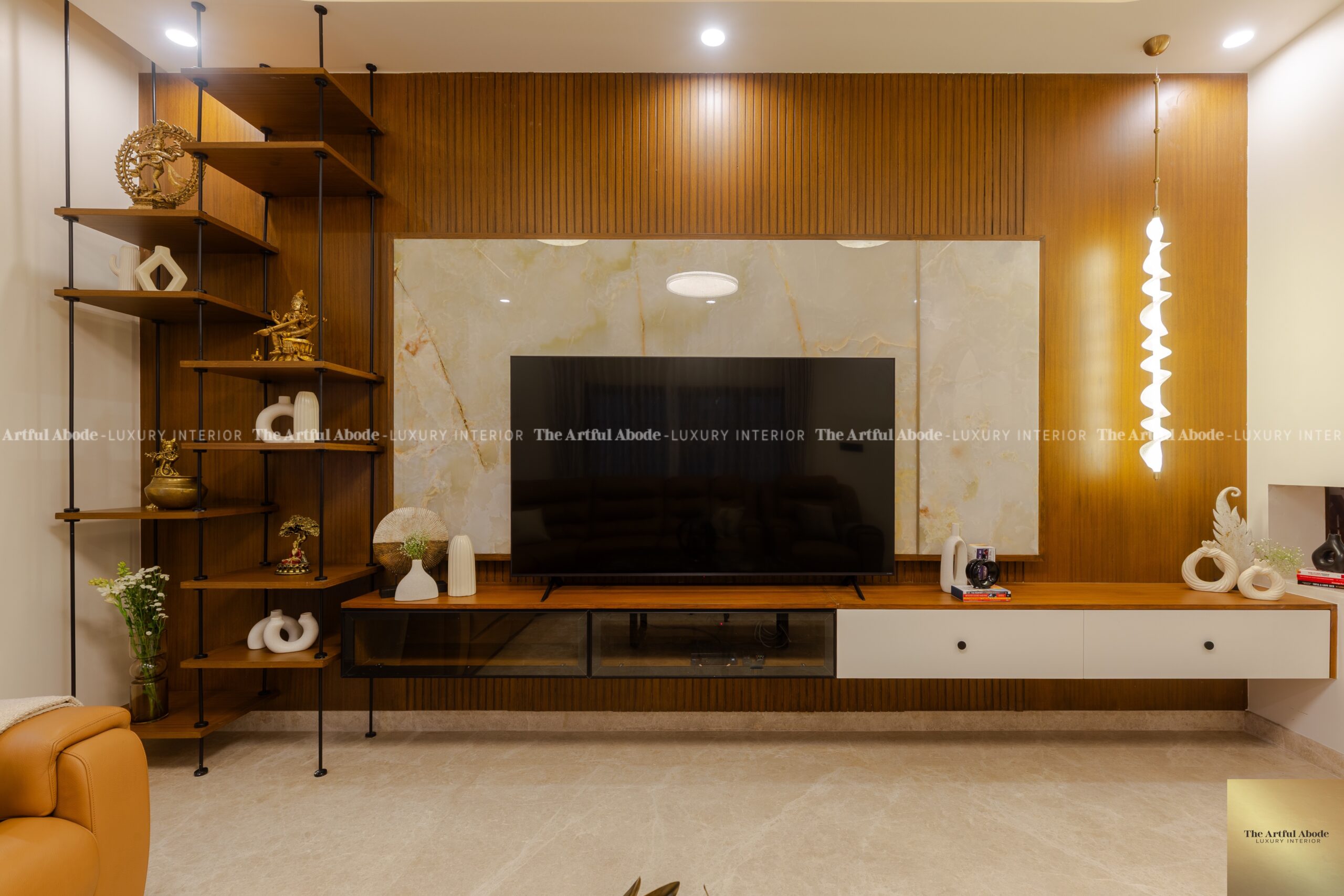
Contemporary design is what's current now. It changes. In 2026, contemporary Bangalore interiors feature warm neutrals over cool greys, fluted textures on TV walls and wardrobe shutters, warm wood tones on furniture, and brass hardware. In 2020 the same word described grey and white interiors with chrome fixtures. Contemporary is a moving target. Modern is a fixed historical reference.
Contemporary design is flexible in a way that strict stylistic approaches aren't. It accommodates the practical realities of Indian family life, the need for storage, the integration of household gods and festival items, and the specific light conditions of Indian apartments, better than approaches developed for European conditions.
What Defines Scandinavian Interior Design?
Scandinavian design emerged from a specific problem: how to make interiors warm, liveable, and beautiful in a climate with long dark winters. The solutions are light wood, white walls, natural textiles, warm lighting, and furniture that's both beautiful and comfortable to use for long periods indoors.
The hygge philosophy: hygge is the Danish concept of cosiness and convivial warmth. It informs Scandinavian interiors as much as any aesthetic principle. A Scandinavian room isn't just clean and light. It's comfortable. There are blankets, candles, warm lighting, and places to sit that you want to stay in.
Indian adaptation: the Scandinavian palette of white walls and light wood works in Indian apartments, where natural light is abundant, even better than in Nordic homes where it was developed. The challenge is the warmth-seeking textile layering that's central to Scandinavian interiors, which looks beautiful in winter and becomes excessive in Bangalore's climate. An Indian Scandinavian adaptation uses the palette and the furniture profiles without the heavy wool and sheepskin layering.
How to Achieve Bohemian, Traditional and Industrial Styles?
Bohemian Interior Design
Bohemian interiors are characterised by an eclectic mix of colour, pattern, and texture that reads as curated rather than chaotic. Layered textiles, handmade and handcrafted objects, plants, and an overall sense that the room has evolved through time rather than being designed in one sitting.
Bohemian works particularly well in Indian contexts because it accommodates the traditional objects, inherited furniture, and handcrafted textiles that many Indian households already own. Rather than hiding these in favour of a more uniform aesthetic, bohemian design celebrates them as elements that give the space its character.
Traditional Interior Design
Traditional design uses historical design references, classical furniture forms, rich materials, and symmetrical arrangements. In Western contexts this often means European classical interiors. In Indian homes, traditional design means something different and genuinely distinct.
Traditional Indian interior design draws on regional craft traditions: Kerala teak joinery, Rajasthani carved stone and painted woodwork, Gujarati carved furniture and mirror-work textiles, Bengali kantha embroidery. These traditions are rich, specific, and increasingly valued by a generation of homeowners who find pure Western-influenced contemporary design culturally rootless.
Industrial Interior Design
Industrial design uses exposed structural elements, raw materials, and the aesthetic of the factory and the warehouse. Exposed brick or concrete walls. Steel pipes and conduit left visible. Edison bulbs. Reclaimed wood. The aesthetic works in loft-style apartments with high ceilings and generous floor area.
In Bangalore, industrial works best in larger apartments and independent homes with sufficient ceiling height and raw structural elements worth exposing. In a standard 2BHK apartment with standard ceiling height and smooth plastered walls, an industrial aesthetic requires faking the elements, applying brick-effect wallpaper, for example, which rarely convinces. For living room styling in any of these styles, see our living room interior design guide.
How to Mix Different Interior Design Styles?
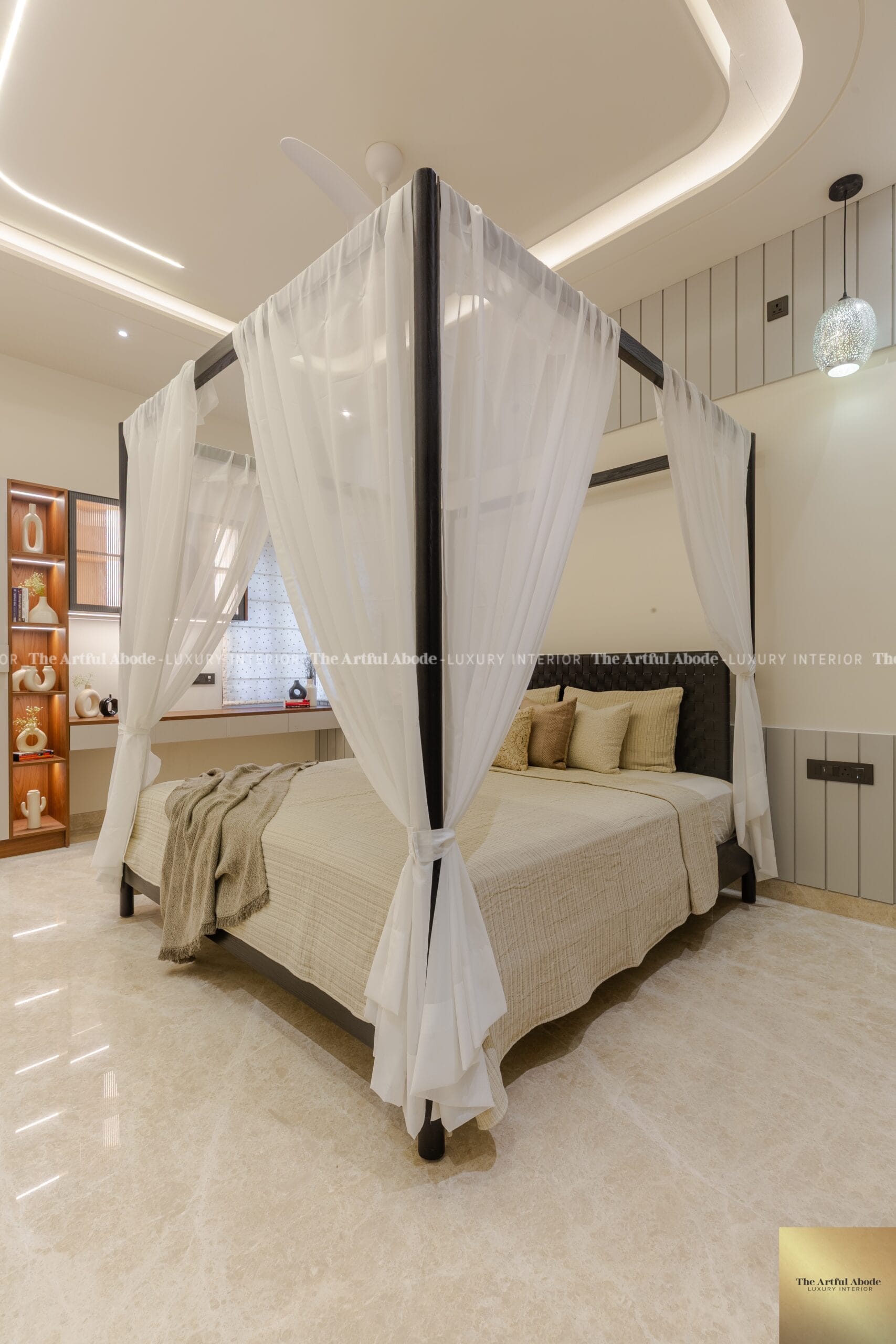
Most well-designed homes don't inhabit a single style. They have a dominant style that accounts for around 80% of the visual language, and one or two other influences that give the space character and prevent it from feeling like a showroom sample.
Finding common threads between styles: a contemporary base with traditional Indian accent pieces works because both value craftsmanship, natural materials, and warmth. A Scandinavian base with bohemian textile layering works because both value natural materials and organic forms. A modern base with industrial accents works because both value honest material expression and functional form.
The 80-20 rule in practice: choose one primary style that governs the furniture, the walls, the flooring, and the overall spatial organisation. Then allow 20% of the visual language to come from another influence. A contemporary living room with a single traditional brass lamp and a handwoven dhurrie rug is contemporary, enriched. A contemporary living room with traditional furniture, traditional brass everywhere, and a modern wall panelled TV unit is confused.
Transitional approaches: transitional design is the term for interiors that sit comfortably between traditional and contemporary. It's the dominant style in aspirational Bangalore interiors right now because it accommodates the practical realities of Indian family life while maintaining a considered aesthetic.
Which Interior Design Style Suits Your Home?
Lifestyle considerations first. A household with young children needs durable surfaces, easy-to-clean upholstery, and storage that keeps things out of reach. Minimalist design is aspirationally appealing but practically difficult with children. A more relaxed contemporary or transitional approach that builds in storage and uses robust materials is more liveable.
Maintenance honestly assessed: marble and light-coloured upholstery in a household with pets is a maintenance burden regardless of how beautiful it looks. Choose a style direction and then assess each material and colour choice within it for actual daily-use durability. For minimalist design in depth, see our minimalist interior design guide.
Found Your Style?
At The Artful Abode, we help homeowners across Bangalore 2BHK and 3BHK homes identify their design aesthetic and apply it consistently across every room. Get in touch and let's find yours.