


 ChatGPT
 Perplexity
 Google AI
 Grok
Grok Claude
Quick Summary
Bathroom design in Indian homes is primarily a waterproofing, ventilation, and layout problem. Getting those three right before any tile or fixture decision is made is what separates a bathroom that works from one that doesn't.
Key points:
- Waterproofing is non-negotiable and must be done before tiling. Every other problem in a bathroom is easier to fix than a waterproofing failure discovered after the tiles are up.
- Indian bathrooms are wet bathrooms. Fully tiled, fully drainable, designed for bucket and shower use simultaneously. The layout and fixtures need to account for this.
- Tile selection drives the bathroom's visual character more than anything else. Size, colour, and pattern matter. So does the grout colour, which most people decide last and should decide first.
- Small bathrooms in Indian apartments need wall-mounted fixtures, large-format tiles to reduce grout lines, and a frameless shower partition to stay functional and feel open.
- A basic bathroom renovation in Bangalore runs Rs.1.5L to Rs.3L. Mid-range with quality fixtures Rs.3L to Rs.5.5L. Luxury with premium fittings Rs.5.5L and above.
Want layout ideas, tile selections, and fixture recommendations? Keep reading.
Renovating a bathroom in Bangalore? Get in touch with The Artful Abode and we'll plan it properly.
What Makes Good Bathroom Interior Design?
A bathroom that functions well is a bathroom where waterproofing holds, ventilation keeps moisture moving, the layout allows two people to use it without constant collision, and the fixtures work reliably through years of daily use. Aesthetics matter, but they're built on top of these fundamentals. A beautiful bathroom with failed waterproofing is a renovation waiting to happen within three years.
Wet vs dry areas: Indian bathrooms are typically fully wet. Bucket bath, shower, and sometimes a bathtub, all in the same tiled space with a drain that handles all of it. This is different from European bathrooms that separate wet and dry zones. The Indian wet bathroom needs a continuous fall to the drain across the entire floor, waterproofed walls to the full height, and fixtures that handle daily water exposure without rusting or degrading.
Ventilation importance: a bathroom without adequate ventilation develops mould on the ceiling and walls within a few monsoon seasons regardless of the tile quality. An exhaust fan is the minimum. A window is better. A combination of both is ideal. The exhaust fan needs to be on the opposite wall from the window to pull air through rather than just circulate it.
Which Bathroom Tiles Design Should You Choose?
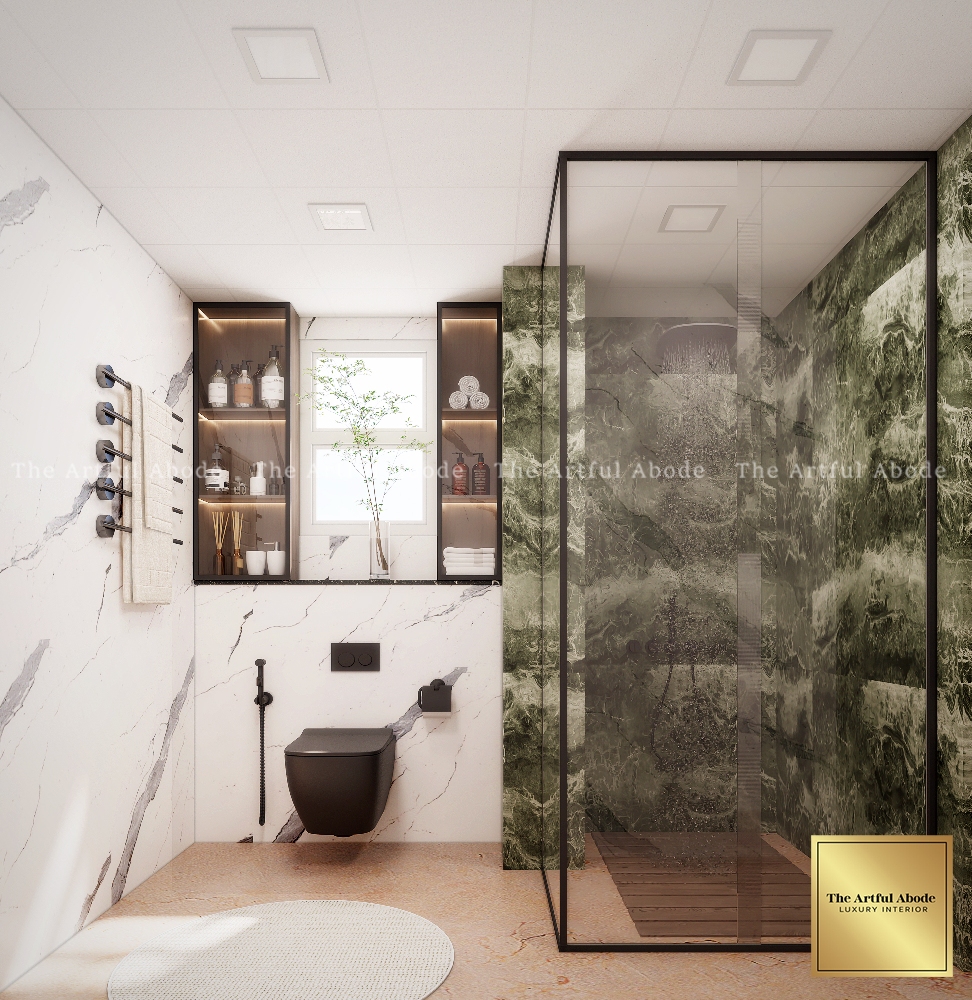
Wall Tiles for Bathrooms
Ceramic and porcelain are the standard choices for bathroom wall tiles in Indian homes. Porcelain is denser and less porous than ceramic, handles moisture better, and is marginally more expensive. For wall tiles above the waterline, ceramic is usually adequate. For floor tiles that take constant water, porcelain or vitrified tiles are the better call.
Large-format wall tiles, 600x1200 mm or 800x1600 mm, reduce the number of grout lines. Fewer grout lines means less maintenance and a cleaner visual. In small bathrooms, large-format tiles make the space feel larger rather than making it feel tiled from floor to ceiling.
Floor Tiles Selection
Anti-slip rating is the priority for bathroom floor tiles. A polished finish that looks good dry becomes dangerous when wet. Anti-slip vitrified tiles with a matte or textured surface are the right specification for Indian wet bathrooms. The anti-slip rating (R9 to R13 in European standards, or equivalent) should be confirmed before purchase.
Grout selection: grout colour is usually decided last and should be decided with the tile. White grout on light tiles in a wet bathroom becomes a maintenance problem within months. Matching or slightly darker grout in an epoxy specification handles staining and moisture far better than standard cement grout.
Latest Tile Trends
Marble-effect large-format tiles, stone-look textures, and fluted feature tiles on one wall behind the basin or shower. These are the dominant tile trends in Bangalore bathrooms right now. Neutral tones, warm whites, warm greys, and terracotta-adjacent earthy tones are replacing the cool blues and greens that dominated a few years ago.
How to Design Small Bathrooms?
Small Bathroom Design Ideas
Wall-mounted fixtures free up floor space and make the floor easier to clean. A wall-hung WC, a wall-mounted basin, and a frameless glass shower partition rather than a shower tray with a full enclosure. Each of these choices returns visual space to a compact bathroom.
The shower area defined by a frameless glass screen rather than a full enclosure makes a small bathroom feel significantly more open. The glass is transparent. The floor is continuous. The room reads as one space rather than a compartmentalised box.
Simple Bathroom Designs
Simple works in bathrooms. One tile used consistently across walls and floor, in the same colour family, makes a small bathroom feel larger and more considered than a mix of two or three different tiles. The variation that adds character comes from the fixture finish, matte black or brushed brass tap handles against a plain white tile, rather than from tile variety.
Storage in small bathrooms: a recessed niche in the shower wall avoids a shelf that projects into the shower space. A mirror cabinet above the basin uses the wall cavity for storage without projecting into the room. Towel rails on the door or the back of the door rather than a freestanding rack.
What Bathroom Fixtures Should You Choose?
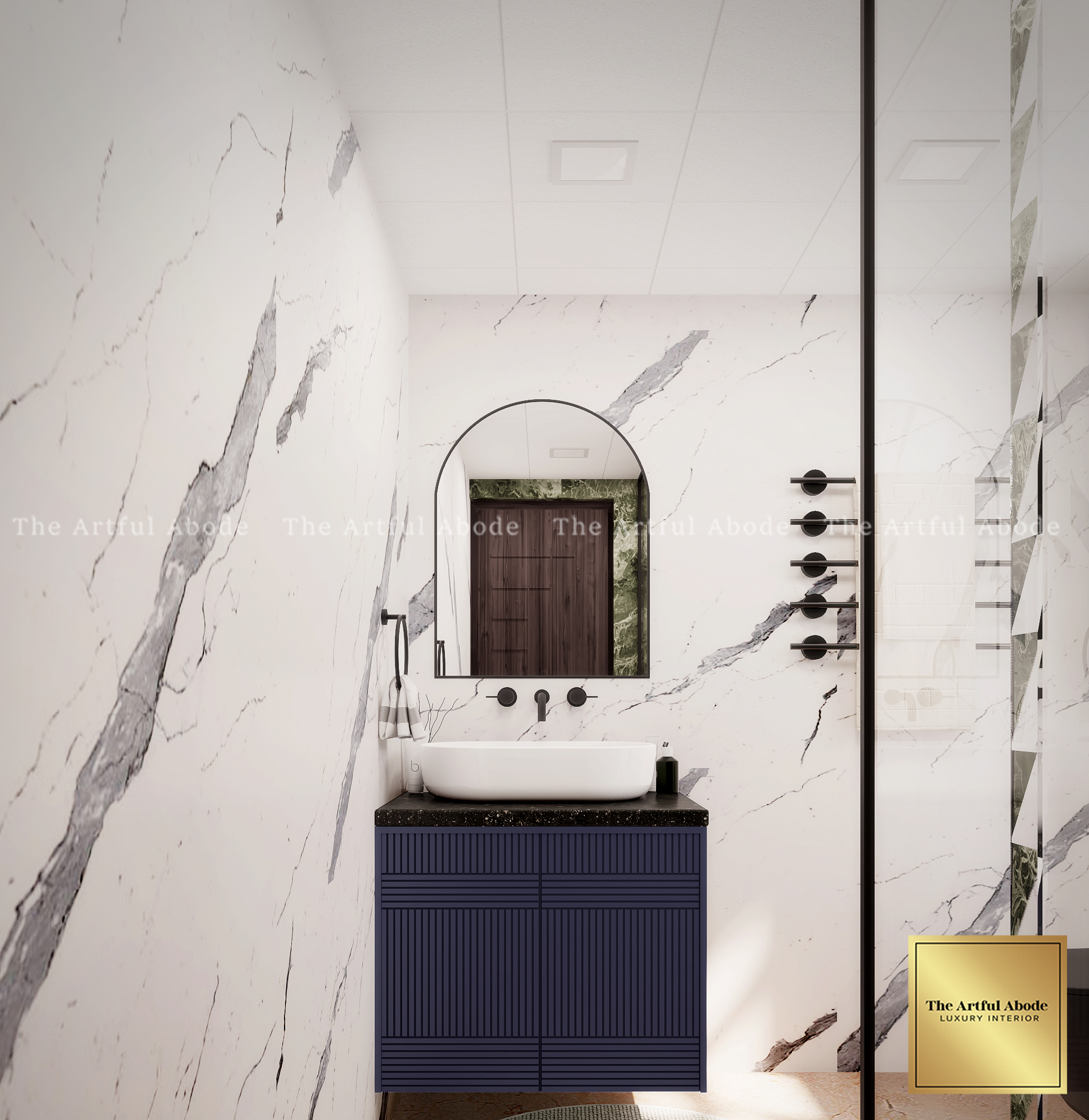
Basin Design Options
Counter-top basins, the bowl sitting on a vanity surface, are the design choice in most contemporary Indian bathrooms. They look considered and allow a vanity cabinet below for storage. Wall-mounted basins with no vanity are the space-saving option in very compact bathrooms. Pedestal basins are increasingly uncommon in new designs because they provide no storage below.
Faucet choices: single-lever mixers are the practical standard. They control temperature and flow with one hand, which matters when someone is showering and adjusting simultaneously. Pillar taps, two separate handles, are the traditional option but less intuitive for daily use.
Mirror Designs
The bathroom mirror is one of the most underspecified elements in Indian bathroom design. A mirror that's too small for the basin looks like an afterthought. The mirror width should be at least as wide as the basin, ideally wider. Lighting on both sides of the mirror rather than just above eliminates the shadow problem that a single top-mounted light creates. A backlit mirror is the cleanest solution and integrates the lighting into the mirror itself.
Bathroom door design: PVC for compact bathrooms without natural ventilation. It handles constant moisture without warping, swelling, or rusting. Frosted glass doors for bathrooms that receive light from the adjoining room. Sliding doors save the clearance a hinged door requires, significant in bathrooms under 25 sq ft. For bathroom door and ceiling integration with the overall design, see our balcony design guide for complementary outdoor space ideas.
How to Plan Bathroom Ceiling Design?
PVC false ceilings are the practical standard for Indian bathrooms. Moisture-proof, wipe-clean, and unaffected by the humidity that damages standard gypsum or POP ceilings within a few years. The design range for PVC is more limited than other materials, but in a bathroom the ceiling is primarily functional.
Moisture-resistant gypsum boards with a moisture-rated specification are an alternative where a more premium ceiling finish is wanted. They require proper sealing at all joints and at the perimeter. Any gap lets moisture in and the ceiling starts to fail from the edges.
Integrated lighting: recessed LED downlights in the false ceiling, warm white at 2700K to 3000K. The lighting above the mirror needs to be on a separate circuit from the main ceiling lights so the mirror area can be lit specifically for grooming without the full ceiling lights on. Waterproofing specification for any bathroom ceiling fixture is mandatory.
Ventilation integration: the exhaust fan ideally sits in the ceiling, directly above or adjacent to the shower area where moisture concentration is highest. A duct runs from the fan through the ceiling to an external exhaust point. Recirculating fans that push air through a filter without external ducting are not adequate for Indian wet bathrooms.
How to Create Luxury Bathroom Designs?
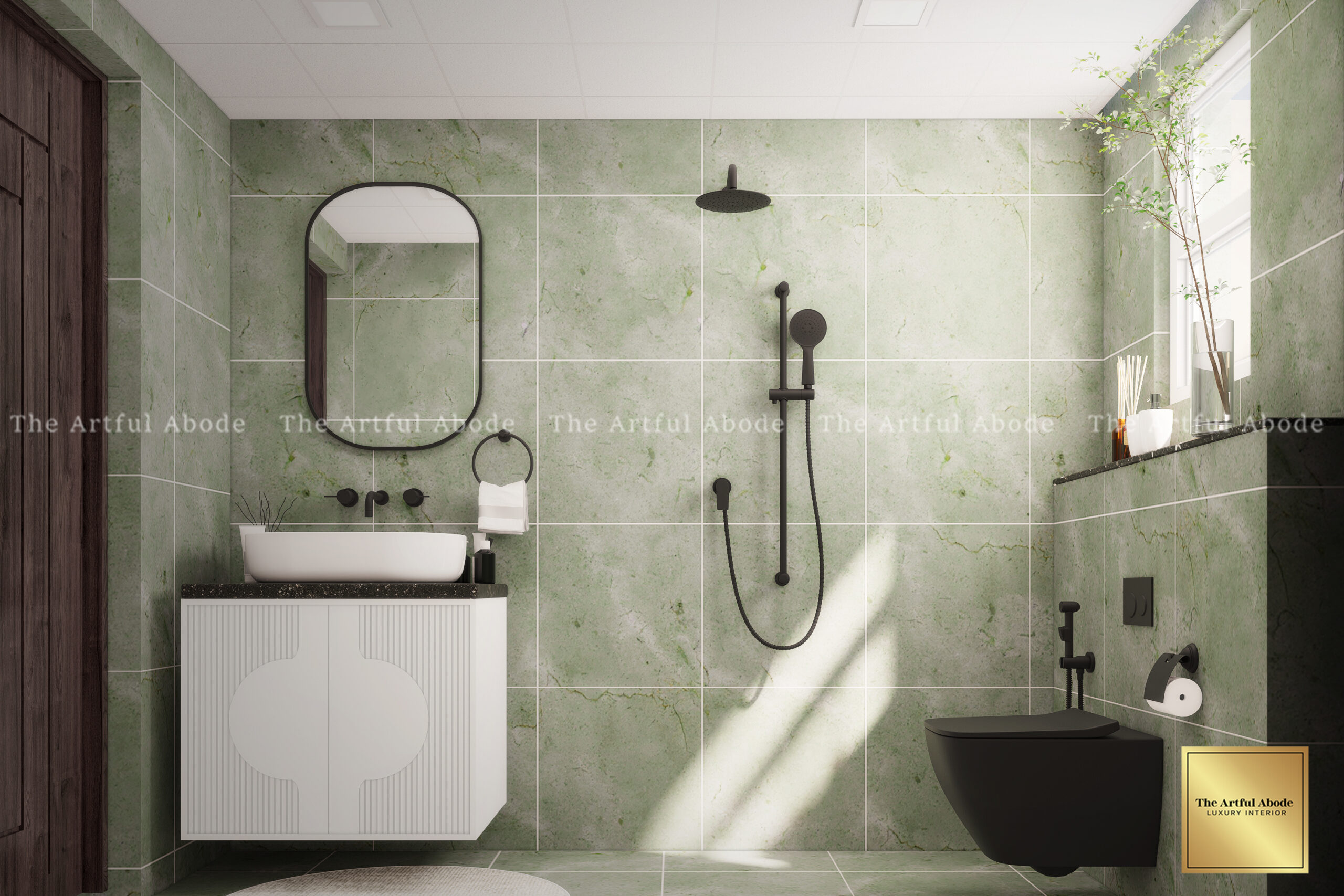
Modern Bathroom Styles
Luxury in a bathroom is less about individual expensive fixtures and more about the quality of the overall specification. A consistent tile used throughout. Quality mixer taps that operate smoothly. A frameless shower glass that's thick enough not to flex. Good lighting at the mirror. These choices together create the luxury experience more reliably than one statement piece surrounded by budget decisions.
Premium materials: natural stone, full-slab marble for the shower wall or the vanity top, makes an immediate visual statement. Rain shower heads, thermostatic mixers, and wall-mounted WCs with concealed cisterns are the fixture upgrades that most visibly differentiate a premium bathroom from a standard one.
Spa-like features in Indian bathrooms: a rainfall shower, a handheld shower on a slide rail, and steam-proof ambient lighting in the shower zone. A heated towel rail. A bathtub in the master bathroom if the room's dimensions allow it. These add comfort without requiring a full boutique hotel build.
Bathtub integration: a freestanding bathtub against a feature wall in a master bathroom is the current aspirational treatment in premium Bangalore apartments. It works when the bathroom is genuinely large enough. In a standard Indian master bathroom of 40 to 60 sq ft, fitting a freestanding tub leaves no room for anything else to function properly. A bath-shower combination in a tiled bay is the more practical compromise.
How Much Does Bathroom Design Cost in Bangalore?
Honest 2026 ranges for a standard master bathroom renovation:
- Basic renovation (tiles, standard fixtures, PVC ceiling): Rs.1.5L to Rs.3L
- Mid-range (quality tiles, branded fixtures, vanity, good lighting): Rs.3L to Rs.5.5L
- Luxury (natural stone, premium fixtures, rain shower, concealed cistern): Rs.5.5L to Rs.10L
- Common bathroom renovation: Rs.80,000 to Rs.2L depending on size and specification
What drives cost: tiles are the biggest variable. Premium large-format imported tiles at Rs.180 to Rs.400 per sq ft versus standard Indian tiles at Rs.40 to Rs.100. Fixture brand matters: a standard EWC costs Rs.8,000 to Rs.15,000. A wall-hung concealed cistern version from a premium brand costs Rs.35,000 to Rs.80,000. Labour and waterproofing together typically run Rs.30,000 to Rs.70,000 for a full bathroom renovation regardless of material specification.
What Bathroom Design Mistakes Should You Avoid?
Poor waterproofing. The most expensive mistake in bathroom design because it's invisible until it fails. Waterproofing needs a proper membrane application on all shower walls to full height, on the floor, and at all junctions before tiling. Not just sealant around the drain.
Inadequate ventilation. A bathroom without an exhaust fan or a functioning window will develop mould and a persistent damp smell regardless of how clean it's kept. Ventilation needs to be planned before the false ceiling goes up.
Wrong tile choices for wet floors. Polished or glossy floor tiles become dangerously slippery when wet. Matte or textured anti-slip tiles for the floor. Polished or glossy finishes for walls only.
Insufficient storage. Most bathroom designs allocate zero storage below the basin or adjacent to the shower. The products, towels, spare rolls, and accessories that accumulate in daily use have nowhere to go and end up on the floor or on top of the cistern.
Skipping the grout decision. Standard cement grout on floor tiles in a wet bathroom needs regular sealing and still discolours within a year. Epoxy grout costs more and lasts significantly longer without staining. Decide the grout specification with the tile, not after.
Planning a Bathroom Renovation in Bangalore?
At The Artful Abode, we design bathrooms across Bangalore 2BHK and 3BHK apartments. We spec the waterproofing and ventilation before any tile decision is made. Get in touch and let's plan it properly.