 ChatGPT
 Perplexity
 Google AI
 Grok
Grok Claude
Quick Summary
Wooden ceiling design in Indian homes works well in specific applications. Not everywhere, and not with every material.
Key points:
- Wooden ceilings work best as accents in living rooms, entryways, and select bedrooms. Full wooden ceilings in compact rooms often feel heavy.
- Solid wood is expensive and high-maintenance. Engineered wood and WPC handle Bangalore's humidity far better for most applications.
- Cost runs from Rs.150 to Rs.450 per sq ft depending on material. Solid teak at the high end, MDF with wood-effect laminate at the lower end.
- Termite treatment is non-negotiable for any real wood ceiling. Skip it and it becomes a problem faster than most people expect.
- Plan electricals before installation. Recessed lights and LED strips in a wooden ceiling need wiring roughed in before the panels go up.
Want design ideas, material comparisons, and cost breakdowns? Keep reading.
Considering a wooden ceiling for your Bangalore home? Get in touch with The Artful Abode for a free consultation.
What Is a Wooden Ceiling and Where Does It Work Best?

A wooden ceiling is the one ceiling treatment that changes a room's character completely. Not just how it looks. How it feels to be in. The warmth, the texture, the way it absorbs sound slightly differently than a painted slab.
Wooden ceiling doesn't mean one thing. It could be full coverage, every surface visible. It could be a partial accent, wooden panels in the centre while gypsum handles the perimeter. Or slatted strips running across a painted background where the gaps are half the design.
Full coverage works in large rooms with good ventilation. Villas, open-plan living areas, dining spaces in independent homes. In a standard Indian apartment bedroom or hall, a full wooden ceiling tends to feel heavy. The room shrinks visually and the warmth tips into oppressiveness.
Accents are more practical. A slatted section in the centre of the hall with gypsum around it. A wooden panel behind the bed. Warmth without the ceiling sitting on you.
What Are the Best Simple Wooden Ceiling Design Ideas?
Wooden False Ceiling Designs for Homes
Slatted ceilings are the most popular wooden ceiling treatment in Bangalore right now. Parallel strips with gaps between them, mounted on a backing panel. The look reads modern and suits both contemporary and transitional interiors without being too specific to either.
Panel designs use larger flat wood sections, sometimes with shadow gaps that create a grid. More formal. Better for dining rooms and home offices.
Coffered ceilings work in independent homes with higher clearances. In a standard Indian apartment that's already at nine feet before a false ceiling goes in, coffered designs make the room feel like a box.
Wooden False Ceiling Ideas for Halls
A slatted wooden section running centrally down the hall, profile lights recessed into it. Warm, defined, doesn't commit the whole room to wood. One of the better hall treatments in Bangalore homes right now.
Solid Wood vs Engineered Wood vs WPC: Which Is Best for a Wooden Ceiling?
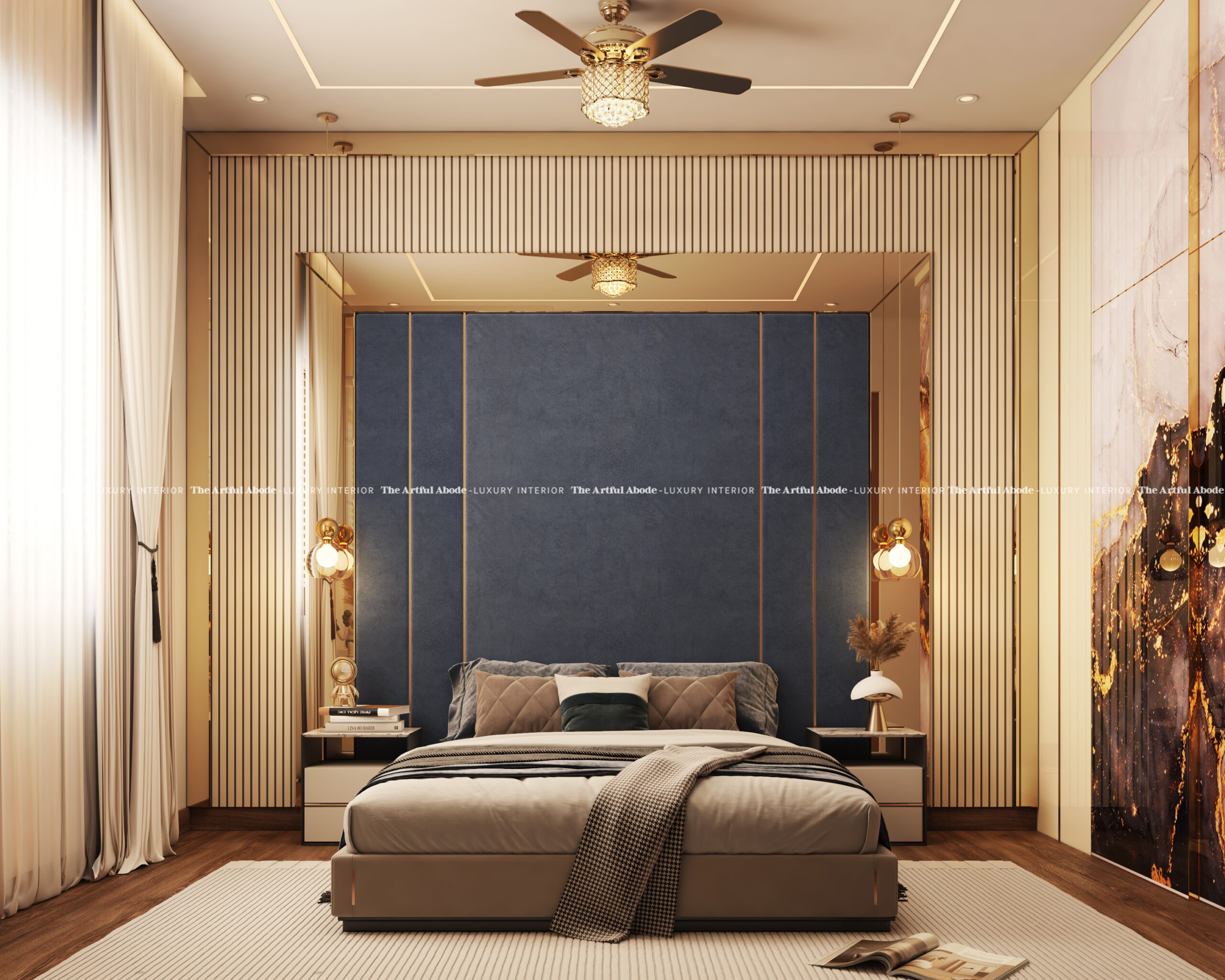
This decision determines how the ceiling performs over time, not just how it looks initially.
Solid wood is the premium option. Teak, pine, cedar. It looks best and ages with character. It's also the most expensive, the heaviest, and the most vulnerable to humidity. In Bangalore's monsoon season, a solid wood ceiling in a room without consistent AC will move. Joints open, panels warp, finish cracks. For rooms with AC running consistently, solid wood is manageable. Otherwise it's a risk.
Engineered wood handles humidity more reliably. Manufactured to resist the movement solid wood is prone to, while still giving a genuine wood surface. More stable, more predictable, considerably cheaper.
WPC (Wood Plastic Composite) is the most moisture-resistant of the three. No swelling, no warping, termite-resistant. Lighter than engineered wood and easier to install. The trade-off is that it doesn't have the texture of real wood on close inspection.
MDF with wood-effect laminate is the budget option. Looks like wood from a distance, only appropriate in dry rooms with no moisture risk.
For most Bangalore apartments, engineered wood or WPC gives the best outcome.
How Much Does a Wooden Ceiling Cost in Bangalore?
Wooden False Ceiling Price Per Sq Ft by Material
Honest 2026 ranges, material and labour:
- MDF with wood-effect laminate: Rs.150 to Rs.220 per sq ft
- WPC slatted ceiling: Rs.200 to Rs.300 per sq ft
- Engineered wood panels: Rs.280 to Rs.380 per sq ft
- Solid wood (teak, pine): Rs.350 to Rs.500 per sq ft and above
- LED strip lighting addition: Rs.120 to Rs.250 per running foot
A slatted WPC ceiling for a standard 15x12 ft living room section runs Rs.36,000 to Rs.54,000 for material and labour. Add LED strips in the slat gaps and it moves to Rs.50,000 to Rs.75,000.
Wooden ceilings cost significantly more than gypsum or POP for the same area. If the goal is a premium-looking ceiling on a moderate budget, a well-executed gypsum ceiling with quality warm LEDs often gets closer to the result than a budget wooden ceiling that's trying to be something it isn't.
Considering a Wooden Ceiling for Your Home?
At The Artful Abode, we design and execute ceiling projects across Bangalore 2BHK, 3BHK and 4BHK homes. We'll advise on whether wood is genuinely the right call for your room before any material decisions are made.
Is a Wooden False Ceiling Right for Your Home?
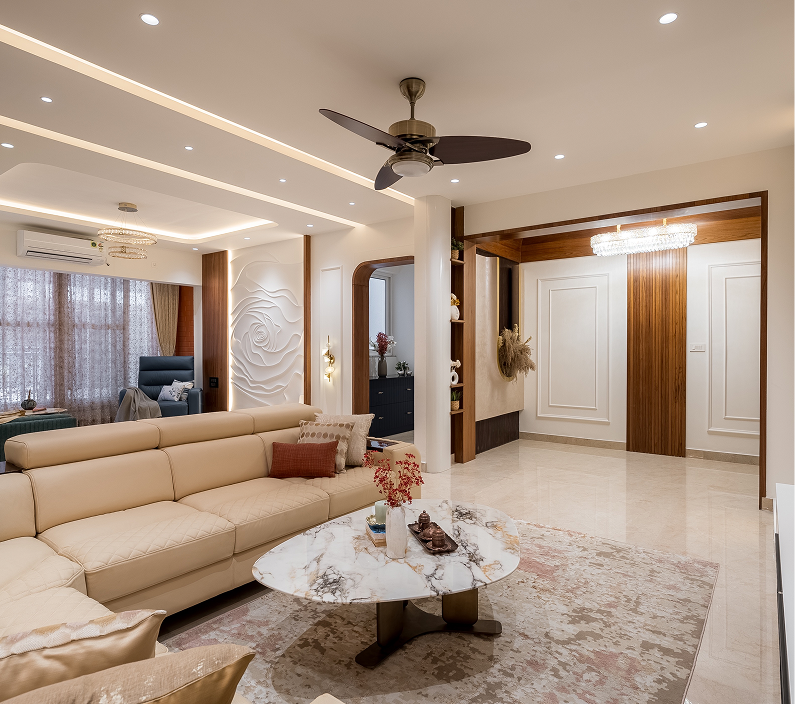
No painted ceiling gives a room the warmth a wooden one does. That's the actual reason people choose it. Living rooms, dining spaces, entryways where the first impression matters.
But it costs more, needs more planning, and asks more of you over time. Termite treatment. The right material for the humidity. Electricals sorted before anything goes up.
If warmth is what you're after and the budget supports it, wood is hard to beat. If budget is tight or moisture is a consistent issue in the room, gypsum with warm lighting is the more honest answer.
For a comparison of all ceiling types, see our ceiling design guide.
What Are the Different Types of Wooden Ceiling Finishes?
Natural finish lets the wood grain show through a clear or lightly tinted sealer. The most honest treatment for real wood. Ages well, requires maintenance every few years.
Stained wood uses a coloured stain to alter the tone while keeping the grain visible. Darker stains for drama. Lighter stains for warmth without weight. More forgiving on lower-grade wood because the colour masks inconsistencies.
Painted wood hides the grain. Less common for ceilings but used in contemporary interiors where the slatted pattern is the design element, not the wood texture itself. WPC and engineered wood come in factory finishes that don't need additional on-site treatment.
How Do You Maintain a Wooden Ceiling in Indian Conditions?
Termite treatment before installation. Not optional. Any real wood ceiling without it is a risk. Bangalore's climate is warm enough year-round for termite activity. Treatment goes on the raw wood before installation, not after.
Humidity management matters more than cleaning. A wooden ceiling in a room that's regularly closed and humid will degrade faster than one with consistent airflow or AC. Monsoon months are when the problems show up.
Cleaning is simple. Dry or lightly damp cloth. No wet mopping, no strong cleaners. Unsealed natural wood needs resealing every three to five years depending on room conditions.
How Do You Plan Lighting Inside a Wooden Ceiling Design?
Electrical wiring needs to be roughed in before the wooden panels go up. LED strips between slats, recessed downlights in panel joints, pendant drops through wooden frames. All of these need conduit and wiring in position first. This is the most common thing that gets forgotten until it's too late.
LED strips between slats give a dramatic effect. Light comes from inside the ceiling rather than pointing at the room. Warm white at 2700K. Cool white cancels out the warmth the wood is there to provide.
Recessed downlights need the panel gap wide enough to accommodate the fitting. Plan the lighting layout and the panel layout together.
What Mistakes Should You Avoid with Wooden Ceiling Design?
Using solid wood in a room without climate control. The movement from humidity will show at the joints within two monsoon seasons. Use engineered wood or WPC if the room isn't consistently air-conditioned.
Skipping termite treatment. It's a small cost relative to the ceiling installation. Not doing it is a false economy.
Installing the ceiling before planning the lights. This is the mistake that requires cutting through finished work or living with lighting that doesn't suit the ceiling.
Too much wood in a small room. A compact bedroom with a full wooden ceiling feels like a sauna. Use wood as an accent. Let gypsum or POP handle the rest.
For more on false ceiling options that can be combined with wooden elements, see our false ceiling design guide. For a POP and gypsum comparison, see our POP vs gypsum ceiling guide.
Ready to Plan Your Wooden Ceiling?
At The Artful Abode, we design and execute ceiling projects across Bangalore 3BHK and 4BHK homes. Get in touch and let's plan yours.