 ChatGPT
 Perplexity
 Google AI
 Grok
Grok Claude
Quick Summary
POP ceiling and gypsum are both false ceiling materials used across Indian homes. They look similar once painted but install differently, cost differently, and suit different design requirements.
Key points:
- POP is applied wet and can take any shape. Curves, arches, custom profiles. Gypsum board is a prefabricated panel and is only practical for flat ceiling designs.
- Gypsum installs faster. A single bedroom ceiling takes one to two days. POP takes longer because it needs drying time between coats.
- POP costs Rs.60 to Rs.90 per sq ft installed. Gypsum runs Rs.70 to Rs.110. Labour is the bigger variable between the two.
- For flat ceilings in most Indian apartments, gypsum is the more practical choice. For decorative work, curves, or custom borders, POP is the only real option.
- Cracks in POP can be repaired invisibly. Damage to gypsum board is harder to hide.
Want the full comparison on costs, durability, and which suits your home? Keep reading.
Not sure which ceiling material suits your home? Get in touch with The Artful Abode for a free consultation.
What Is a POP Ceiling and How Is It Made?
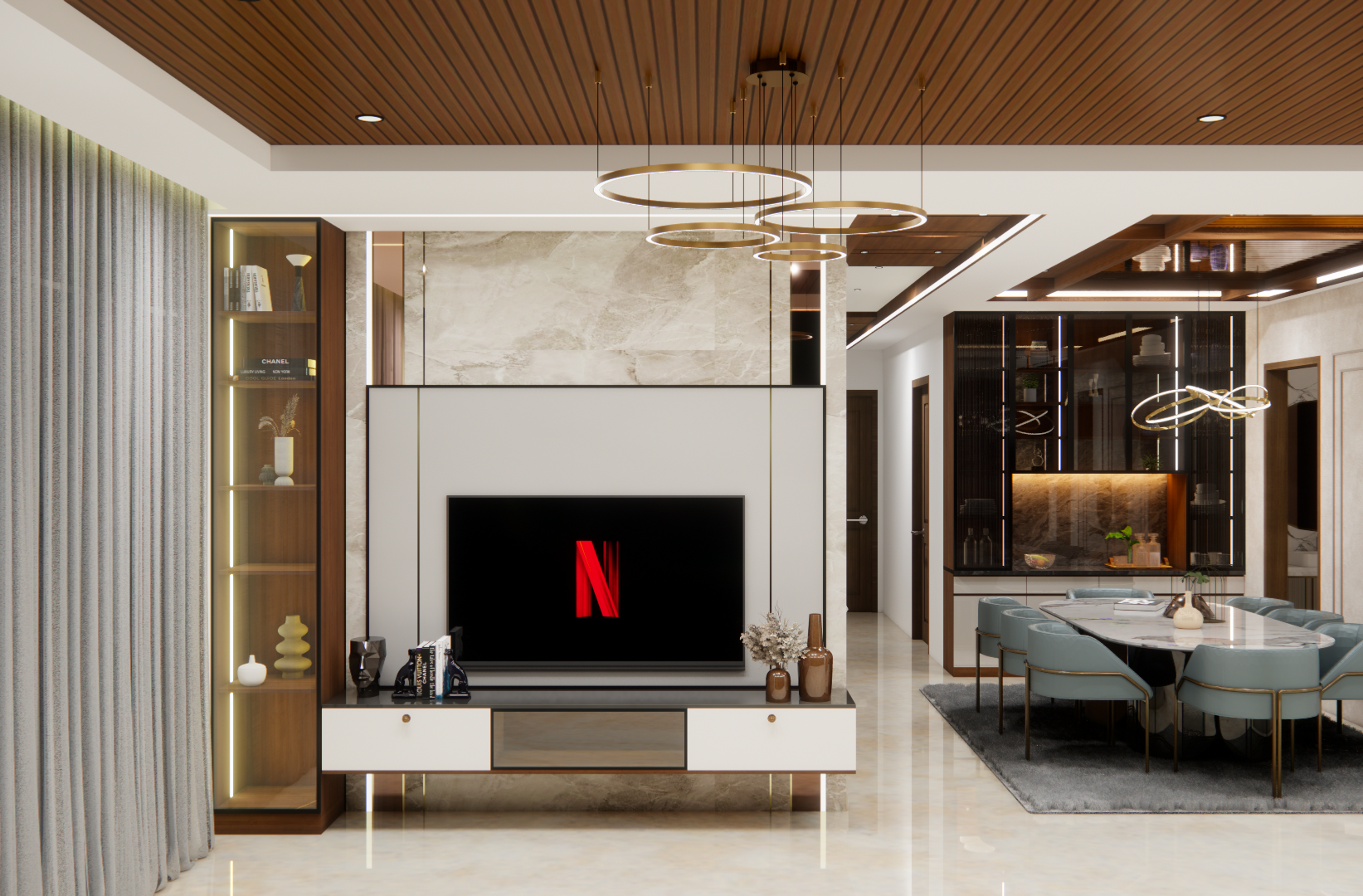
POP stands for Plaster of Paris. Mixed with water and applied wet by a plasterer onto a metal frame suspended below the structural slab. The material is shaped by hand before it dries, which is what allows curves, arches, stepped profiles, and decorative cornices that no other ceiling material can match.
The trade-off is time and skill. POP needs multiple coats with drying time between each. A single room takes three to five days minimum. And the quality varies significantly with the plasterer. A good POP ceiling looks custom. A rushed one shows every flaw once painted.
Popular POP Ceiling Designs for Halls and Bedrooms
In Indian homes, POP is the standard choice for hall ceilings with decorative borders and profile light channels. In bedrooms, it's used for step ceiling designs where the centre panel drops lower than the perimeter. For simpler flat bedroom ceilings, most contractors now default to gypsum unless the design specifically calls for POP.
POP ceiling lifespan runs fifteen to twenty years. Cracks that develop at joints can be refilled and repainted without any visible trace.
What Is a Gypsum Ceiling and How Does It Differ?
Gypsum board is a manufactured panel, calcium sulphate pressed between two layers of paper. Panels are cut to size and fixed onto a metal frame. The surface is a finished panel rather than a hand-applied material.
Gypsum False Ceiling: Design Options and Finishes
Gypsum gives a consistently smooth, flat surface that takes paint evenly. For homes where the ceiling design is clean and minimal, it's often the better call. Design range is the real limitation. Gypsum can do stepped levels and recessed cove channels. It can't do curves or ornate mouldings. Anything shaped needs POP.
Gypsum Board Ceiling: Installation and Uses
Installation is significantly faster than POP. A bedroom ceiling goes up in one to two days. A full 3BHK in five to seven working days. No drying time to wait on between stages.
Fire-rated gypsum boards are available and used in commercial projects. Moisture-rated boards exist for bathrooms, though PVC is still the more practical call in wet areas.
How Does POP Ceiling Compare with Gypsum?
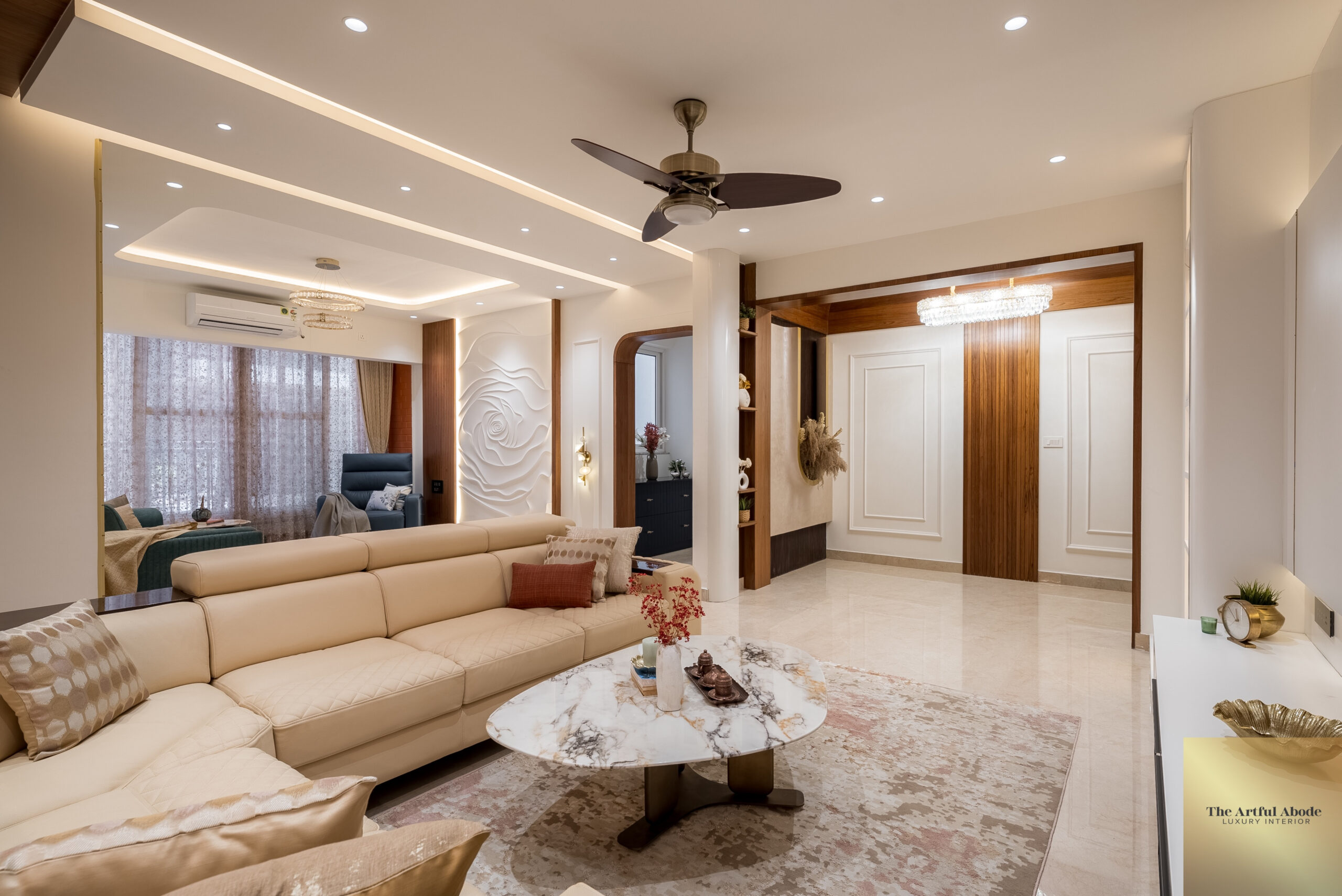
The difference that matters most in practice is design flexibility vs speed.
POP can be shaped. Gypsum can't. Curved or decorative ceiling? POP only. Flat stepped ceiling with recessed channels? Either works and gypsum is faster.
POP depends more on skilled labour. Quality varies with the plasterer. Gypsum installation is more consistent because the panels are manufactured to a standard.
Repair favours POP. Cracks in POP fill and repaint invisibly. Damage to gypsum board shows as a panel defect that's harder to conceal without replacing the section.
Which Is the More Cost-Effective Option?
POP comes in slightly cheaper on material. Gypsum's faster installation reduces labour hours. For simple flat ceilings, both end up at comparable all-in costs. POP runs Rs.60 to Rs.90 per sq ft installed. Gypsum runs Rs.70 to Rs.110 per sq ft.
Where the difference matters is decorative work. An elaborate POP ceiling with custom borders and multi-level profiles needs significantly more skilled labour time. For simple designs, the choice doesn't dramatically change the budget.
For the full false ceiling cost breakdown, see our false ceiling design guide.
Where Does POP Ceiling Work Better Than Gypsum?
Any ceiling design that isn't flat. Curves, arches, rounded steps, circular profiles, ornate cornices. POP is the only material that handles these properly.
Budget builds where the design is simple actually favour POP slightly on material cost. Labour is the variable, and a skilled POP plasterer who works quickly can finish a flat ceiling competitively.
Repair-friendliness is another POP advantage. Over the lifespan of a home, a ceiling that can be invisibly repaired is worth something. Hairline cracks at joints are common in any false ceiling over time. POP handles this better.
Where Does Gypsum Ceiling Work Better Than POP?
Speed. When a project is on a timeline, gypsum is the practical call. No drying time between coats. Panels go up, joints are taped and plastered, and the ceiling is ready to paint in a fraction of the time POP needs.
Large flat ceiling spans. Gypsum panels are consistent in thickness and surface quality across the entire area. A large flat gypsum ceiling looks even in a way that requires significant skill to replicate in POP.
Commercial and office spaces specify gypsum almost exclusively because fire-rated boards are available and installation speed matters on commercial timelines. In residential settings the fire rating isn't usually specified, but the speed advantage remains.
Not Sure Which Ceiling Material Suits Your Home?
At The Artful Abode, we handle ceiling design and execution across Bangalore 2BHK, 3BHK and 4BHK homes. We'll tell you which material suits your design and timeline before work starts.
What Are the Best POP False Ceiling Designs in India?
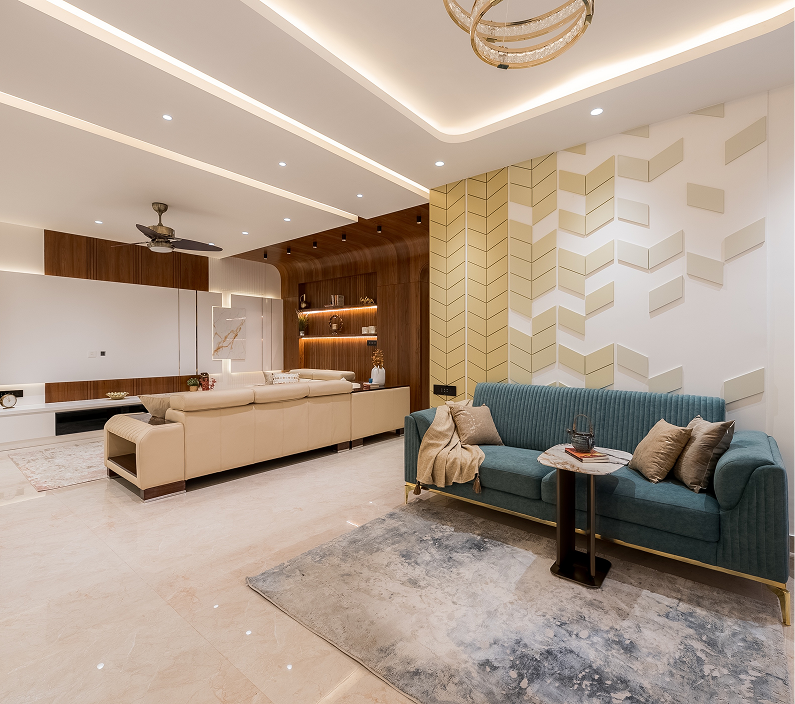
POP is most commonly used in halls and master bedrooms where the ceiling is meant to be a design element.
Simple POP Ceiling Ideas with LED Cove Lights
The most popular POP treatment in Bangalore homes right now is actually simple. A flat ceiling with a stepped border around the perimeter, a cove channel for LED lighting, clean lines. No elaborate mouldings. The LEDs do the decorative work. The POP provides the structure for it.
This works because it delivers warmth and intentionality without visual noise. Warm white LEDs at 2700K to 3000K in the cove channel change the feel of the room completely in the evening.
More elaborate POP designs still work in larger homes with high ceilings. In standard Indian apartment rooms, simpler POP with good lighting is almost always the better call.
What Are the Best Gypsum Ceiling Designs for Bedrooms?
Bedrooms are where gypsum performs well. Ceiling is typically flat or a single step. No decorative shaping needed. Gypsum installs quickly, finishes smoothly.
A flat gypsum ceiling with a recessed cove channel is the standard master bedroom treatment. The cove channel is done cleanly in gypsum without any special skill. Warm white LEDs at 2700K on a dimmer is the right setup.
Acoustic gypsum boards are available for bedrooms where sound transmission is a concern. They add cost, but in concrete slab buildings the bigger acoustic gains come from solid core doors and wardrobe placement on shared walls.
How Much Does POP Ceiling vs Gypsum Ceiling Cost in Bangalore?
Side-by-side for a standard 12x12 ft bedroom ceiling:
- POP flat ceiling with cove channel: Rs.8,500 to Rs.13,000
- Gypsum board flat ceiling with cove channel: Rs.10,000 to Rs.16,000
- LED cove lighting addition: Rs.4,000 to Rs.9,000
- Recessed downlights: Rs.400 to Rs.1,200 each
For a full 3BHK, all-in ceiling cost including lighting runs Rs.1.5L to Rs.3L. POP and gypsum end up similar for standard designs. POP gets more expensive with decorative work. Gypsum gets more expensive with acoustic or fire-rated boards.
POP Ceiling or Gypsum Ceiling: Which Should You Choose?
Design is driving the choice most of the time. Curved or decorative ceiling? POP is the only option. Flat or stepped ceiling? Either works and gypsum is faster.
Budget and timeline are secondary factors. If the project is on a tight timeline, gypsum. If repair ease over the long term matters, POP. If you want to keep flexibility for design details like curved borders or custom profiles, POP.
What most Bangalore homeowners actually go with: gypsum for bedrooms and kitchens, POP for the hall ceiling where the design investment is higher. This is a sensible split. It uses each material where it performs best.
For the full ceiling type overview, see our ceiling design guide. For wooden ceiling options, see our wooden ceiling design guide.
Ready to Sort Your Ceiling Material?
At The Artful Abode, we handle ceiling design and execution across Bangalore 3BHK and 4BHK homes. Get in touch and let's sort which material suits your project.