


 ChatGPT
 Perplexity
 Google AI
 Grok
Grok Claude
Kitchen cabinets are the skeleton of your modular kitchen. Everything else — countertops, appliances, lighting — sits on top of them. Get the material and hardware wrong and the whole kitchen fails within five years regardless of how good the rest of it looks. I have seen this play out enough times to have strong opinions on it.
Quick Summary
- BWP plywood lasts 15 to 20 years in Indian humidity. MDF fails at base cabinet level within a few years.
- Soft-close hinges are worth every rupee. Cheap hinges fail within a year regardless of plywood quality.
- Laminate offers the best durability-to-cost ratio for most kitchens
- Choose organizers based on what you actually own and cook — not catalogue defaults
- Hardware quality determines daily experience more than any other single decision
What Material Should Your Kitchen Cabinets Be Made Of?
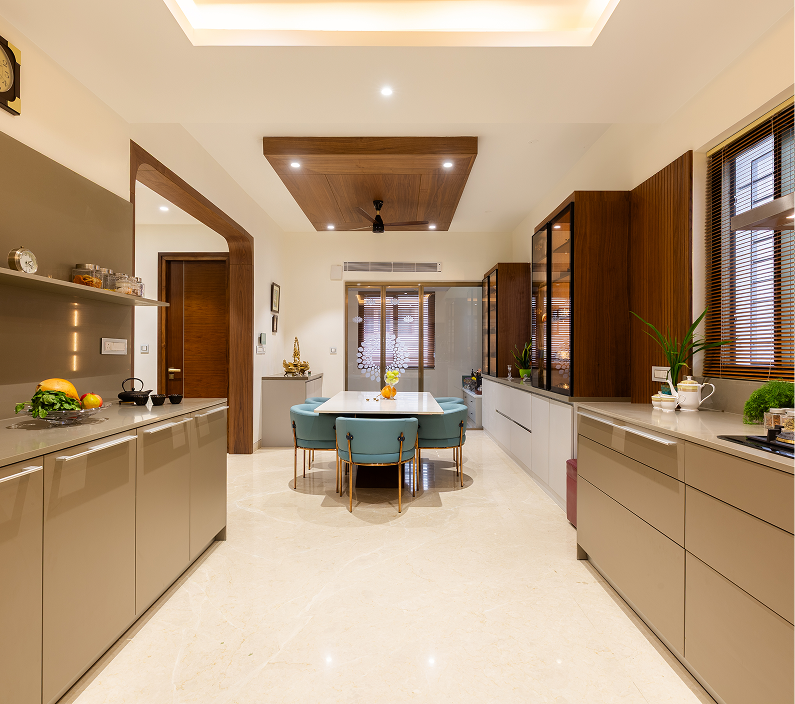
Cabinet carcass material determines structural integrity and moisture resistance. In Indian kitchens, this decision matters more than it does in drier climates.
| Material | Best For | Lifespan | Verdict |
|---|---|---|---|
| BWP Plywood | All cabinets, especially base | 15–20 years | Best Choice |
| Marine Ply | Under-sink and dishwasher area | 20+ years | Premium Use |
| MDF | Overhead cabinets only | 7–10 years | Overheads Only |
| Particle Board | — | 3–5 years | Avoid |
| Natural Wood | Dry areas, low humidity | Variable | Not for Indian Kitchens |
One thing to watch: the word "waterproof" gets used loosely in kitchen marketing. True waterproof means zero absorption. BWP resists water but is not completely impervious. Marine ply comes closest among wood products.
Finishes and Designs That Last
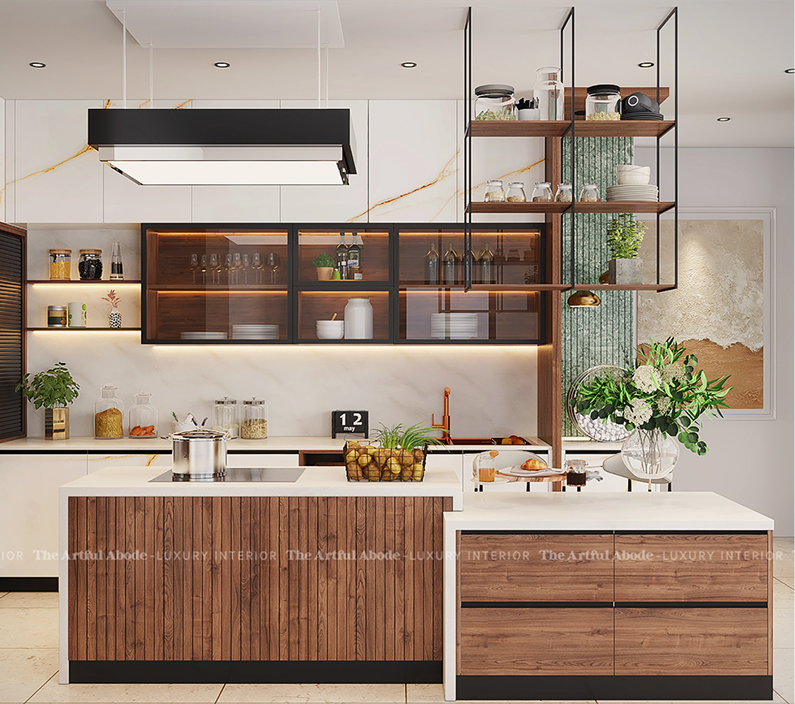
Cabinet finish determines appearance and maintenance requirements for 10 to 15 years. This choice affects daily life more than most people realise at specification stage.
Laminate
The workhorse and usually the right choice. Hundreds of design options, resistant to heat, moisture, and stains when properly sealed, lasts 10 to 15 years. Matte versions hide fingerprints better than glossy ones. For most kitchens, this is where the conversation starts.
Acrylic
High-gloss, contemporary, makes spaces appear larger through its reflective quality. The trade-off: every fingerprint shows, every water spot. Requires daily cleaning if you want it to look the way it did when installed. Choose acrylic only if you are genuinely committed to the maintenance.
PU Finish
Customisable colours in any shade — polyurethane applied in multiple coats creates smooth surfaces. Well-executed finishes last 8 to 12 years. More flexibility in colour matching than standard laminates.
Veneer
Thin wood slices showing genuine grain patterns. Looks beautiful when done well. Requires protective coating and periodic resealing — more maintenance than laminate.
Digital Print
Photorealistic patterns printed directly onto shutter surfaces. Good option when you want something specific that standard laminates cannot deliver. Cost sits between laminate and acrylic.
Hardware: Where Most Kitchens Actually Fail
Daily functionality is determined by hardware. This is the decision most homeowners undervalue and most regret. I have seen beautiful kitchens completely undermined by failing hinges within a year.
Fails quickly regardless of plywood quality. Stuck drawers, slamming doors, broken hinges. The cost saving is not worth the daily frustration.
Genuinely good quality at reasonable cost. Soft-close works properly. Drawer channels handle daily loads. The right choice for most kitchens.
The quality standard. 50,000 cycle rated hinges. Tandem box drawers that handle heavy Indian cookware silently. Worth it for high-use kitchens.
Where to spend more: invest in hardware for frequently used cabinets. Base drawers get opened multiple times every day. They deserve tandem systems, not basic rollers. Handles on the base cabinets get pulled thousands of times a year — mounting strength matters.
The Artful Abode helps homeowners across Bangalore make these decisions correctly from the start — before materials are ordered and before mistakes get built in.
Book a Free ConsultationCabinet Organisation Systems
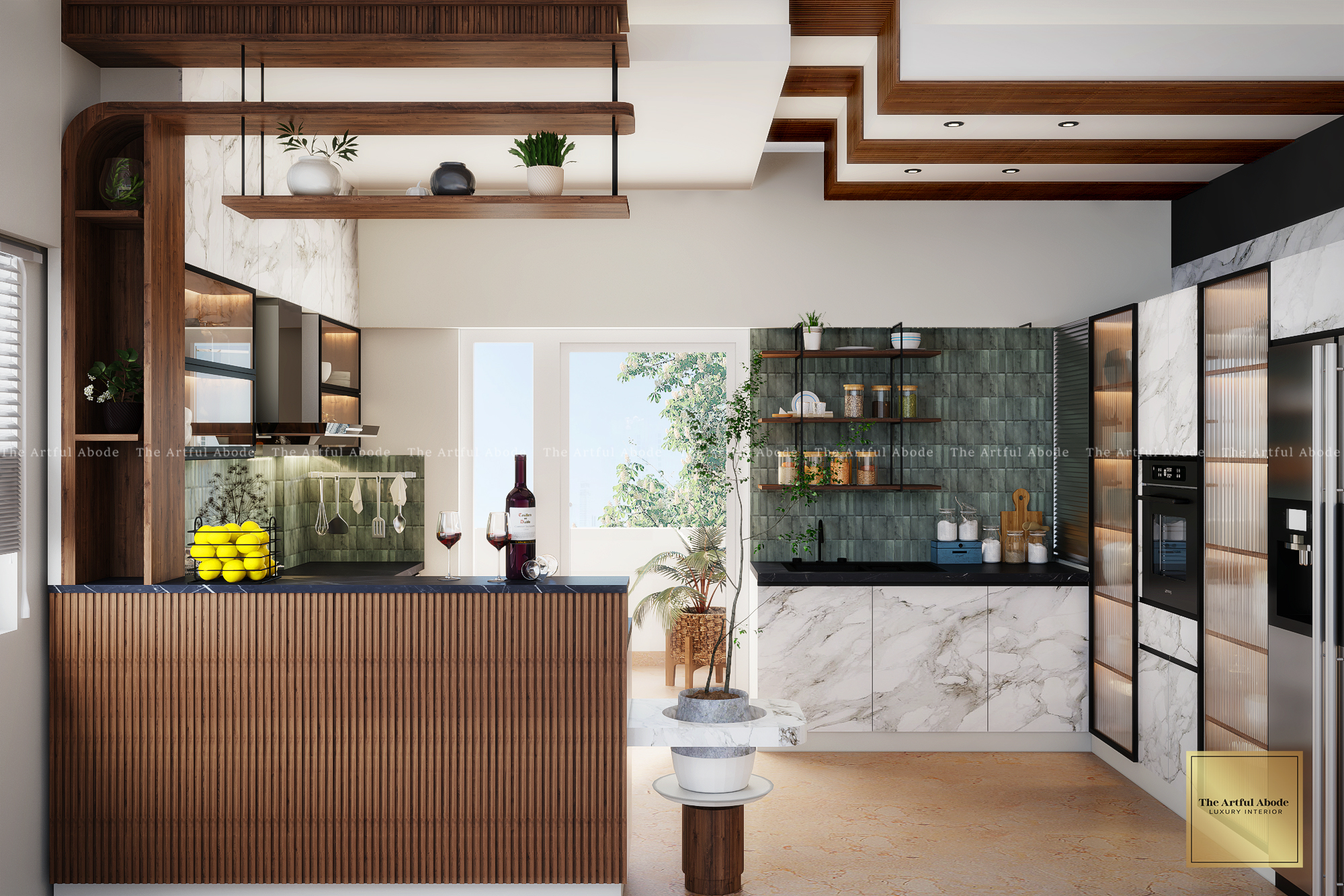
Internal organisers maximise efficiency but must match how you actually cook. Over-specifying is as common a mistake as under-specifying — each fitting consumes cabinet volume.
- Cutlery organisers — universally useful. Adjustable dividers adapt to different drawer sizes. Every kitchen needs this.
- Spice pullouts — essential if you use 15+ spices regularly. Keeps containers visible and accessible without digging. If you use 5 spices, a shelf works fine.
- Corner solutions — non-negotiable in L-shaped kitchens. Magic corners or Le Mans units prevent 15 to 20% of storage capacity disappearing into dead corners.
- Bottle pullouts — for households storing oils and condiments in tall bottles. Brings items forward for easy selection.
- Thali and plate racks — store dishes vertically. Easier selection, prevents scratching.
- Waste segregation units — dual or triple bins for wet waste, dry waste, recyclables. Worth including from the start.
The honest guide: daily-use items deserve accessible storage with proper fittings. Infrequently used items can go in overhead cabinets without pullouts. Design around what you own and cook — not around a European catalogue.
What to Avoid
MDF or particle board for base cabinets. Guarantees replacement within five years. I have seen homeowners save Rs.30,000 on a Rs.4 lakh kitchen by using MDF base cabinets — and end up replacing the whole thing. The maths never works in their favour.
Ignoring hardware quality. Stuck drawers, slamming doors, broken hinges affect how the kitchen feels every single day. The gap between cheap hinges and mid-range Hettich is small in cost and enormous in daily experience over 10 years.
Over-designing with excessive organizers. Each internal fitting consumes cabinet volume. Assess actual needs — what you own and how often you use it — before the fitting specifications go in. Fittings you never use are just expensive obstacles.
Not planning for Indian cooking realities. Standard base cabinet heights, spice storage dimensions, and drawer depths from European modular designs do not account for pressure cooker heights, large vessel sizes, and the spice collections most Indian households actually have.
Final Thought
Kitchen cabinets are more than storage. They determine whether your kitchen works the same way on day 3,000 as it did on day one.
A beautiful kitchen with cheap hardware and MDF base cabinets will frustrate you within three years. A less glamorous kitchen with BWP plywood and quality hinges will still work perfectly in fifteen.
The Artful Abode has completed 50+ modular kitchen projects across Bangalore — Whitefield, Koramangala, HSR Layout, Indiranagar. Book a free consultation to talk through your kitchen cabinet options.